Quick Conclusion: What is the Minimum Size for a Yacht?
What length is a yacht? If you simply want a direct answer: the industry-recognised minimum size for a yacht is approximately 24 feet (7.3 metres).
However, a more precise classification is shown in the table below:
| Length | Industry Consensus |
| 18–23 feet | Large boat, typically not considered a yacht |
| 24–30 feet | Entry-level yacht (Mini / Entry Yacht) |
| 30–45 feet | Standard private yacht |
| 45–80 feet | Midsize luxury yacht |
| 80 feet and above | Superyacht / Megayacht |
Table of Contents
Official Definition of a Yacht
Does Size Alone Define a Yacht?
Yacht Size vs Boat Size Explained
Practical Capability Differences Across Yacht Sizes
Common Misconceptions About Yacht Size
FAQ
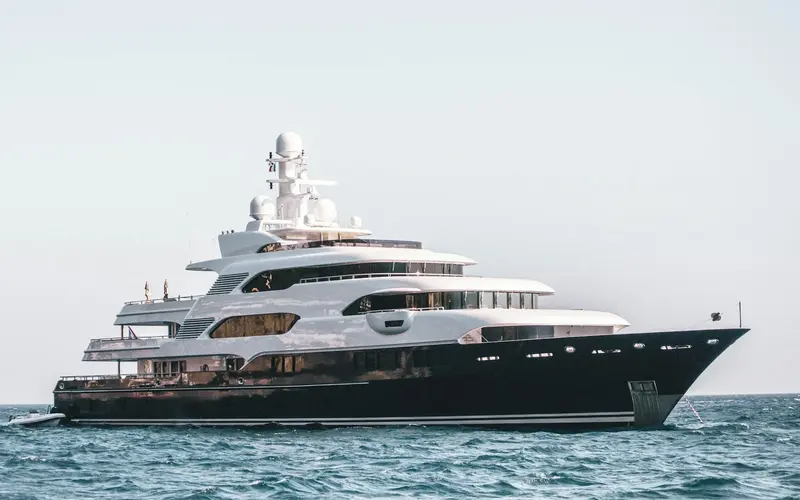
Many encountering yachts for the first time are perplexed by a common question: why are some clearly large vessels termed “boats”, while others appearing less imposing are designated “yachts”? Where exactly lies the true dividing line?
When I first encountered yachts, my understanding of the term ‘yacht’ was rather superficial. In my mind, a yacht had to be one of those large vessels, forty or fifty feet long, featuring a flybridge, and moored in the most prominent berth at the marina. It wasn't until I began seriously viewing boats, discussing them, and even nearly placing an order that I realised the ‘yachts’ of the real world differed vastly from my imagination.
The true dividing line isn't luxury, but rather: can people live aboard this vessel?
Official Definition of a Yacht
Legally speaking, most nations define yachts not by length, but by purpose. Within shipping, maritime, and insurance frameworks, a yacht is typically defined as a vessel used for private recreation, leisure, or habitation, rather than commercial transport.
In practice, there exists no universally agreed size threshold for when a vessel qualifies as a ‘yacht’. Wikipedia (Yacht) states: ‘There is no standard definition (of yacht) … the term generally applies to vessels with a cabin intended for overnight use.’
This explains why yacht size definitions appear so vague in legal texts – they focus more on ‘how you use it’ than ‘how big it is’.
Yet this definition falls far short in practice, as one might purchase an 18-foot motorboat for water recreation—a purely leisurely purpose—yet it would never be termed a yacht.
What truly qualifies a vessel as a yacht is whether it is designed as a space where people can remain for extended periods.
- Does it have beds?
- Does it have a toilet?
- Does it have water, electricity, and ventilation?
- Does it have the capability to keep you at sea for a day or two without needing to dock?
Simply put, a yacht is not a usage category but a technical classification. When a vessel is too small to independently accommodate a toilet, water, electricity, sleeping quarters, and ventilation, it remains merely a boat in the industry's eyes.
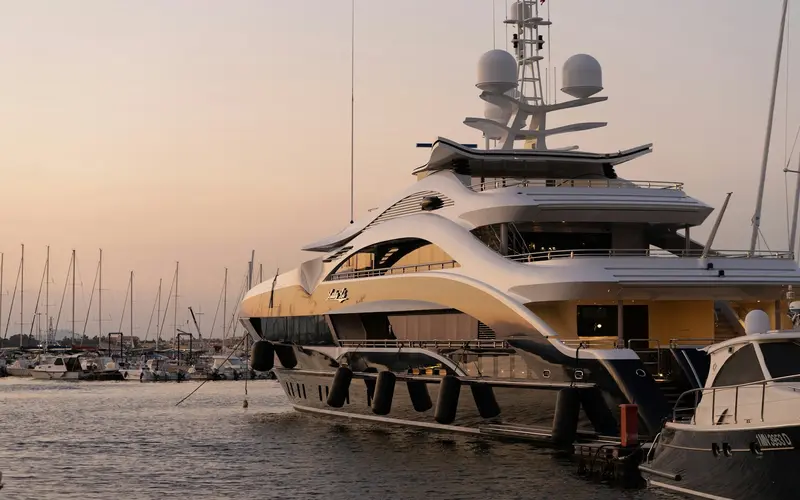
Does Size Alone Define a Yacht?
Size alone is certainly not the whole story, but you will find that without sufficient dimensions, true yacht functionality becomes impossible.
Imagine fitting a bed, toilet, water tanks, and batteries onto a 20-foot vessel while still leaving space for people to move about and for ventilation – it's virtually impossible. It's not that shipyards wouldn't attempt it, but the physical constraints simply won't permit it.
Thus, the essence of a yacht isn't merely ‘larger’, but an evolution from a transport vessel into a habitable system. For the vast majority of hull types, this transformation occurs precisely around the 24-foot mark. It is at this point that the question ‘when does a boat become a yacht?’ first receives a definitive answer.
Yacht Size vs Boat Size Explained
I gradually came to understand that in the real market, “boat” and “yacht” are not synonymous. The true difference between yacht and boat size actually stems from two entirely distinct design philosophies.
The logic of a standard boat is: set sail → enjoy → return to harbour
Yacht logic: Depart → Anchor → Stay overnight → Continue voyage the next day
If you still struggle to distinguish them, consider this comparison table:
| Item | Boat | Yacht |
| Sleeping accommodation | Typically absent | Present |
| Toilet facilities | Absent | Private bathroom |
| Overnight capability | No | Yes |
| Multi-day voyages | Unrealistic | Standard |
Precisely for this reason, global shipyards, yacht brokers, marinas, and insurers universally adopt approximately 24 feet as the defining threshold. This isn't merely for convenience; below this dimension, vessels function primarily as recreational tools. Above it, a craft first becomes a genuinely habitable, continuously usable ‘aquatic space’.
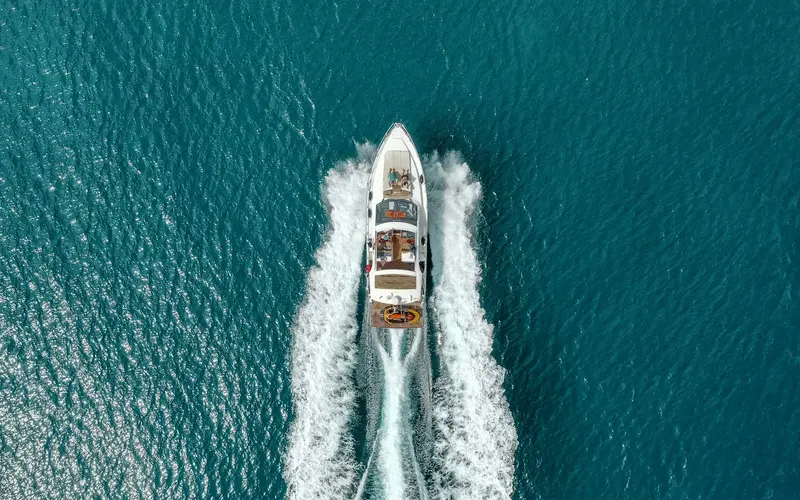
Practical Capability Differences Across Yacht Sizes
Many buyers fixate solely on a yacht's apparent size, but I later came to understand: the significance lies not in visual impact, but in how much of your life you can genuinely relocate to the sea. Different lengths offer far more than merely extra space – they define entirely distinct boundaries of usage.
• Around 25 feet: You can comfortably sleep two aboard for a weekend, already evoking that ‘floating cottage’ feel.
• Over 30 feet: You can take your family on multi-day trips without needing to find a mooring every day.
• 40 feet and above: You'll realise you no longer own a boat, but a true ‘home at sea’.
So when you truly begin researching tips for buying a new yacht, the most crucial question isn't ‘what size looks most impressive’, but ‘how much of my life do I want to move onto the water?’
Common Misconceptions About Yacht Size
Before I gained hands-on experience with yachts, I too fell into several traps regarding ‘size’. After speaking extensively with numerous owners and brokers, I realised these misconceptions are almost universally held by novices.
Misconception 1: Anything under 40 feet isn't worthy of being called a yacht
This is the most common illusion, heavily amplified by social media and images of luxury yachts. The vessels you see online are often 60-footers, 80-footers, or even larger superyachts, leading to the instinctive assumption that anything smaller isn't a proper yacht. Yet the reality of the market is quite different.
Globally, the most popular yacht size in terms of sales and ownership actually falls within the 25–35-foot range. Boats in this category offer fully functional living systems without spiralling maintenance, berthing, or ownership costs out of control. They may lack the ‘wow factor’ of larger vessels, but they represent the yachts used by the vast majority of genuine owners.
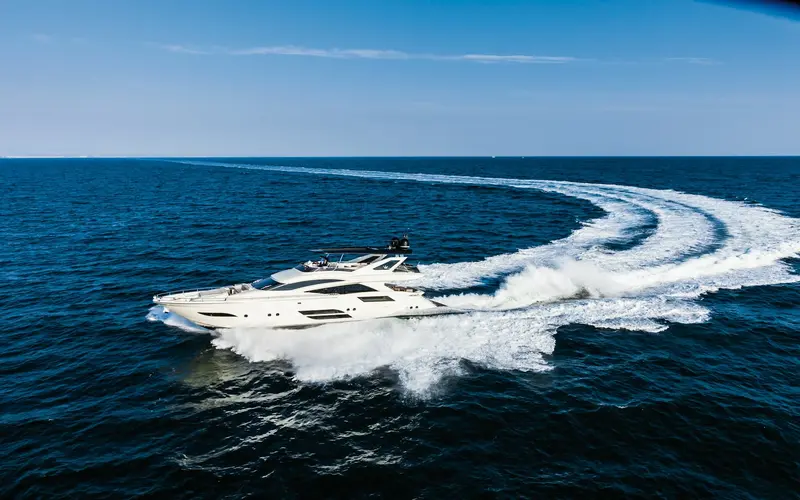
Misconception 2: Smaller yachts are merely ‘luxury toys,’ not true yachts
Many perceive vessels under 30 feet as toys rather than yachts. Yet this criterion is fundamentally flawed. The defining characteristic of a yacht has never been its sheer length, but its capacity for self-contained living.
A 26-foot cruiser equipped with a cabin, toilet, fresh water system, and electrical systems is considered a standard yacht by industry standards. While compact, it offers complete functionality—you can sleep, wash, and live aboard it. This is fundamentally the same as a 50-foot yacht, differing only in scale.
Misconception 3: Larger is invariably better
This is a common pitfall for first-time yacht viewers. While larger vessels offer greater stability, comfort, and luxury, the benefits come at an exponentially higher cost and complexity.
A larger yacht means higher mooring fees, pricier insurance, more complex maintenance, and often the inability to find suitable berths in many ports. For many owners, a 30-plus-foot yacht proves more “practical” than a 50-footer, striking a more realistic balance between living experience and operational costs.
Misconception 4: Catamarans can be small yet still qualify as yachts
Due to their efficient use of space, catamarans can indeed achieve yacht-like interior layouts within shorter lengths – for instance, accommodating a bed and small galley within 22–23 feet. However, within industry classifications, insurance, marina facilities, and the second-hand market, they are typically categorised as “Boats” rather than “Yachts”.
In other words, catamarans can be ‘used like yachts,’ but at a systemic level, they must cross the 24-foot threshold to be genuinely regarded as yachts.
FAQ
Q1: Is 24 feet universally recognised as the minimum yacht size globally?
Within most yacht markets and shipbuilding systems, 24 feet is regarded as the entry point for yachts, as vessels of this size typically incorporate sleeping quarters, a toilet, and independent water and electrical systems. While individual countries or catamaran designs may present slight variations, the industry consensus remains largely consistent.
Q2: Why is there such a significant distinction between 23 and 24 feet?
Because 24 feet is the first size where most hull designs can fully accommodate living systems, including enclosed lavatories, freshwater systems, and overnight berths. Vessels under 23 feet are typically suited only for day use and cannot genuinely support life aboard.
Q3: Are yachts under 30 feet suitable for long-term use?
Yachts under 30 feet are ideal for weekend or short cruises, accommodating overnight stays and brief periods at sea. However, they are unsuitable for extended shore-independent living. For longer periods afloat, vessels over 35 feet are generally recommended.
Q4: Are catamarans more readily able to meet the “yacht” standard in terms of dimensions?
Due to their greater beam and superior space utilisation, catamarans can indeed offer yacht-like interior layouts within shorter overall lengths. However, within industry classification and market transactions, the threshold for entering the yacht category is typically still around 24 feet.
Q5: Many inquire about the cost of building a yacht.
This varies significantly based on dimensions, materials, and system complexity, ranging from several hundred thousand to tens of millions of dollars. This is precisely why the question ‘How much does it cost to build a yacht?’ invariably begins with ‘What size are we talking about?’
Riley Miller
Riley Miller is the owner of the “Serendipity” yacht, a contributing columnist for “Yachting Monthly,” and has published 17 in-depth analyses on yacht cost management. He also serves as an advisory committee member for the European Second-Hand Yacht Association (ESYA) and holds the International Yachting Certificate ICC-UK-2019C-17429, with certified cruising areas covering the Mediterranean and the western coast of the Atlantic.
Disclaimer
The content herein is for informational purposes only and is intended to share the author's personal experiences and perspectives. It does not constitute legal, tax, or investment advice. Yacht transactions involve complex legal, financial, and technical matters. Actual purchasing processes may vary due to regional regulations, vessel type differences, or individual circumstances. Before making any yacht purchase decisions, readers are advised to consult licensed professionals (such as attorneys, tax advisors, licensed yacht brokers, or surveyors) for personalized guidance tailored to their specific situation. Neither the author nor the publisher shall be liable for any direct or indirect losses arising from reliance on the information provided herein.