Quick Answer
A used boat handover should cover more than receiving the keys. Buyers should check all access devices, onboard equipment, safety gear, spare parts, registration documents, manuals and maintenance records. Compare each item with the purchase agreement and agreed inventory list, test important equipment where possible, and document anything missing, damaged or outstanding before signing the handover confirmation.
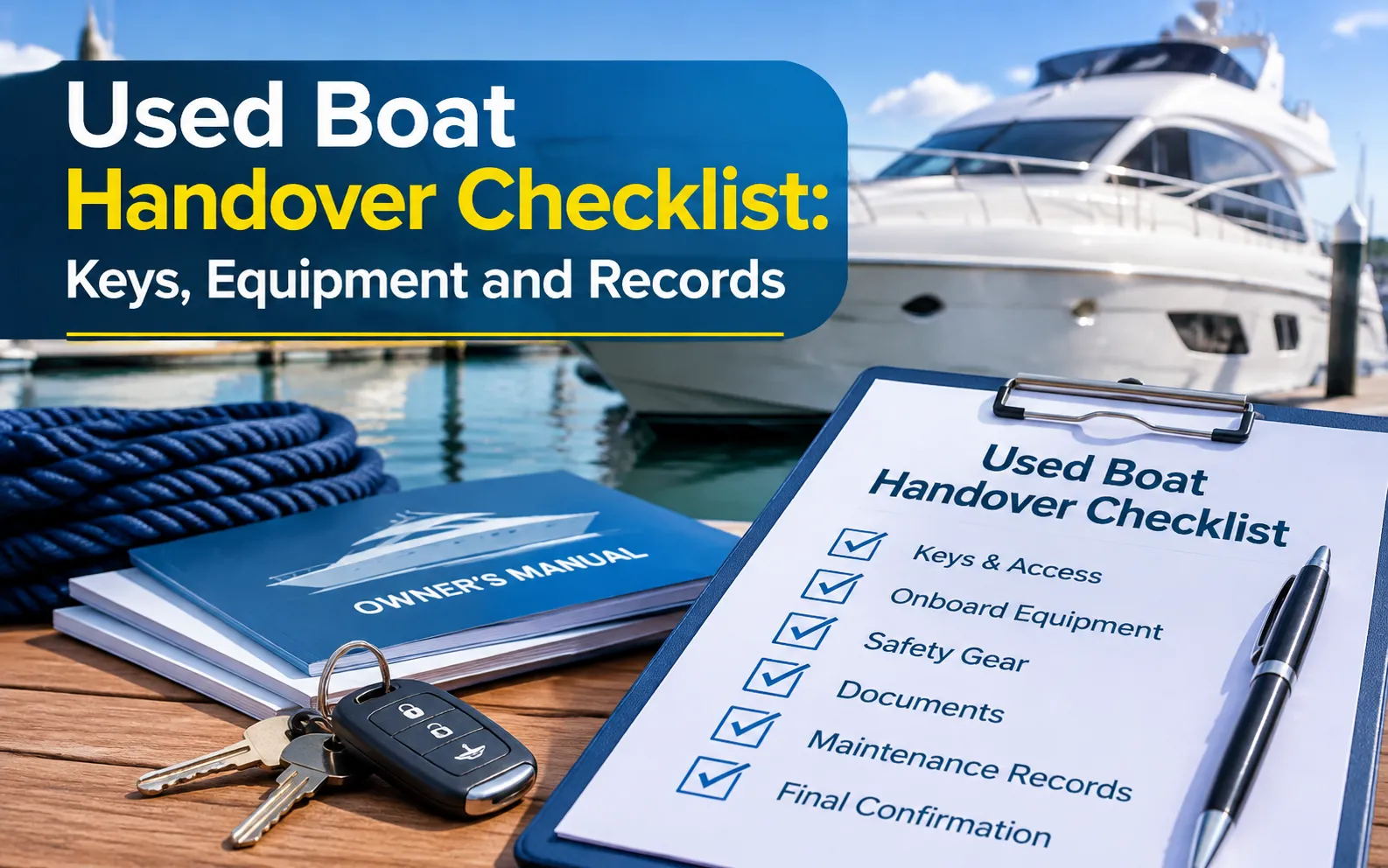
What Should You Prepare Before the Handover of a Used Vessel?
After purchasing a used vessel, the formal handover does not simply mean receiving the keys and completing payment to finalize the transaction. The handover is a crucial step for both the buyer and seller to confirm the actual scope of delivery, and it is also one of the buyer’s last opportunities to verify that the terms of the contract have been fulfilled.
Before the handover date is finalized, it is recommended that the buyer prepare the following documents:
- Purchase Agreement: Confirm the vessel’s basic information, purchase price, delivery terms, and the equipment and accessories included as per the contract.
- Inventory List: Specify which equipment, tools, spare parts, and furnishings are included in this delivery.
- Pre-purchase Survey Report: Compare the condition of the equipment, any issues identified, and the repair items agreed upon by both parties as outlined in the report.
- Outstanding Work List: Verify whether the seller has completed the repairs, replacements, or equipment additions specified in the contract.
- Handover Arrangement: Specifies the time, location, participants, and method of document signing for the handover.
If you are still familiarizing yourself with the process of purchasing a used vessel, start with our used yacht buying guide to understand the key steps involved in selecting, inspecting, and purchasing a pre-owned boat. You can also explore our complete yacht buying guide for a broader overview of the purchase process and long-term ownership considerations.
Please note that the pre-purchase survey and the formal handover are two distinct stages. The survey primarily assesses the vessel’s condition, while the handover focuses on confirming that the items, equipment, and documentation specified in the contract have actually been delivered.
Keys, Access Devices, and Security Information
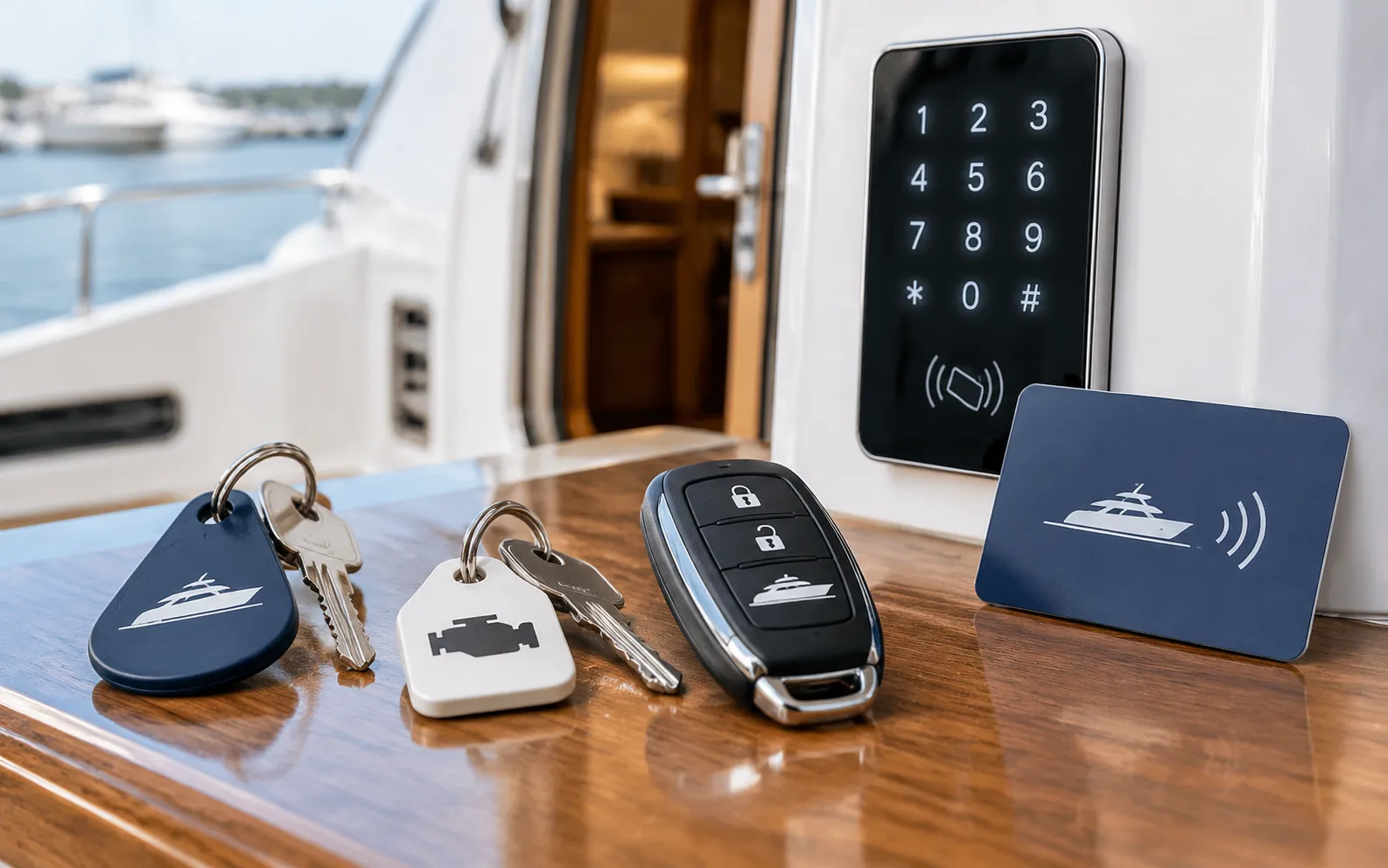
Keys are one of the most easily overlooked details during the handover of a pre-owned boat. A yacht may have multiple independent locks and electronic access systems; if you only receive the master keys for the helm or the cabin, you may encounter unnecessary problems later on.
Physical Keys
It is recommended to check the following one by one:
- Keys for the main cabin and guest cabin door locks;
- Keys for the helm station, storage lockers, and equipment cabinets;
- Keys for the engine room and machinery room;
- Keys for fuel tanks, water tanks, and other locked access points;
- Spare keys for other independent locks on board.
Do not merely verify the number of keys; test each key on-site to ensure it functions properly, and mark the corresponding locks.
Electronic Access and Security Systems
If the vessel is equipped with electronic devices, you should also check:
- Electronic door locks and remote controls;
- Anti-theft alarm systems;
- GPS tracking or vessel monitoring systems;
- Account permissions for navigation and onboard electronic systems;
- Administrative access to onboard Wi-Fi and network equipment.
For devices requiring account login, verify that the buyer has the necessary administrative privileges. After the handover is complete, it is recommended to change relevant passwords and update account binding information as required by the device.
Key Inspection Points: Record physical keys, electronic remote controls, passwords, and account privileges separately; do not simply write a generic “Keys received” on the handover checklist.
Onboard Equipment and Inventory Checklist
Shipboard equipment is the aspect of secondhand vessel handover that requires the most time to verify. There are significant differences among various vessel types, brands, and configurations; therefore, a single, identical equipment list cannot be applied across the board.
It is recommended to categorize equipment by purpose and check each item individually for physical presence, quantity, and basic functionality.
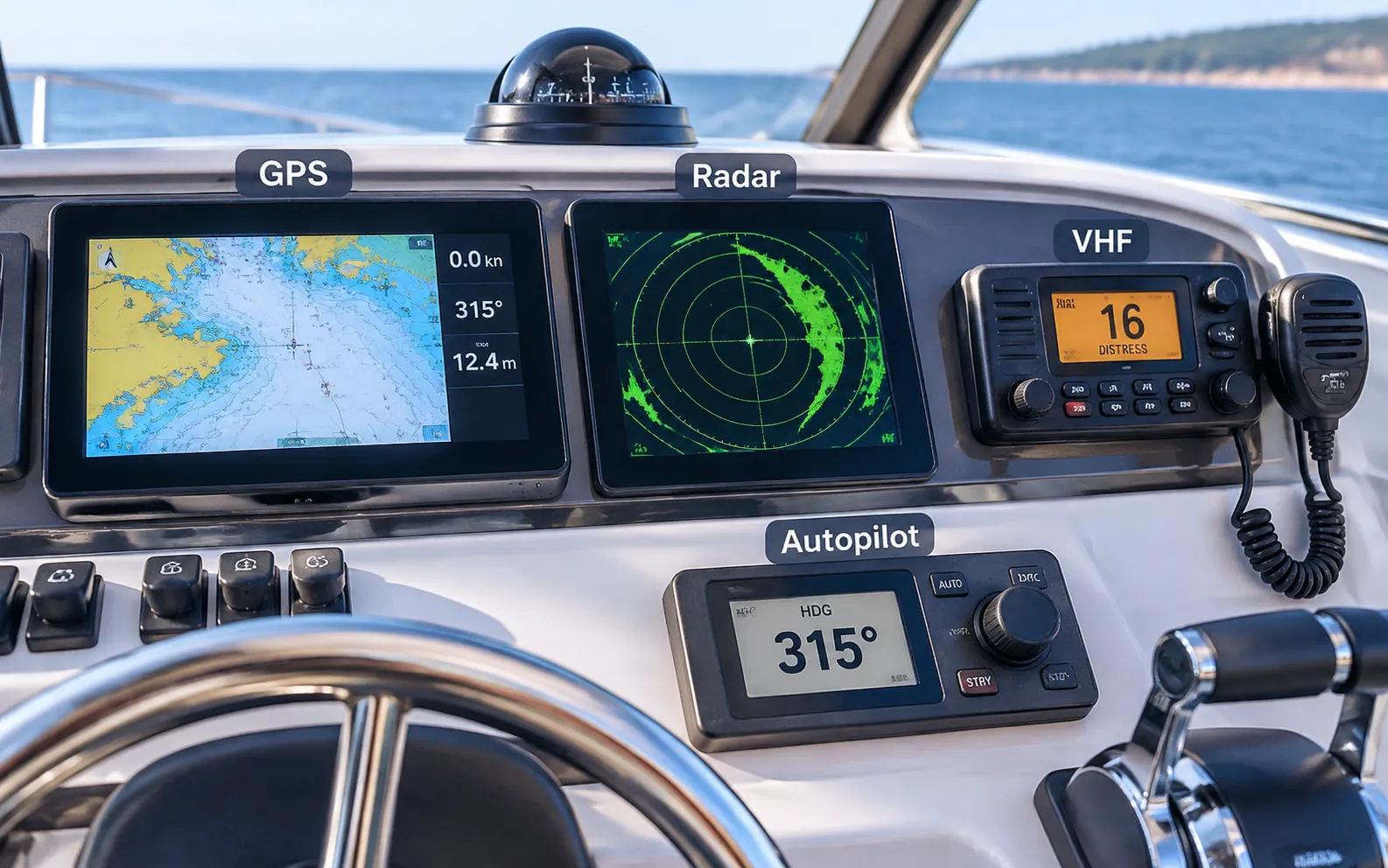
Navigation and Communication Equipment
| Equipment | Inspection Items |
| GPS / Chartplotter | Is it delivered with the vessel? Does it start up normally? |
| Radar | Are the radar unit and display system complete? |
| VHF Radio | Does the radio power on normally and perform appropriate tests? |
| AIS | Are the device and related display functions operating normally? |
| Autopilot | Does the autopilot system respond normally? |
| Depth Sounder | Are the depth sounder and sensors functioning properly? |
If the equipment uses standalone software, electronic charts, or subscription services, you should also verify account transfers, authorizations, and updates. Some digital services may not be directly transferable and may require the buyer to re-register.
Safety Equipment
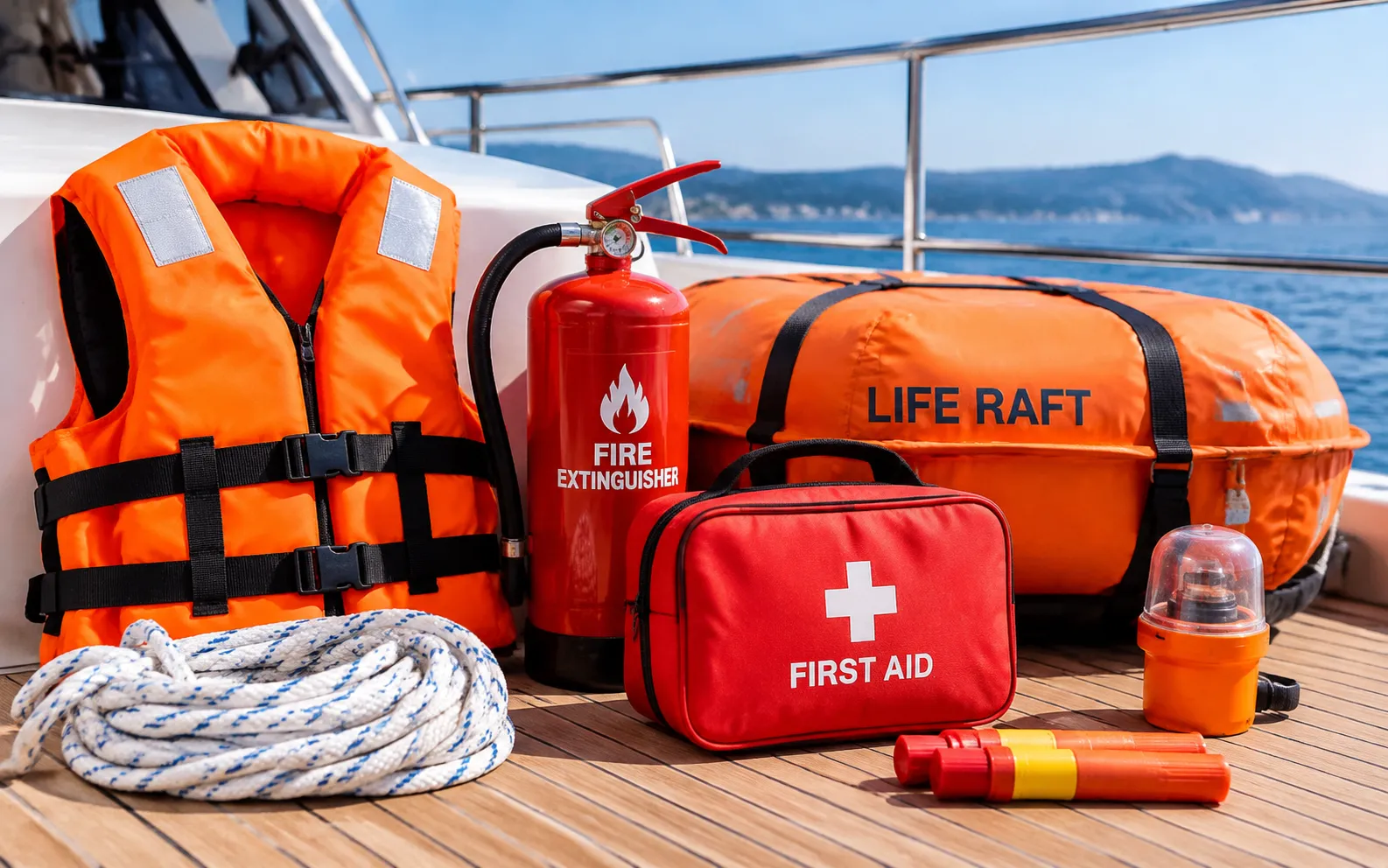
When inspecting safety equipment, it is important not only to verify the quantity but also to check the expiration dates, condition, and suitability.
| Equipment | Inspection Focus |
| Life Jackets | Quantity, size, condition, and suitability |
| Life Raft | Availability, maintenance status, and expiration date |
| Fire Extinguishers | Quantity, pressure, and inspection status |
| First-Aid Kit | Check if medications and supplies have expired |
| Flares | Quantity and expiration date |
| Emergency Equipment | Check if emergency signaling devices and related equipment are complete |
The specific configuration of safety equipment and legal requirements depend on the vessel’s place of registration, intended use, navigation area, and applicable regulations; it cannot be simply assumed that all yachts require the same configuration.
Engine Room and Mechanical Equipment
Recommended inspections:
- Main engine and related instruments;
- Generator and control system;
- Battery bank and charging equipment;
- Bilge pumps and automatic drainage system;
- Cooling system and ventilation equipment;
- Air conditioning, water heater, and other auxiliary equipment.
During the handover, you may ask the seller or a technician familiar with the vessel to demonstrate the basic operation of major equipment. For equipment that fails to start, emits unusual noises, or displays error messages, the specific circumstances should be documented rather than simply marked as “normal.”
Deck Equipment and Accessories
Do not overlook items that may seem insignificant but are essential in actual use:
- Anchor, anchor chain, and spare anchor;
- Mooring lines and fenders;
- Winches and related control equipment;
- Marine toolkits and commonly used spare parts;
- Boardings ladders, lifeboat ladders, and related accessories;
- Fixed onboard furniture and removable fittings specified in the contract.
Here is an important principle: Whether equipment is to be delivered should be determined based on the purchase contract and the inventory list of items on board confirmed by both parties, rather than solely on the buyer’s assumption that a particular item should naturally be part of the vessel’s standard configuration.
Documents and Maintenance Records to Collect
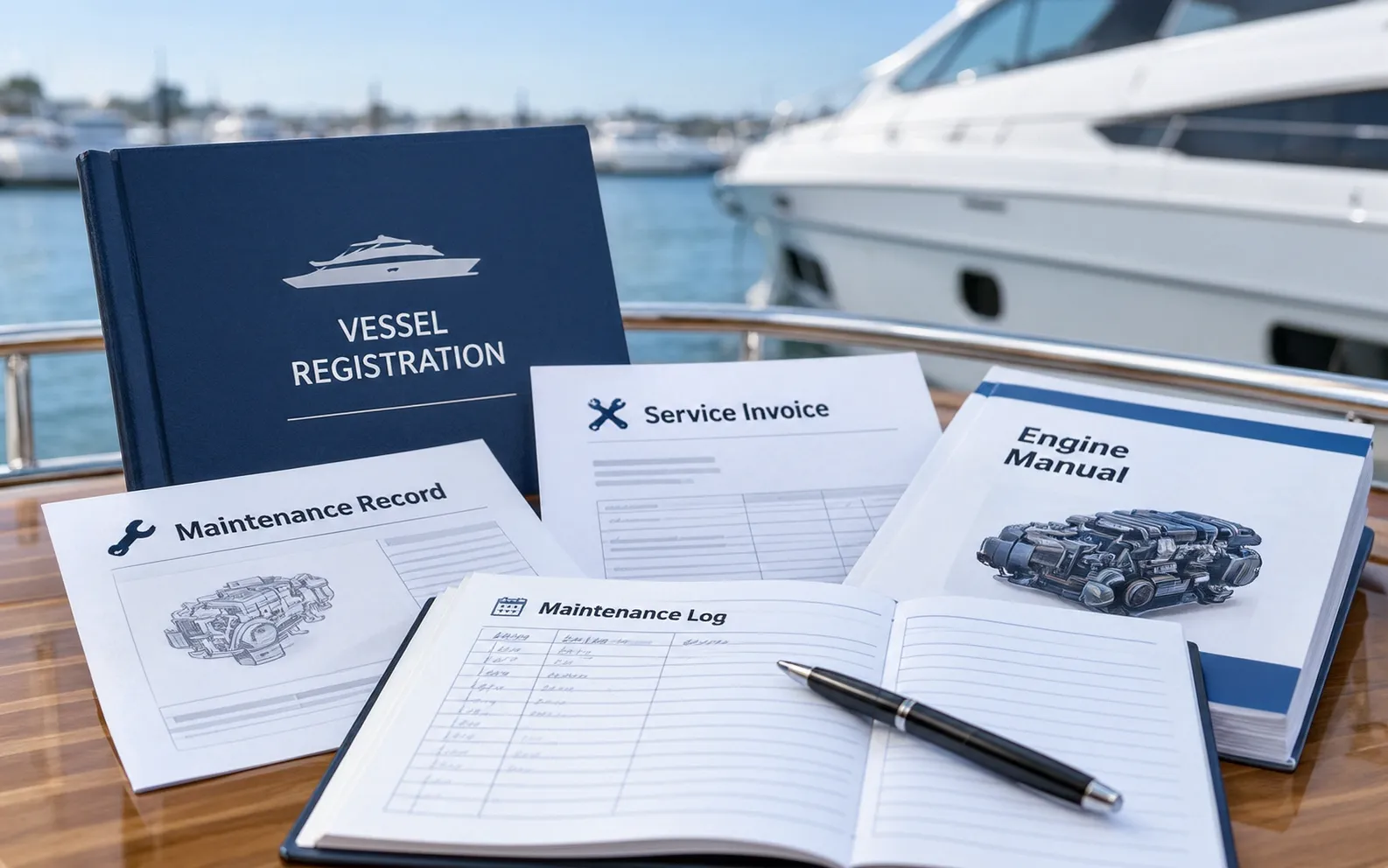
Vessel documents and maintenance records are just as important as the physical equipment. After taking delivery of the yacht, the buyer must rely on these documents to understand the vessel’s registration status, how its equipment operates, and its maintenance history.
Ownership and Registration Documents
Depending on the vessel’s place of registration and the terms of the transaction, the buyer should verify and receive the applicable documents, such as:
- Vessel registration certificate and related registration documents;
- Proof of ownership transfer or transaction;
- Purchase and sale agreement and delivery documents;
- Applicable vessel inspection or compliance certificates;
- Import, tax, or VAT-related documents (if applicable).
In the case of cross-border transactions, it is also necessary to confirm the vessel’s original registration status, ownership transfer requirements, and the specific regulations of the new registration jurisdiction.
The requirements for these documents vary from vessel to vessel. Buyers should verify these requirements with the vessel registration authority or relevant professionals to avoid directly applying one country’s document requirements to other jurisdictions.
Insurance and Operating Documents
It is recommended to obtain:
- Current insurance policies and related documentation;
- Engine and generator operating manuals;
- Navigation and communication equipment manuals;
- Electrical system and onboard equipment manuals;
- Equipment warranty documents and supplier contact information.
It is important to note that the previous owner’s insurance does not automatically transfer upon the sale of the vessel. Buyers should confirm new insurance arrangements and their effective dates prior to handover to avoid any gaps in coverage.
Maintenance and Repair History
Maintenance records help buyers understand the vessel’s past usage and maintenance history and serve as a reference for future maintenance planning.
Key documents to collect:
- Engine Service Records: Records of periodic engine maintenance, oil changes, and component repairs.
- Generator Records: Records of generator maintenance and repair of malfunctions.
- Hull Maintenance Records: Records of hull maintenance, antifouling paint application, and related repairs.
- Electrical System Records: Records of repairs to batteries, electrical circuits, and navigation equipment.
- Refit and Upgrade Records: Records of major refurbishments, equipment upgrades, and modifications.
- Repair Invoices: Repair invoices, service reports, and proof of replacement parts.
If the seller cannot provide complete records, it does not necessarily mean there are problems with the vessel, but the buyer should further investigate the reasons for the missing information and treat the unverifiable maintenance history as a factor of uncertainty in future maintenance planning.
For guidance on how to assess a vessel’s condition before purchase, refer to 10 Essential Inspection Points Before Buying a Used Yacht to learn about key inspection areas for the hull, engine, electrical system, and onboard equipment.
What to Do If Equipment Is Missing or Records Are Incomplete
These issues should also be considered alongside the findings of the pre-purchase survey. Buyers who want to understand the broader inspection and purchasing process can refer to our guide to buying a yacht in 2026, which covers vessel inspections, sea trials, and other important steps before completing a transaction.
Step 1: Compare the Actual Inventory with the Agreement
First, compare the equipment actually delivered with the purchase contract and the ship’s inventory list. For example, if the contract specifies that two sets of spare ropes are to be delivered with the vessel but only one set is found on site, the missing quantity should be noted on the list.
Step 2: Photograph Missing or Damaged Items
For equipment that is damaged, missing, or not functioning properly, it is recommended to take photos or videos and record the equipment name, location, and specific details. For electronic devices, take photos of error messages or display screens to facilitate subsequent verification.
Step 3: Record Outstanding Issues in Writing
Do not handle issues solely through phone calls or verbal communication. You may use the following table:
| Issue | Details | Follow-up Action |
| Spare Key Missing | Did not receive spare key for engine compartment | Seller to provide |
| Navigation System Malfunction | GPS fails to start properly | Further inspection |
| Incomplete Maintenance | Records Missing engine maintenance records from the previous year | Seller to provide missing information |
| Deck Accessories | Missing Spare fenders specified in the contract were not delivered | Both parties to confirm a resolution plan |
Step 4: Agree on Responsibility and Deadlines
Both parties should clarify:
- Which items need to be provided;
- Which equipment requires repair or further inspection;
- Who is responsible for covering the related costs;
- When the work will be completed;
- How uncompleted items will affect the final delivery confirmation.
The specific resolution process should comply with the purchase contract and applicable laws; do not assume that all issues can be resolved through deductions from the payment.
Printable Used Boat Handover Checklist
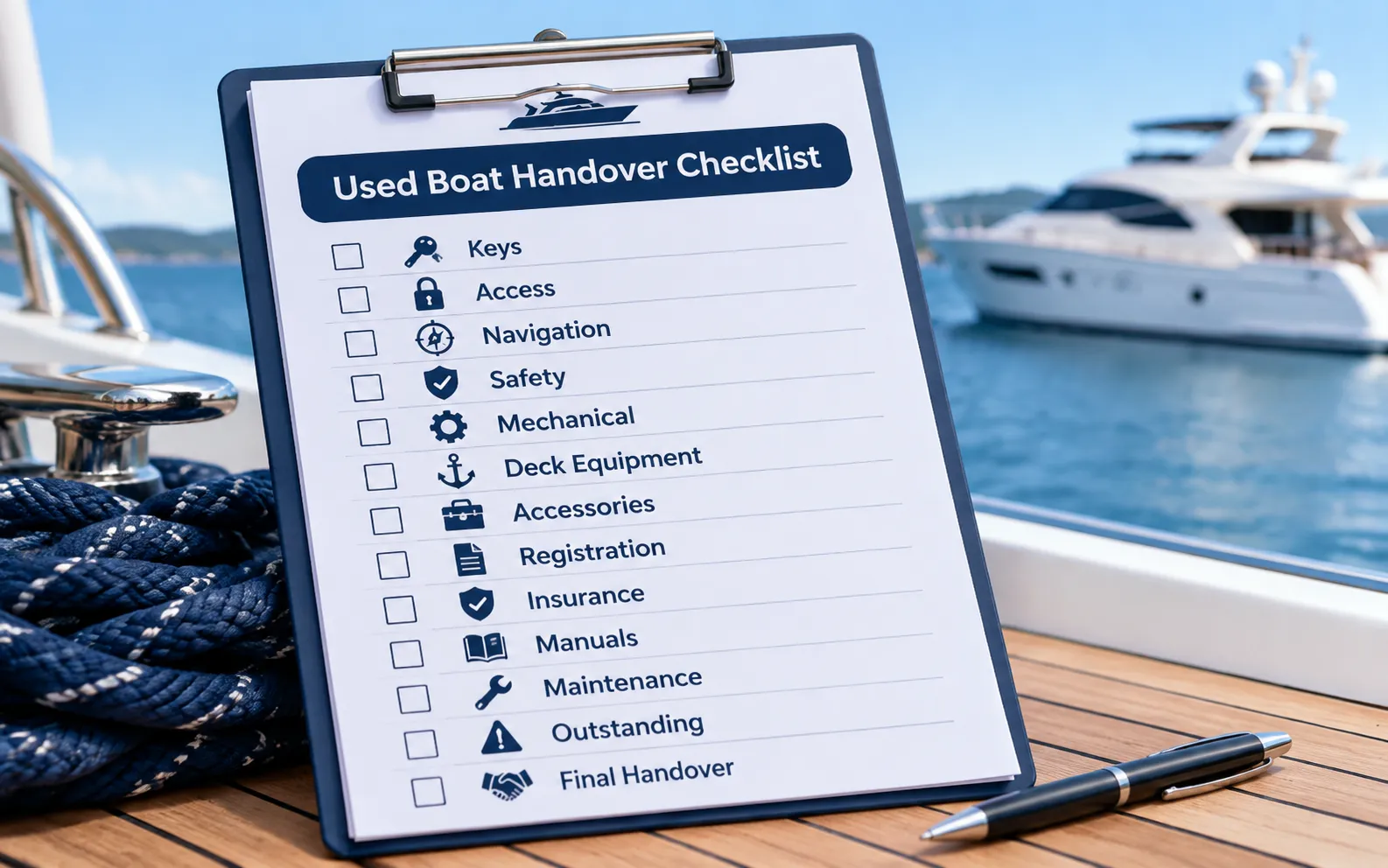
To make it easier for buyers to use, here is a checklist that can be used to verify each item on the day of handover.
| Inspection Category | Specific Items | Status |
| Keys | Keys to the cabin, helm, and equipment compartment | ☐ |
| Access | Electronic door locks, remote controls, and access codes | ☐ |
| Navigation | GPS, radar, VHF, AIS | ☐ |
| Safety | Life jackets, fire extinguishers, first aid kit | ☐ |
| Mechanical | Engine, generator, batteries, and water pumps | ☐ |
| Deck Equipment | Anchoring gear, ropes, fenders, and winches | ☐ |
| Accessories | Tools, spare parts, and contractually agreed-upon accessories | ☐ |
| Registration | Registration and ownership-related documents | ☐ |
| Insurance | Insurance documentation and arrangements for new policies | ☐ |
| Manuals | Equipment manuals and operating instructions | ☐ |
| Maintenance | Engine, hull, and equipment maintenance records | ☐ |
| Outstanding | Items Missing, Damaged, and Pending Items | ☐ |
| Final Handover | Joint Verification and Signing of Handover Documents | ☐ |
Handover Information
At the time of the formal handover, the following information may also be filled in below the checklist:
- Vessel Name: __________________
- HIN / CIN: __________________
- Handover Date: __________________
- Handover Location: __________________
- Seller: __________________
- Buyer: __________________
- Outstanding Items: __________________
- Agreed Completion Date: __________________
It is recommended that both the seller and the buyer retain a signed copy of the checklist and file it along with photographs of the equipment, maintenance records, and other supporting documents.
Final Checks Before Signing the Handover Document
After completing the above inspections, the buyer must also perform a final confirmation.
Before signing the handover documents, it is recommended to verify the following:
- The keys, equipment, and accessories actually delivered match the list in the contract.
- Basic functional tests have been completed for critical navigation, communication, and mechanical equipment.
- The quantity and condition of safety equipment have been verified.
- Vessel registration, insurance, and applicable documents have been handed over, or arrangements for their subsequent processing have been clearly established.
- Maintenance records for the engine and major equipment have been received.
- All missing items, damages, and unresolved issues have been documented in writing.
- Both parties have confirmed the responsibilities and timelines for outstanding tasks.
If any significant issues remain unresolved, do not overlook the handover documentation simply because payment has been completed. You should confirm the appropriate course of action with the seller in accordance with the contract terms and accurately reflect the actual situation in the final documents.
For buyers planning to hold a used vessel long-term, it is advisable to establish their own maintenance records after the handover is complete. You may refer to the Yacht Buying and Ownership Cost Guide for further information on holding costs, including insurance, maintenance, berthing, and day-to-day operations.
Conclusion
A proper used boat handover involves much more than collecting keys and taking possession of the vessel. Buyers should verify the agreed inventory, test important equipment, collect relevant documents and maintenance records, and record any outstanding issues before signing the handover confirmation.
A written checklist makes the process easier to manage and helps both parties establish exactly what has been delivered. Once the handover is complete, keeping an organised record of the vessel's equipment, repairs and future maintenance will make ongoing ownership easier to manage.
About the Author
Riley Miller is a contributing writer at YachtTrading, focusing on yacht ownership, used boat purchases, maintenance, and resale value. He shares practical insights to help buyers understand the purchasing process, assess vessel condition, and make more informed decisions throughout yacht ownership.
Disclaimer
This article is for general informational purposes only and does not constitute legal, technical, or professional advice. Used boat handover requirements may vary depending on the vessel, purchase agreement, registration jurisdiction, and applicable regulations. Buyers should verify all documents, equipment, and outstanding items with the seller and consult qualified marine surveyors or relevant professionals when necessary.
FAQ
Q1: What documents should I receive when buying a used boat?
A: You should receive applicable registration and ownership documents, the purchase agreement, inspection records, equipment manuals, insurance information and available maintenance and repair records. Requirements vary by vessel registration and location.
Q2: Should all boat keys and access codes be handed over?
A: Yes, all keys, remotes and access credentials included in the agreed inventory should be handed over. Test physical keys and confirm access to electronic systems before completing the handover.
Q3: What should I do if equipment is missing during handover?
A: Compare the missing item with the purchase agreement, photograph the issue and record it in writing. Agree with the seller on replacement, repair or another contractual solution before confirming completion.
Q4: Is a sea trial necessary before taking delivery of a used boat?
A: A sea trial is generally an important part of the pre-purchase assessment, rather than a substitute for the handover checklist. If an agreed trial or operational test has not been completed, clarify this before accepting final delivery.