Quick Conclusion: The Core Distinction Between Yachts and Boats in Terms of Size
Key differences:Size dictates attributes. Only when a vessel's length, spatial capacity, and system complexity surpass a certain threshold does it become universally recognised as a ‘yacht’.
In the vast majority of practical applications:
- Boat: Typically denotes a shorter watercraft with a single purpose and relatively simple structure.
- Yacht: Generally commences at 10 metres (approximately 33 feet) and upwards, signifying a vessel equipped with ‘living accommodation’.
Table of Contents
Legal and Industry Definitions
What is the difference between a boat and a yacht?
Size Comparison: Boat vs Yacht
Functional Differences Beyond Size
When Does a Boat Become a Yacht?
Summary
FAQ
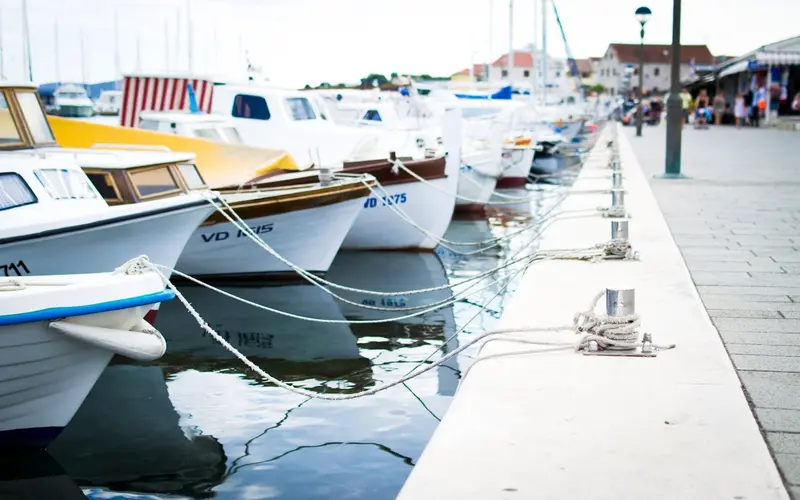
In everyday language, "boat" and "yacht" are often used interchangeably. Some might say, "Isn't it just a bigger boat?" This is a classic example of the "is a yacht just a big boat" question.
Others might argue, "As long as people can live there and it has bedrooms, it's a yacht."
However, within the realms of navigation, manufacturing, trade, and legal frameworks, size often serves as the most intuitive and crucial starting point for distinguishing between ‘boats’ and ‘yachts’.
This article will systematically clarify the core dimensional differences between yachts and boats, exploring multiple dimensions including industry perception, functional distinctions, and legal definitions.
Legal and Industry Definitions
Legally, different countries lack entirely uniform dimensional definitions for ‘yachts’.
- Europe: Typically categorised by CE certification class + intended use, rather than a single size threshold
- United States: Primarily employs the concept of ‘recreational vessel’
- Port and marina management: Commonly uses 12 metres, 15 metres, and 24 metres as dividing lines for different fee structures and berth categories
This explains a common phenomenon: the same vessel may be marketed as a ‘yacht’ yet remain registered merely as a ‘vessel’.
Consequently, in practice, ‘yacht’ functions more as an industry and market term than a strictly legal designation.
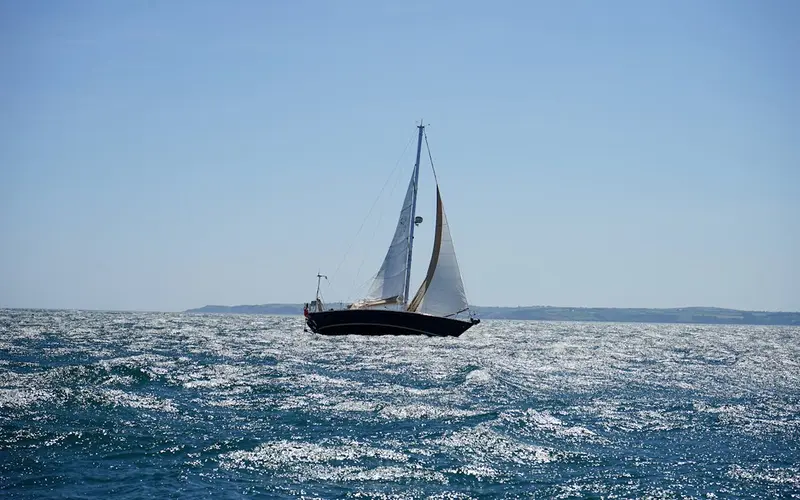
What is the difference between a boat and a yacht?
Linguistically, ‘boat’ is an extremely broad term.
Fishing boats, speedboats, lifeboats, and dinghies can all be termed boats. ‘Yacht’, however, is markedly more specific, inherently encompassing several prerequisites:
- Primarily non-commercial transport
- Core purpose focused on leisure, recreation, or living
- Possession of relatively complete onboard accommodation
In this respect, size becomes a natural filter and directly affects subsequent yacht vs. boat ownership—because once the size is upgraded, the holding costs, maintenance logic, and usage will be completely different.
This distinction is similarly recognised within the official US framework. The U.S. Coast Guard does not define ‘Yacht’ separately in its vessel regulations, instead applying the unified concept of ‘Recreational Vessel’ for oversight.
Consequently, whether a vessel is marketed as a ‘yacht’ does not depend on its registered designation, but rather on whether its dimensions support overnight stays, living accommodation, and multi-day voyages.
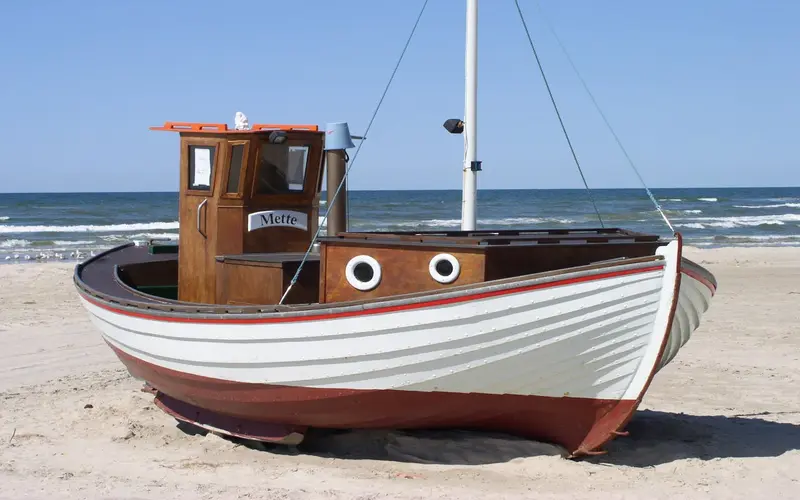
Size Comparison: Boat vs Yacht
Within the industry, while no globally standardised official demarcation exists, numerous shipyards, dealers, insurers, and ports have developed remarkably consistent size range perceptions.
| Item | Boat | Yacht |
| Common Length | 3–9 metres (10–30 feet) | 10 metres and above (33 feet+) |
| Accommodation | Rare or highly simplified | Standard Features |
| Headroom | Typically insufficient | Standing height in most areas |
| Sanitary facilities | None or portable | Self-contained, enclosed |
| Cruising range | Short trips, day cruising | Medium-to-long distances, overnight voyages |
| Mooring requirements | Standard jetties | Yacht marinas |
This comparison demonstrates that a yacht is not merely an enlarged version of a boat, but rather the result of systemic changes brought about by increased dimensions. This is a true reflection of the length difference between yachts and boats in practical use.
Functional Differences Beyond Size
Size matters not because ‘bigger equals pricier’, but because it directly defines a vessel's functional boundaries. Why is this so?
The reason lies in the qualitative changes that emerge when length exceeds 10–12 metres:
- Significantly enhanced hull stability
- Capacity to install standalone diesel engines or twin-engine systems
- Water, electricity, fuel, and waste systems become fully integrated
- Onboard space evolves from ‘seating’ to ‘living quarters’
This explains why many vessels around 9 metres, however lavishly designed, remain categorised by the market as ‘cabin boats’ or ‘day cruisers’ rather than yachts.
The essence of a yacht lies in its size enabling you to ‘live’ upon the water, not merely ‘ride’ upon it.
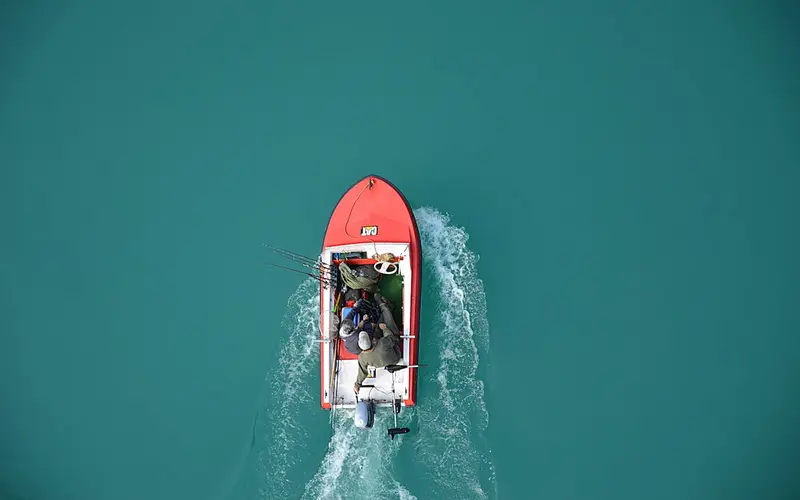
When Does a Boat Become a Yacht?
If you ask me: ‘What size boat truly qualifies as a yacht?’
My usual response is: ‘When you start seriously considering overnight stays aboard, rather than merely thinking about it as an afterthought, it's likely already a yacht.’
This question often concerns many novices. From practical experience, when a vessel meets the following criteria simultaneously, it rarely faces questioning as to its yacht status:
- Length ≥ 10 metres
- At least one enclosed sleeping cabin
- Self-contained sanitary facilities
- Capable of supporting continuous living aboard for 24–48 hours
- Berthing at yacht marinas rather than fishing harbours
BoatUS, the American boat owners' association, explicitly states: Once a vessel is sufficiently spacious to accommodate comfortable overnight stays, onboard systems, and multi-day voyages, most owners begin classifying it as a yacht rather than merely a boat."
Consequently, the so-called mini-yachts and entry-level yachts commonly found on the market typically fall within the 30–40-foot (9–12-metre) range. This represents the critical threshold where a “boat” transitions into a “yacht”.
It is precisely within this size range that many novice boat owners begin to seriously research various tips for buying a new yacht, because they realize that the choice is no longer just for their "first boat," but the starting point for a whole waterborne lifestyle.
Summary
Returning to the original question: when it comes to yachts and boats, is size truly that significant? The answer is unequivocally yes.
Size isn't about distinguishing status; it determines:
• Whether you can live aboard
• Whether you can undertake long voyages
• The maintenance regime required
• Which maritime world you enter
Once size crosses a certain threshold, a vessel ceases to be merely a boat and becomes a way of life upon the water.
FAQ
Q1: Is a 30-foot vessel considered a yacht?
Yes, but this depends on its intended purpose.
Size criteria: In mainstream European and American markets, 30 feet (approximately 9 metres) is typically regarded as the dividing line between small boats and yachts. Recreational vessels exceeding 30 feet are often categorised as yachts.
Key factor: Purpose. If designed for leisure (e.g., holidays, parties, sailing experiences), even a 30-foot vessel may be termed a yacht. If intended for fishing or work, it is more likely classified as a fishing boat or utility vessel.
Q2: Does size automatically determine yacht status?
Not necessarily. Size alone is not the determining factor. The essence of a yacht lies in its design and use for private leisure and recreation. A large vessel employed for commercial shipping (cargo ships), industrial production (large fishing vessels), or government duties (patrol boats) is not a yacht, regardless of its size. Purpose and design intent (enjoyment versus work) are the crucial distinguishing points.
Q3: Why are many fishing vessels larger than yachts yet not called yachts?
Because their fundamental purpose and design are entirely different; the name reflects their core functional essence.
Fishing vessels are production tools, designed for operational efficiency: open decks (for casting nets/processing catches), heavy-duty equipment, large-capacity refrigerated fish holds, and basic crew quarters.
Yachts are leisure toys, designed for comfort and enjoyment: refined saloons (sofas/air conditioning), bedrooms, bathrooms, entertainment facilities, and aesthetically pleasing interiors.
Riley Miller
Riley Miller is the owner of the “Serendipity” yacht, a contributing columnist for “Yachting Monthly,” and has published 17 in-depth analyses on yacht cost management. He also serves as an advisory committee member for the European Second-Hand Yacht Association (ESYA) and holds the International Yachting Certificate ICC-UK-2019C-17429, with certified cruising areas covering the Mediterranean and the western coast of the Atlantic.
Disclaimer
This article is based on publicly available market data, broker listings, and industry depreciation reports.
The content herein is for informational purposes only and is intended to share the author's personal experiences and perspectives. It does not constitute legal, tax, or investment advice. Yacht transactions involve complex legal, financial, and technical matters. Actual purchasing processes may vary due to regional regulations, vessel type differences, or individual circumstances. Before making any yacht purchase decisions, readers are advised to consult licensed professionals (such as attorneys, tax advisors, licensed yacht brokers, or surveyors) for personalized guidance tailored to their specific situation. Neither the author nor the publisher shall be liable for any direct or indirect losses arising from reliance on the information provided herein.