Nearly ten years ago, when I first stepped into the world of fishing yachts, I still remember the mix of excitement and confusion I felt. Standing on the dock, staring at the gleaming hulls and teak decks, I was like a kid in a candy store—captivated by the variety of yachts, but unsure which one would be right for me. Luckily, I found a trustworthy broker back then. With his professional guidance, I successfully purchased a high-value used SNIPO 43-foot Fishing Yacht. To be honest, before that moment I had little understanding of the market, different models, or their configurations. Without his help, I probably would have made some costly mistakes.
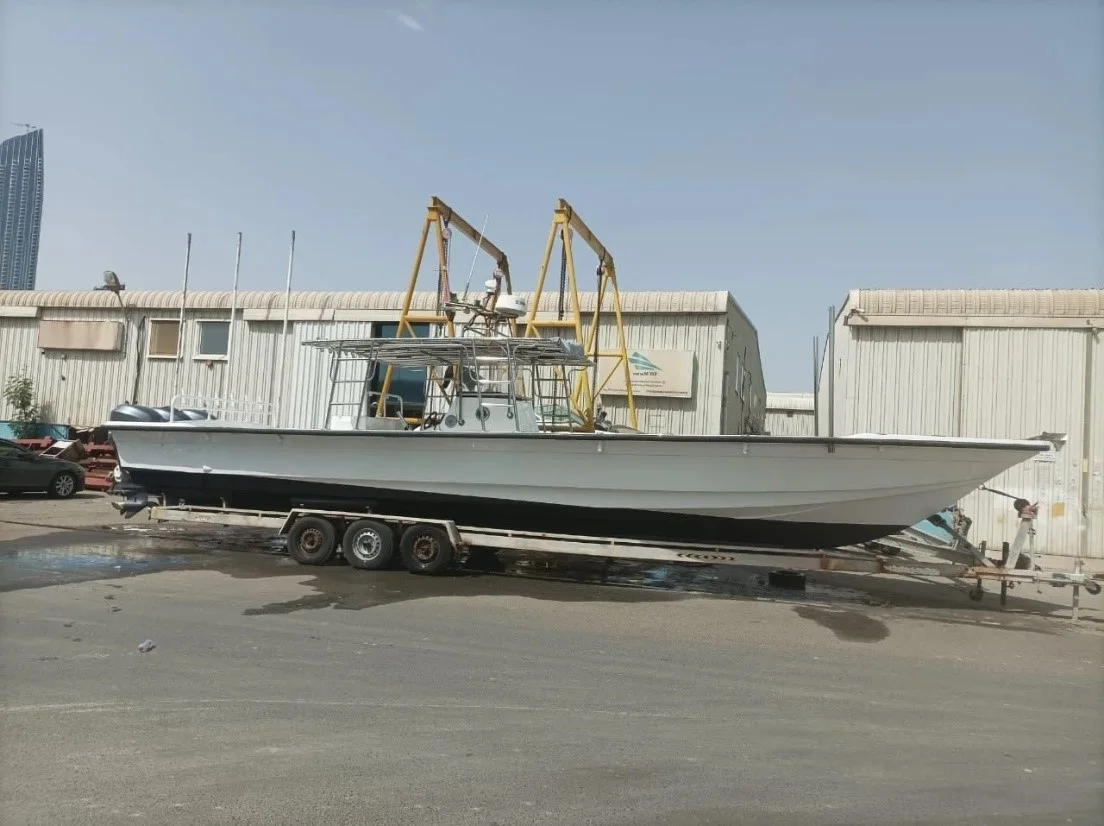
Fast forward to today: I’ve been in the yacht brokerage business for 8 years and have helped more than 100 clients realize their “dreams at sea.” Some were first-time buyers, some were upgrading to larger vessels, while others were simply looking for a budget-friendly yacht for weekend fishing. Each deal, to me, feels like a journey of its own.
The goal of this article is simple: to help you confidently choose the fishing yacht that suits your needs in 2025, while sharing some insights that brokers like myself see every day.
Here are the 5 things you need to pay attention to before buying a fishing yacht:
1.Choosing the Right Type of Fishing Yacht
Fishing is not just a single activity—it’s an evolving experience shaped by your target species, fishing grounds, and personal preferences. The way you fish almost determines the type of yacht that best fits your needs. The right vessel allows you to fish more efficiently and comfortably, while the wrong platform could turn your dream trip into a frustrating day at sea.
Fishing yachts come in many forms, each with its own advantages and limitations. According to Allied Market Research in their “Sportfishing Boats Insightful Analysis: Trends, Competitor Dynamics, and Opportunities 2025–2033”, the sportfishing boat market offers a wide variety—from small center console boats perfect for nearshore fishing to large luxury yachts capable of deep-sea expeditions. Globally, the sportfishing yacht market is categorized into center consoles, walkaround boats, sportfishing speedboats, and luxury fishing yachts.
Center Console Boats
In 2025, center consoles remain the go-to choice for small to mid-size anglers. Known for their agility, 360° casting space, and practical design, they’re ideal for those who value precision handling and frequently change fishing spots.
|
Type |
Center Console |
|
Advantages |
Single helm in the middle, providing 360° casting freedom |
|
Features |
High maneuverability, shallow draft, perfect for inshore and reef fishing |
|
Best For |
Mangroves, reef fishing, nearshore trolling |
Walkaround Boats
Walkarounds balance performance, space, and comfort. Their standout feature is side-deck access around the cabin, allowing you to move easily around the boat—great for both fishing and leisure.
|
Type |
Walkaround Yacht |
|
Advantages |
Easy movement around the boat with unobstructed fishing access |
|
Features |
Spacious cabins, suitable for overnight or multi-day trips |
|
Best For |
Nearshore trolling, island-hopping, family outings |
Sportfishing Speedboats
For anglers who chase speed and adrenaline, sportfishing speedboats are synonymous with high performance. With lightweight hulls and twin or triple engines, they’re built to get you to fishing grounds fast. In 2025, they continue to gain popularity in Western markets, especially among younger anglers and performance-driven owners.
|
Type |
Sportfishing Speedboat |
|
Advantages |
High cruising speed, rapid acceleration, excellent wave handling |
|
Features |
Great for short to mid-range offshore runs, covering multiple spots quickly |
|
Best For |
Tuna chases, mahi-mahi, and sailfish at mid-range grounds |
Luxury Sportfishing Yachts
If the previous categories are “tools,” luxury sportfishing yachts are the dream itself. They represent the top tier of the global sportfishing market—combining deep-sea expedition capability with luxurious onboard living.
|
Type |
Luxury Sportfishing Yacht |
|
Advantages |
Long range, extended endurance, capable of transoceanic fishing expeditions |
|
Features |
Large aft decks, fighting chairs, sonar fish finders, cold storage, luxury suites |
|
Best For |
Deep-sea marlin tournaments, transoceanic expeditions, multi-method long-term fishing trips |
2.Choosing the Right Yacht Size: Bigger Isn’t Always Better
When it comes to size, this is often where dreams collide with reality. Bigger doesn’t always mean better. A larger yacht also comes with higher maintenance, mooring, and fuel costs. Length not only determines where you can fish, but also how much gear you can carry and how far you can go. The right size is the one that matches your fishing goals, budget, and comfort level.
20–30 Feet — Best for Solo Anglers
If you enjoy early mornings chasing tuna or kingfish within 20 nautical miles of shore, the 20–30 ft. range is your sweet spot. These yachts are light and agile, typically powered by a single engine, and large enough to house a fish hold, several rod holders, and a high-performance sonar. Smaller center consoles and yachts in this category are flexible, economical, and easy to manage alone. You can launch them from a trailer, slip into shallow bays, and dock them with ease. Fuel consumption is moderate—most burn about 15–25 gallons per hour at cruising speed.
Last year, I worked with a client from Florida, a typical solo angler. He originally had his eye on a 36-foot twin-engine cabin fishing boat. But after we analyzed his needs together, I recommended he try a 28-footer instead. Why?
-
Ease of handling: He wanted to fish alone. Larger boats are too troublesome when docking, mooring, or anchoring.
-
Fuel efficiency: A 28-foot single-engine setup with 300 horsepower offers over 30% better fuel economy than a twin-engine boat.
-
Ample space: A spacious cockpit and fish hold provided all the room he needed for frozen bait and gear.
Later he sent me a photo—sitting alone on his yacht, holding what looked like an 80-pound tuna. His message read: “Lena, this is the best purchase I’ve ever made.”
30–40 Feet — Best for Families
Yachts in the 30–40 ft. range strike a balance: tough enough for serious fishing, yet comfortable enough for overnight cruising.
These boats usually feature twin outboards or inboards, higher gunwales for stability, and expanded deck space for trolling. Inside, you’ll find berths, a galley, an enclosed head, and climate control—perfect for small families or social trips with friends. With larger fuel tanks and more efficient hulls, they can easily reach offshore fishing grounds 50–70 nautical miles away. Most carry 250–400 gallons of fuel, giving you the confidence to pursue big game beyond sight of land.
45 Feet and Above — For Professionals and Offshore Expeditions
At this size, yachts are built for multi-day expeditions and high-end charter operations. They offer long range, massive storage, and excellent comfort. With huge fuel tanks (often over 1,000 gallons), these vessels can venture 150–250 nautical miles offshore and remain at sea for several days.
It’s tempting to think that “the longer the yacht, the better the experience.” But every extra foot adds responsibility, cost, and complexity:
-
Higher costs: Fuel, insurance, dockage, and maintenance rise exponentially with size.
-
Complex systems: More engines, pumps, and electronics mean more upkeep and troubleshooting.
-
Crew requirements: Larger yachts need trained personnel to operate safely—rarely can vessels over 40 ft. be managed alone.
3.Budget Considerations: New or used?
Should you buy a new yacht, or go for a used yacht? There’s no single answer—it depends on your goals, style, and risk tolerance. As I often tell clients: The ocean will test you enough on its own—don’t start with a yacht that isn’t right for you.
Here’s the breakdown I usually share with clients:
|
New Fishing Yacht |
Pre-Owned Fishing Yacht |
|
|
Advantages |
a. No hidden issues like rot or corrosion b. Equipped with the latest technology and modern materials c. Fully customizable—e.g., larger fish hold options d. Warranty included |
a. Lower purchase price b. Excellent value, ideal for first-time buyers learning the basics c. May come with extras such as equipment or upgrades from the previous owner |
|
Disadvantages |
a. Higher price tag; new boats usually have higher insurance premiums b. Rapid depreciation—often lose 10–15% of value immediately after purchase |
a. Buyer takes on risk b. Older parts may need repair or replacement c. May require maintenance or upgrades sooner |
And don’t forget the 10% rule: According to the National Marine Manufacturers Association (NMMA) via Discover Boating’s “Boat Maintenance” guide, annual maintenance typically runs up to 10% of the boat’s value. That means if you buy a $500,000 yacht, you should expect around $50,000 per year in upkeep.
In short:
-
A new yacht is best if you have a comfortable budget, value cutting-edge technology, want custom features, and prefer lower risk at sea.
-
A pre-owned yacht is right for those who seek value for money, are willing to do their homework, and don’t mind some upgrades and maintenance along the way.
4.The Real Costs of Owning a Fishing Yacht
In reality, the cost of a fishing yacht is like an onion—the sticker price is just the first layer. Peel it back, and you’ll uncover many other expenses, some predictable and some unexpected. In my 8 years as a yacht broker, I’ve watched countless new owners go from excitement to silence once these costs set in. Many only consider the purchase price, forgetting that yacht ownership is a continuous investment. Owning a fishing boat sounds fantastic, but the yearly expenses for insurance, dockage, fuel, and maintenance often exceed expectations.
Dockage & Storage
The first question after buying is: Where will you keep it?
-
Marina berths: On the U.S. East Coast, a 25-foot slip typically runs $300–$600 per month in average cities. In popular destinations like the Florida Keys, San Diego, or Hawaii, prices can easily double.
-
Liveaboard fees: If you plan to live aboard, expect an additional $100–$200 per month for water, electricity, and marina management fees.
-
Onshore storage: To save money, some owners haul their boats ashore. Land storage costs about $100–$300 per month, much cheaper than slips. But this means trailering each time you want to head out. Towing, launching, and hauling add up over the year.
Insurance
First-time buyers often underestimate insurance—until the marina says: “No insurance, no docking.”
Even if it’s not required, insuring your yacht is simply smart. For a $20,000 boat, premiums are usually $300–$800 annually. Faster or higher-value boats are deemed “high risk,” so premiums climb significantly.
Maintenance & Repairs
The unavoidable truth of yacht ownership is maintenance. My rule of thumb: budget at least 10% of the yacht’s value annually.
Where does the money go?
-
Routine oil changes, belt replacements, engine servicing
-
Antifouling paint to keep barnacles and algae off the hull
-
Replacing lines, anchor chains, and bilge pumps
-
Repairing electronics, radar, and sonar systems
Unexpected issues are common too—like bilge pump failures or hull leaks—that must be fixed immediately for safety. For detailed strategies, I recommend the article “6 Ways to Reduce Yacht Maintenance Costs.” It provides excellent tips for cutting expenses without compromising safety.
Fuel Costs
Fuel is another expense many underestimate, especially with fishing yachts.
Take a 40-foot sportfishing yacht as an example: cruising often burns 40 gallons per hour. For a 200-nautical-mile offshore trip at 25 knots, you’re looking at an 8-hour round trip—roughly $2,000 in fuel alone. Targeting marlin, sailfish, or tuna requires high-speed runs and long trolling sessions, which raise consumption further. In rough seas, expect up to 30% higher fuel burn than planned.
Emergency Fund
At sea, surprises arrive before your plans. Always set aside 10–20% of the purchase price as a contingency fund.
I once learned this lesson the hard way: while cruising the Florida Keys, I struck a submerged reef. The propeller was ruined—$800 for a new one plus two days of repairs.
5.The Buying Process
According to the NMMA (National Marine Manufacturers Association), U.S. boating expenditures have remained at record highs since 2020. In 2025, they’re projected to reach 3–5% above the $55 billion mark reported in 2024. This prediction has proven accurate—demand is rising, and I’ve barely had a moment’s rest this year. With competition heating up, careful selection is more critical than ever. In 2025, popular models and quality inventory are often sold out months in advance, with some shipyards requiring half a year’s lead time. To secure the right yacht, preparation is key.
Here’s how the process works:
a. Making an Offer
Once you’ve chosen a yacht, the first step is submitting a purchase offer. This document outlines your intent, including price, contingencies (survey, sea trial, financing), and a timeline. In the U.S. and Europe, wording usually follows MYBA (Mediterranean Yacht Brokers Association) or FYBA (Florida Yacht Brokers Association) standards. In Asia, I often use AYBA formats, which combine international best practices with local regulations.
b. Purchase Agreement
After the offer is accepted, the broker (or sometimes the buyer’s attorney) drafts a Memorandum of Agreement (MOA) or Sales Agreement. Key terms include:
-
Final purchase price
-
Deposit amount
-
Survey and sea trial schedule
-
Closing date
-
List of included items (electronics, fishing gear, spare parts, etc.)
Clarity is vital. I’ve seen disputes erupt over something as small as a set of tuna rods. My rule: If it’s not written in, it’s not included.
One case in Rotterdam stands out: a buyer assumed the yacht’s teak fighting chair was part of the deal. The seller, viewing it as personal property worth $12,000, removed it before handover. Legally, the seller was entitled, but the buyer was furious.
c. Deposit & Escrow
The buyer then wires a deposit—usually 10%—into escrow. It’s a significant sum, and clients often hesitate here. But remember: escrow protects both sides. The seller knows the buyer is serious, while the buyer is assured that if the yacht fails inspection, the funds are safe. Trusted brokers or maritime attorneys usually serve as escrow agents.
d. Survey & Sea Trial
This is the most critical stage. A qualified surveyor inspects the yacht from top to bottom: hull, engines, electronics, and safety systems. The sea trial then tests real-world performance.
Key focus areas include:
-
Engine hours and maintenance records
-
Hull condition
-
Live wells and bait tanks
-
Fishing deck layout (rod holders, outriggers, fighting chair mounts)
-
Electronics (GPS, sonar, fish finders)
e. Closing
Once both parties are satisfied, the buyer transfers the balance into escrow. The agent releases funds to the seller and hands over the Bill of Sale and transfer documents to the buyer.
Before your first voyage, conduct a final handover inspection. Cross-check the inventory list and verify all electronics, navigation systems, fishing gear, and safety equipment are present and functional. Even after a full survey, I always advise a final walkthrough—last-minute issues can surface.
Conclusion
Owning a fishing yacht expands your world like unfolding a nautical chart—you’ll see more sunrises and live more stories. The ocean brings both challenges and rewards, and the right yacht becomes a trusted partner in your journey. My advice is simple: don’t rush. Take your time. The sea will always be there, and the right yacht will make every voyage worthwhile.
See you on the water.
Lena Corby is a freelance writer and senior yacht broker with over 8 years of industry experience, specializing in yacht selection, outfitting, and market analysis. A contributor to Saltwater Sportsman and Boat International, she has authored 20+ articles on yacht models, equipment upgrades, and offshore strategies. She serves on the advisory board of the Asian Yacht Brokers Association (AYBA) and holds the international yacht license ICC-SG-2018C-09217, certified for cruising across Southeast Asia, the Caribbean, and the Pacific coastlines.
Disclaimer: This article provides general information for educational purposes only. It is not financial, legal, tax, or safety advice. Prices, cost ratios, regulations, and contract examples are for reference only and may vary by region, market, and time. Actual expenses (fuel, insurance, mooring, maintenance) differ based on yacht condition, outfitting, and usage habits. Boating involves inherent risks—always comply with local laws and safety standards. Engage a qualified attorney for contract review and hire independent surveyors and technicians for due diligence and sea trials. Neither the author nor the publishing platform accepts liability for losses arising from the use of this content.