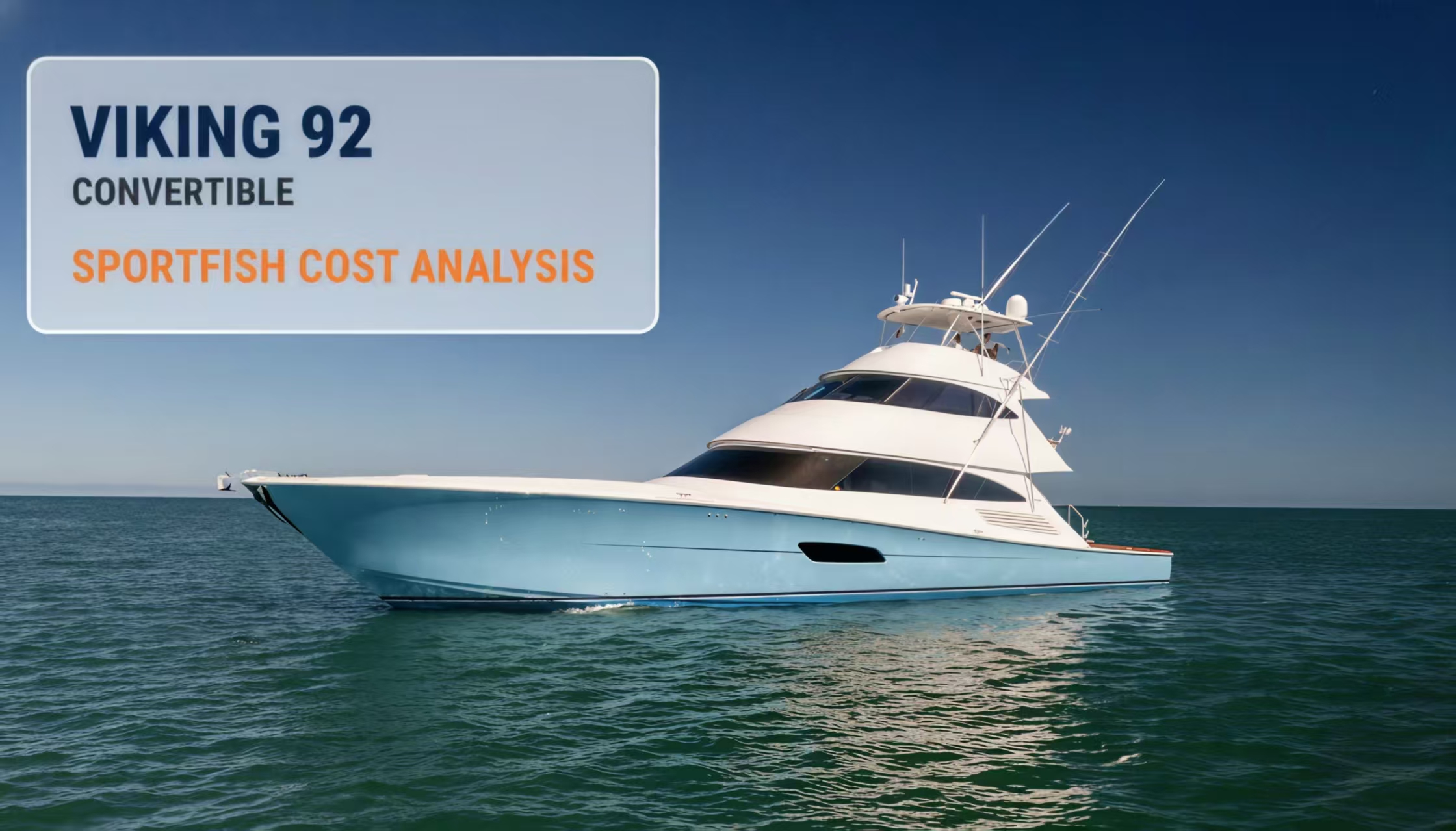
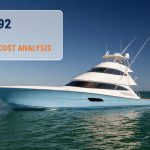
I noticed something interesting last month while comparing several Viking 92 Convertible listings across different regions. Two nearly identical 2019 models—both with low engine hours, both meticulously maintained—showed a price difference of nearly $800,000. One was positioned in South Florida, the other in the Mediterranean. That gap wasn’t random. It reflected regional demand patterns, optional equipment choices, and the tournament-ready upgrades that serious sportfish buyers understand immediately.
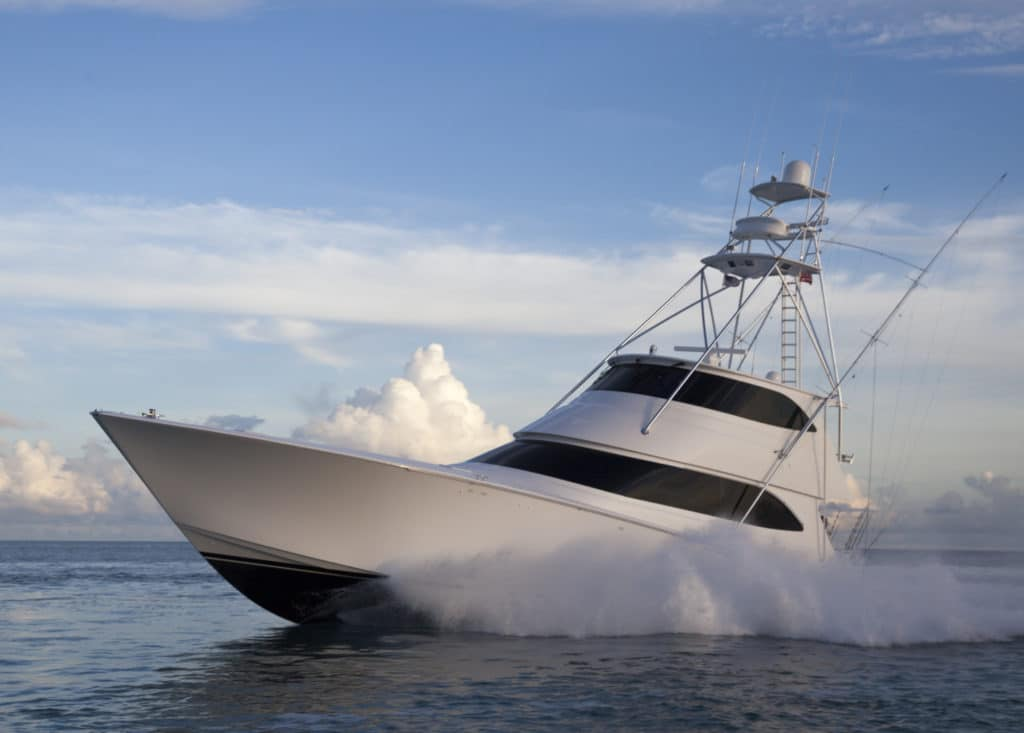
The Viking 92 represents decades of refinement in sportfishing yacht design, sitting at the pinnacle of the Viking Yachts fleet. This is a flagship model built for those who want both tournament capability and long-range cruising comfort. Understanding its pricing requires looking beyond the base cost and examining the full spectrum of what transforms a beautiful yacht into a competitive fishing machine.
Viking 92 Convertible Price in 2025: New vs Used Market
A new Viking 92 Convertible typically ranges between $9.8M and $12.5M USD, depending on specification level and customization depth. That baseline figure reflects Viking’s semi-custom approach, where each yacht receives individualized attention during the build process.
The used market shows more complexity. I’ve tracked recent transactions across several platforms, and the pattern is clear: well-maintained examples from 2018–2020 typically sit around $7.2M to $8.9M, while newer 2021–2023 models range from $8.5M to $10.8M. These aren’t arbitrary numbers—they reflect specific value drivers.
Year-to-year depreciation runs about 8–12% annually for the first three years, then stabilizes to around 5–7% per year after that initial period. This is gentler than many yacht categories, largely because Viking’s reputation for durability and tournament success keeps demand strong.
Engine hours matter significantly at this size. A 2019 model with under 500 hours commands a premium over an identical yacht with 1,200 hours. I’ve seen this difference amount to $400K–$600K in actual transaction prices. Buyers understand that MAN marine engines are built for reliability and longevity, but lower hours still signal less wear on all systems.
Regional pricing follows predictable patterns. South Florida, particularly Fort Lauderdale and Palm Beach, shows the highest concentration of Viking 92 inventory and tends to price competitively because of broker volume. Mediterranean-based yachts often carry a 10–15% premium, reflecting import duties, VAT considerations, and lower supply in European waters.
Cost of a Tournament-Ready Viking 92
Here’s where the conversation shifts from beautiful yacht to serious fishing machine. A base Viking 92 arrives turnkey with impressive standard equipment, but tournament-level fishing demands specific upgrades.
Tower, Tuna Tubes & Tournament Gear Packages
The iconic Viking tower isn’t just aesthetics—it’s command central for tournament fishing. A full custom tower package with extended platform, observation seating, and integrated electronics runs $180,000 to $280,000 depending on height and complexity.
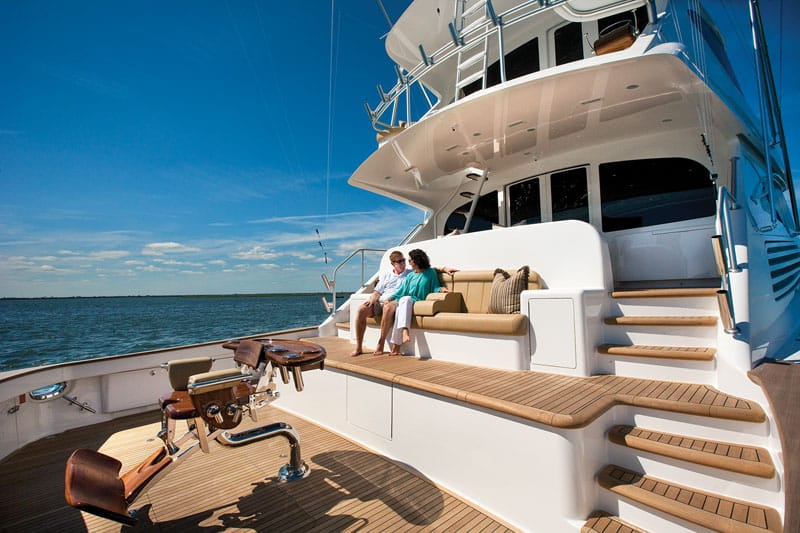
Tuna tubes transform the cockpit into a true fighting arena. Professional-grade tube installations with hydraulic gates and flush-mount hardware typically add $45,000 to $75,000 to the build cost. I’ve walked through several Viking 92 cockpits, and the difference between standard and tournament-ready layouts is immediately apparent in the flow, the tackle storage integration, and the fighting chair positioning.
Release marine equipment—outriggers, rocket launchers, rod holders, livewells—adds another $60,000 to $95,000 for top-tier systems. These aren’t optional for serious tournament use. They’re the difference between a capable sportfisher and a winning machine.
Electronics, Sonar & Fishing Tech Upgrades
Modern tournament fishing runs on technology. A full electronics suite for the Viking 92 includes multiple helm stations, radar systems, sonar arrays, chart plotters, and communication gear. Budget $150,000 to $250,000 for a comprehensive package that covers both bridge and tower stations.
Advanced sonar systems—think Furuno DFF-3D or Garmin Panoptix arrays—run $40,000 to $80,000 installed. These systems provide real-time fish tracking and bottom mapping that serious anglers consider non-negotiable.
Stabilizer systems deserve special mention. Seakeeper or TRAC systems dramatically improve comfort during long runs and while drifting. Installation costs typically range from $120,000 to $180,000, but the improved fishability and guest comfort justify the investment for most owners.
When you total everything—tower, tubes, release gear, electronics, stabilizers—a fully tournament-ready Viking 92 can carry $600,000 to $900,000 in additional equipment beyond the base yacht price. This is why comparing “Viking 92 prices” requires understanding specification levels. A $9.8M base yacht and an $11.5M tournament-ready example are fundamentally different fishing platforms.
Annual Operating Expenses for a 92-Foot Sportfisher
Purchase price is one-time. These costs repeat every year and determine whether ownership fits your lifestyle and budget.
Docking and Marina Fees by Region
South Florida marinas catering to sportfish yachts charge $55,000 to $95,000 annually for prime slips with tournament access. Annual contracts typically save 15–20% compared to transient rates. I’ve seen owners negotiate better rates by committing to 12-month terms at facilities like Lauderdale Marine Center.
Caribbean winter season docking runs $40,000 to $70,000 for six-month contracts. Mediterranean summer rates in marinas like Port Adriano or Puerto Portals range from $65,000 to $110,000 depending on specific location and season timing.
Fuel Consumption and Tournament Use
The Viking 92 typically runs twin CAT C32 engines (1,925 HP each) or MAN V12 engines (1,900 HP each). Fuel consumption at tournament speeds tells the real story.
Cruising at 28–30 knots: 180–220 gallons per hour combined Full throttle (38–40 knots): 280–340 gallons per hour Tournament day fuel burn: 1,200–1,800 gallons for a typical offshore run
If you’re running 40 tournament days per year plus recreational cruising, annual fuel costs typically range from $120,000 to $180,000 depending on regional fuel pricing and usage patterns. Diesel costs vary significantly: South Florida averages $4.20–$5.00 per gallon, while Caribbean and Mediterranean pricing runs $4.80–$6.50 per gallon.
Crew, Captain, and Tournament Staff
Most Viking 92 owners maintain a full-time captain for a yacht of this size and complexity. Annual captain salary runs $85,000 to $120,000 plus benefits, accommodation, and travel expenses. Tournament season often requires adding a professional mate, which adds $45,000 to $65,000 for seasonal employment.
For owners running serious tournament circuits, having professional crew isn’t optional—it’s the difference between competitive performance and amateur results.
Insurance, Registration, and Maintenance
Hull insurance for a Viking 92 runs 1.0–1.5% of insured value annually. For a $10M yacht, that’s $100,000 to $150,000 per year. Rates vary significantly based on navigation area, storage method, claims history, and whether you’re running tournaments.
US Coast Guard documentation and state registration costs $3,000 to $6,000 annually. Foreign flag registration—common for international cruising—adds complexity and expense.
Annual maintenance for a 92-foot sportfisher typically runs $80,000 to $140,000 for routine service: engine maintenance following manufacturer schedules, generator service, bottom paint and antifouling, systems checks, detailing, and tournament prep work. Major service every 3–5 years—engine overhauls, paint restoration, teak replacement, major equipment replacement—can reach $180,000 to $280,000.
Industry best practice: budget 2.5–3.5% of yacht value annually as a safety buffer for unexpected repairs like thruster failures, air conditioning replacement, or electronics issues.
Total Annual Operating Cost
Conservative use (40–60 days, light tournament schedule): $380,000 to $520,000 per year Active tournament schedule (80–100 days, multiple events): $550,000 to $750,000 per year
These aren’t intimidating numbers for the Viking 92’s target buyer, but they need to be factored into ownership planning from day one.
Viking 92 Resale Value & Brand Loyalty Factors
Viking Yachts maintains some of the strongest resale values in the sportfish category, and I’ve watched this play out across hundreds of transactions. The reasons are specific and measurable.
Brand Reputation and Tournament Heritage
Viking’s tournament success creates tangible value. Boats with documented tournament history—wins, placements, professional maintenance—often command premiums of $200,000 to $400,000 over identical yachts without that pedigree. The sportfish community recognizes Viking quality, and that recognition translates directly into resale demand.
I’ve noticed something else: Viking owners tend to stay within the brand. When a 92 owner upgrades, they typically move to a larger Viking rather than switching manufacturers. This loyalty creates consistent demand for used Viking 92s because buyers trust the brand’s engineering and support network.
Depreciation Patterns Compared to Competitors
Viking 92 depreciation runs gentler than most competitors in the 90-foot sportfish category. Where competing brands might depreciate 15–20% in year one, Viking typically sees 8–12% first-year depreciation. This pattern continues throughout the ownership curve.
Five-year depreciation comparison (approximate):
New Viking 92 purchased at $10.5M → five-year value $7.2M–$7.8M (27–31% total depreciation)
Competing 90-foot sportfish purchased at $10.5M → five-year value $6.5M–$7.2M (31–38% total depreciation)
That 5–7% difference amounts to $350,000–$550,000 in retained value—real money that impacts total cost of ownership significantly.
Best Time to Buy and Sell
I’ve tracked seasonal patterns carefully. Optimal buying window runs November through February, when off-season inventory increases and sellers face approaching maintenance cycles. January listings historically average 6–10% lower than summer peak prices.
The best selling window runs March through June, when tournament season approaches and buyer urgency peaks. Boats listed in April with professional preparation typically sell 8–12% faster and command 5–8% price premiums compared to fall listings.
Tournament season timing matters more for sportfish yachts than for cruising yachts. Buyers planning tournament schedules pay premiums to secure boats before season starts.
Request Pricing & Available Viking 92 Listings
The Viking 92 market moves quickly because inventory stays relatively limited and buyer demand remains strong. If you’re seriously considering a Viking 92, understanding current availability across different specification levels helps narrow your search efficiently.
Current market inventory typically includes 8–15 Viking 92 yachts globally at any given time. South Florida maintains the highest concentration, with 4–6 yachts usually available. Mediterranean markets typically show 2–3 listings, while Caribbean and Pacific regions see occasional availability.
For current Viking 92 specifications and build options, the Viking Yachts official specifications page provides detailed information on standard equipment and available customization packages. For broader sportfish market context, Boat International regularly publishes sportfish market analysis and yacht reviews.
When evaluating specific listings, focus on these critical factors: documented service history from authorized Viking service centers, actual engine hours verified through maintenance logs, tournament history and any documented wins or placements, specification level including tower, electronics, and fishing equipment, and recent survey results showing hull condition and systems status.
Marine documentation requirements vary by registration location. For US-flagged yachts, the USCG National Vessel Documentation Center handles registration and certification processes.
Final Thoughts
The Viking 92 Convertible represents serious money—$9.8M to $12.5M new, $7.2M to $10.8M for quality used examples—plus $380,000 to $750,000 annually depending on usage patterns. But for buyers seeking tournament capability, long-range cruising comfort, and strong resale value, it delivers on every front.
The smartest buyers I’ve worked with follow a consistent approach: they calculate total five-year ownership costs including depreciation, they time purchases during optimal buying windows (November–February), they prioritize 2018–2021 models with under 600 engine hours and complete service records, they verify tournament equipment specifications match their actual fishing plans, and they budget conservatively for annual operating expenses before committing.
Viking’s brand strength, tournament heritage, and exceptional build quality create resale advantages that offset higher initial costs. When you factor in gentler depreciation curves and strong buyer demand, the total cost of ownership often proves more favorable than competing brands with lower purchase prices but steeper value drops.
If the Viking 92 fits your fishing ambitions and ownership budget, focus on specification level first, purchase price second. A properly equipped tournament yacht delivers value that a base model simply cannot match, regardless of initial savings.
If you’re in the mood for more, here are a few posts you might enjoy next.