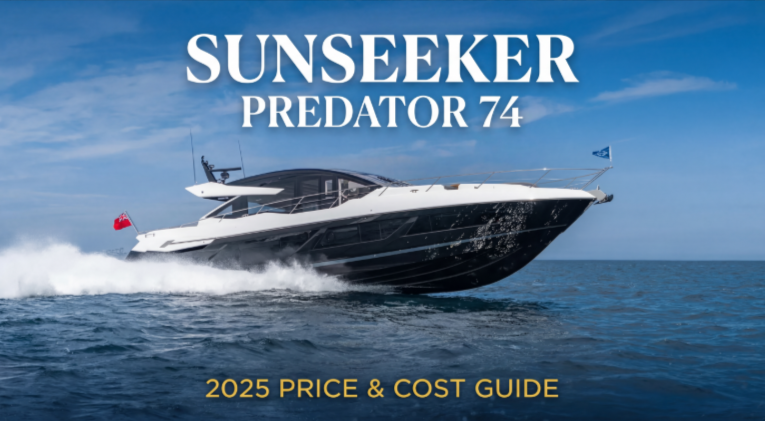
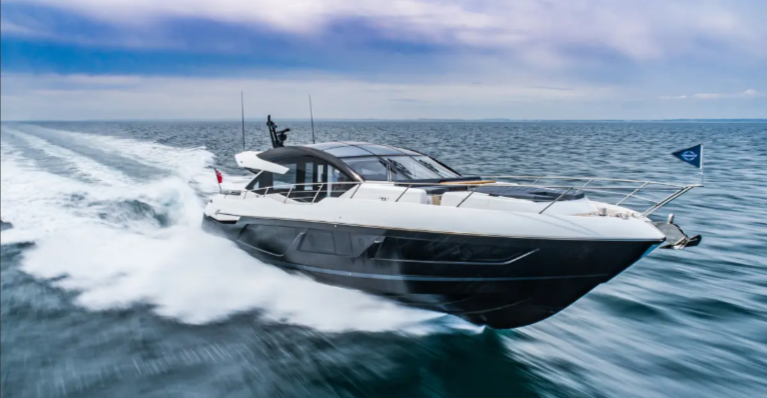
When Sunseeker launched the second-generation Predator 74 in 2018, they lengthened the hull by 56 centimeters, redesigned the stabilizer system, and introduced pillarless glass windows that changed how light moves through the interior. That engineering shift explains why a 2019 Gen 2 model trades around €2.2 million while a 2012 Gen 1 sits closer to €1.1 million.
Here’s what I notice buyers overlook: the Gen 2’s hydraulic stabilizers deploy to full capacity in under ten seconds versus 30-40 seconds for Gen 1 models. During sea trials I’ve reviewed, that difference becomes immediately obvious when anchoring in moderate swells—the yacht achieves stable footing remarkably faster. That’s not styling—it’s engineering that changes the onboard experience.
When I stepped aboard a 2020 model last year, the first thing that struck me wasn’t the electronics suite but how the continuous glass panels altered the salon’s atmosphere. Natural light wraps the entire space without vertical interruptions. Sunseeker redesigned the structural framework to eliminate those traditional mullions while maintaining hull rigidity—a genuine engineering solution rather than cosmetic refinement.
The other reality buyers need to face early: purchase price represents 60-70% of your first-year expense. Annual costs—dockage, fuel at performance speeds, insurance, systems maintenance—add €150,000 to €240,000 depending on usage patterns and home port location.
Predator 74 Price Snapshot (2025)
The Sunseeker Predator 74 market spans €850K to €2.5M depending primarily on generation. Two distinct models exist, each with different engineering characteristics.
New vs Brokerage Listings
Second Generation (2018-2023): €1.7M – €2.5M
The Gen 2 measures 22.82 meters and introduced three key engineering improvements. The hydraulic stabilizers deploy in ten seconds versus 30-40 seconds for Gen 1—during sea trials, this difference is immediately noticeable when transitioning from passage-making to anchored positions. The fins reach full extension and stabilizing capacity while Gen 1 systems are still deploying.
The pillarless window design creates continuous glass panels without vertical mullions. Sunseeker redesigned the structural supports to maintain hull rigidity while eliminating visual interruptions. Walking through the salon, the difference is striking—sightlines extend unbroken from port to starboard, and natural light distribution changes completely.
The carbon fiber sliding sunroof transforms the main deck into connected indoor-outdoor space with mosquito netting. What impressed me during inspections is the precision of the seal mechanism—the carbon fiber panels close with virtually no air gap, maintaining climate control when needed. When evaluating 2019-2022 models, examine the carbon fiber edges around the sunroof for UV degradation. Replacement sections cost €15K-€20K if damaged.
Models with MAN V12-1900 engines (1,900hp, 38-40 knots maximum) command €100K-€150K premiums over V12-1550 versions (1,550hp, 34 knots). The performance difference matters for buyers prioritizing top-end speed capabilities. Browse Predator 74 listings to see current equipment positioning.
First Generation (2008-2014): €850K – €1.4M
The Gen 1 measures 22.26 meters with traditional window framing and older stabilizer technology. These yachts achieved 45-knot top speeds with the MAN V12-1800 configuration—notably faster than Gen 2’s 40-knot ceiling, reflecting a different performance philosophy prioritizing top-end speed.
The interior joinery used traditional high-gloss walnut with chrome detailing rather than the matte lacquers and carbon fiber of Gen 2 builds. The aesthetic feels distinctly different—more classic yacht character versus contemporary minimalism. When I inspect these models, I look carefully at how the gloss finish has aged. Well-cared-for walnut maintains its luster; neglected surfaces show cloudiness that signals moisture intrusion or inadequate climate control.
Engine configuration affects pricing more than calendar year within this generation. A 2012 model with the 1,800hp configuration and comprehensive service documentation typically trades within €50K-€80K of a 2014 model showing higher hours but deferred engine work.
Critical inspection points: examine teak deck seams closely (re-caulking runs €25K-€40K), check generator run hours separately from main engines, and review air conditioning compressor service records since those systems typically need €15K-€25K refurbishment at 12-15 years. The teak quality on Gen 1 models used wider planks than contemporary builds—a detail that speaks to Sunseeker’s material choices during that era.
Annual Cost of Ownership
Purchase price is one-time. These costs repeat annually.
Dockage / Fuel / Maintenance
Marina Fees: Mediterranean prime locations (French Riviera, Monaco) run €70K-€100K annually, secondary marinas €45K-€60K. Southeast Asia costs €30K-€45K, North America €50K-€80K. Annual contracts save 15-20% versus transient rates.
Fuel Consumption (Real-World Data from Sea Trials):
The 4,800-liter fuel capacity provides 320-350nm at 21 knots. Running 80-100 days yearly at moderate speeds (24-28 knots) for 5-6 hours daily consumes 120,000-150,000 liters annually.
At European pricing (€1.30-€1.60/liter):
Conservative use: €40K-€55K
Performance use: €75K-€100K
Insurance & Maintenance:
Hull insurance: 1.2-1.8% of value (€2.0M yacht = €24K-€36K annually)
Registration: €3K-€9K depending on flag
Annual systems maintenance: €35K-€50K (engines, generators, bottom paint, hydraulics, stabilizers, air conditioning)
Major service every 3-5 years: €70K-€120K (engine overhauls, teak work, gel coat, equipment refurbishment)
Budget 2-3% of yacht value annually for unexpected repairs. Resources at BoatUS provide additional guidance.
Price Drivers
Three factors determine Predator 74 values: generation, engine configuration, and layout.
Horizontal Comparison: Predator 74 vs Competitors
Against the Princess V78, the Predator 74 offers sharper performance characteristics—38-40 knots versus Princess’s 35-knot ceiling—but Princess provides slightly more interior volume due to a wider beam (5.52m vs 5.38m). The Azimut 72 Fly matches the Predator’s 22.6-meter length but prioritizes flybridge space over salon height, creating a different spatial hierarchy. Pricing sits similarly—€1.7M-€2.5M across all three platforms for 2018-2022 models.
What sets the Predator 74 apart is the stabilizer deployment speed and pillarless glass design. These aren’t luxury features—they’re engineering decisions that change how the yacht functions. When comparing options in this class, focus on the specific engineering characteristics rather than brand reputation alone.
Model Year / Upgrades / Location
Generational Differences
The 2018 redesign created the most significant price separation. Gen 2 commands €600K-€1.1M premiums from: hydraulic stabilizers deploying in 10 seconds (versus 30-40 seconds for Gen 1), pillarless windows requiring redesigned structural supports, and carbon fiber sunroof with electric operation.
Engine hours matter within each generation, but generation differences outweigh hour counts. A 2019 Gen 2 with 600 hours typically equals or exceeds a 2014 Gen 1 with 200 hours in market value.
Engine Configurations
MAN V12-1550: 34 knots max, 336nm range at 19 knots
MAN V12-1900: 38-40 knots max, €100K-€150K premium
The XPS package (2021-2024) added carbon fiber interiors, shadow grey gel coat, and upgraded lighting—typically €80K-€120K premiums.
Regional Pricing
Mediterranean listings run €150K-€250K higher than Southeast Asian inventory due to European buyer demand and established infrastructure. Transport between regions costs €45K-€65K.
Resale Outlook
Gen 2 depreciation (2018-2023):
Years 1-3: 14-18% annually
Years 4-7: 8-12% annually
Year 8+: 5-7% annually
Gen 1 depreciation (2008-2014):
Current rate: 3-5% annually, stabilized around €850K-€900K floor
YachtBuyer market data shows Gen 2 models average 610 days on market versus 2,338 days for Gen 1.
Five-Year Ownership Analysis
2020 Gen 2 Purchase (€2.2M):
2030 value: €1.5M-€1.65M
Depreciation: €550K-€700K
Operating costs: €750K-€1.2M
Total cost: €1.3M-€1.9M
2012 Gen 1 Purchase (€1.1M):
2030 value: €850K-€950K
Depreciation: €150K-€250K
Operating costs: €750K-€1.2M
Total cost: €900K-€1.45M
Timing: Buy November-February (8-12% below June pricing). Sell March-May (spring season premium). Consult YBAA for performance yacht valuations.
Get a Personalized Offer
Budget €850K-€2.5M for purchase plus €150K-€240K annually. The smart approach:
Calculate five-year total cost including depreciation. Factor realistic usage—100 days versus 50 days creates different fuel and crew structures. Time purchases during off-season windows. Choose Gen 2 (2019-2021) for contemporary systems or Gen 1 (2011-2013) for value retention.
The engineering evolution between generations represents genuine advancement. The hydraulic stabilizers, structural glass, and refined systems on Gen 2 justify premiums for buyers prioritizing contemporary performance.
Explore Sunseeker inventory through established brokerages. The right Predator 74 exists—finding it requires understanding the engineering differences that drive market values.