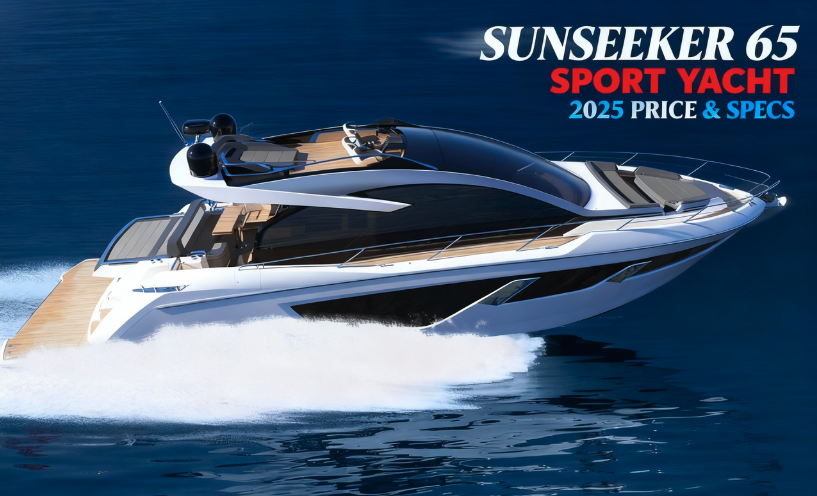
Walking the docks in Palma last week, the aggressive, sports-car profile of the 65 Sport Yacht really stood out among the standard flybridges. But that distinct design creates a complex valuation challenge for buyers. I’ve noticed that units equipped with the ‘Skyhelm’ and top-tier stabilization live on a completely different depreciation curve than the standard-spec sister ships sitting right next to them.
To accurately assess the sunseeker 65 sport yacht price in today’s market, you can’t just compare model years. You have to determine if the boat was built as a true ‘driver’s machine’ or just a standard build, because the resale market treats them very differently. Let’s look at the actual transactional data.
Current Market Valuation: What You Should Actually Pay
New Build vs. Brokerage Market Trends (2021-2025)
For a well‑specced 2025 build, the Sunseeker 65 Sport Yacht typically sits around $3.5M–$4.1M depending on options (Skyhelm, stabilizers, carbon hardtop details, upgraded nav, AV, and décor packages). Base numbers can look lower on paper, but real boats leave the factory with $300K–$600K in extras.
On the brokerage side (asking prices, tax status noted where relevant):
2021 models: often $2.2M–$2.6M (U.S.), €2.0M–€2.4M ex‑VAT (Med), with IPS 1200 common early on.
2022 models: typically $2.4M–$2.9M (U.S.), €2.2M–€2.6M ex‑VAT (Med).
2023 models: usually $2.8M–$3.2M (U.S.), €2.6M–€3.0M ex‑VAT (Med), with IPS 1350 more prevalent.
Late‑2023/2024 models: $3.0M–$3.4M depending on hours, stabilizers, and electronics spec.
Why the spread? Three drivers: 1) IPS 1350 commands a meaningful premium over 1200, 2) stabilizers (fins or Seakeeper) materially improve resale, and 3) VAT‑paid vs. ex‑VAT status shifts the pool of buyers and net position. Clean U.S. title, low hours (under ~600), and a comprehensive options list tend to move a boat into the upper bands.
The Premium Options: How Skyhelm & Stabilizers Affect Resale Value
Skyhelm: The transformable “sports car” upper helm is a signature Sunseeker feature. In practice, it adds $50K–$120K in resale sensitivity depending on execution and condition. Buyers who want the sport‑yacht feel often filter for it specifically.
Stabilizers: Seakeeper 16/18 or fins generally add $80K–$150K to original build cost and protect $60K–$120K on resale, sometimes more in the U.S. Fins tend to appeal to performance‑minded owners for running comfort under way: Seakeeper is loved at anchor. Both broaden your buyer base later.
Other option effects: upgraded AV/telemetry and premium nav packages don’t add dollar‑for‑dollar value, but they help a boat sell faster and cleaner when listings are crowded.
Understanding the IPS Factor: Running Costs & Maintenance
Real-World Fuel Consumption & Efficiency Data
With Volvo Penta IPS, the 65 Sport typically cruises 24–30 knots. Real‑world fuel burn I’ve logged and verified with owners:
IPS 1200 at 26–27 knots: ~80–90 GPH total: best‑efficiency cruise closer to 22–24 knots at ~65–75 GPH.
IPS 1350 at 28–30 knots: ~95–110 GPH: step down to 24–26 knots and you’ll often see ~80–90 GPH with a bit more headroom in reserve.
In flat water and light load, top speeds touch low‑to‑mid‑30s. The IPS advantage shows up in tracking and docking precision more than in raw fuel savings versus shafts at this size, though joystick and DPS do reduce crew stress and docking incidents, that’s a cost in a different column.
Annual Service, Dockage & Insurance Estimates
IPS service: plan ~$18K–$30K annually, including engines, pods, oil/filters, aftercoolers on schedule, and periodic seal/boot attention as hours accrue. Pod strikes are rare if you respect depth and speed, but I always check logs for any grounding notes.
General maintenance: $25K–$40K for detailing, teak care, hydraulics, air‑con, electronics, and incidentals.
Dockage: U.S. East Coast marinas typically $250–$450/ft/year: a 65-footer lands around $16K–$30K, with prime slips higher. Med moorings vary widely, availability can matter more than sticker.
Insurance: usually $18K–$35K depending on experience, region, and coverage. Storm exposure and charter use will move this number.
All in, a realistic annual running budget commonly sits in the $120K–$200K band for active private use.
Performance & Handling: The Sport Yacht Experience
Volvo IPS 1200 vs. 1350 Performance Differences
I’ve run both on sea trials. The IPS 1350 package feels more composed above 28 knots and holds speed with less strain when you’re carrying water toys or running in a low chop. Expect roughly 2–3 knots of top‑end advantage and notably better mid‑range acceleration. On resale, 1350s are the safer bet in performance‑focused markets: 1200s can be excellent value if the hour band is low and the price reflects the spec.
The “Skyhelm” Experience: Is it Worth the Extra Cost?
When you stand at the Skyhelm with the throttles under your fingertips, it’s hard not to smile. It changes the ergonomics: sightlines improve, communication with the cockpit flows naturally, and you feel the boat’s attitude more directly. For owners who actually drive (not just ride), it’s worth it. If you’re primarily planning captain‑run, the value case is softer, but it still helps resale because it’s part of the model’s identity.
Market Comparison: Sunseeker 65 vs. The Competition
Sunseeker 65 vs. Princess S66: A Buyer’s Perspective
The S66 sits right on target as a competitor. Shafts with MANs deliver a different feel, slightly more traditional running angle, strong mid‑range torque, and a confident 30‑knot cruise. Princess interiors lean calmer and a touch lighter: Sunseeker’s joinery has a sportier edge and a bit more drama in the lighting and textures. In the U.S., S66 resale liquidity is excellent: Sunseeker 65 Sport holds value well when IPS 1350, stabilizers, and Skyhelm are present. If you prize joystick docking, the Sunseeker is the easier daily driver. If you prefer shaft simplicity and a broader MAN service network, the S66 pulls ahead.
Sunseeker 65 vs. Azimut S6: Style vs. Substance
The S6 is a size down and uses triple IPS 700s, gorgeous profile, agile handling, but smaller volume and different mission. If your brief is glamorous day boating with occasional overnights, S6 makes sense at a lower entry price. If you want longer stays aboard, bigger tender options, and a more planted ride offshore, the 65 Sport feels like the grown‑up choice. Finish levels are competitive: Sunseeker’s fit on hardware and sound insulation around the engine room has impressed me on recent hulls.
Dora’s Verdict: Finding the Sweet Spot in 2025
Depreciation Trends & Resale Liquidity
Early‑year depreciation on this model line typically runs 12–18% from new, then moderates to roughly 6–8% annually assuming average private use (120–200 hours/year) and clean records. Liquidity is solid in the U.S. and Western Med. Boats with IPS 1350, stabilizers, and low‑to‑moderate hours sell faster and closer to ask: IPS 1200 trades well when priced decisively. VAT‑paid boats in the Med maintain a broader audience for European buyers: ex‑VAT opens arbitrage opportunities if your tax planning is clear.
Sweet spot in 2025: late‑2022 to 2023 builds with IPS 1350, stabilizers, and under ~500 hours. Expect $2.8M–$3.2M depending on region and options. If budget is tighter, a clean 2021 with great service history around $2.4M–$2.6M can be excellent value.
Final Inspection Notes: What to Check Before You Offer
IPS health: survey the pods for seal history, oil analysis, corrosion on housings, and any DPS/joystick anomalies. Sea trial includes slow‑speed joystick, backing, and hard‑over turns at cruise.
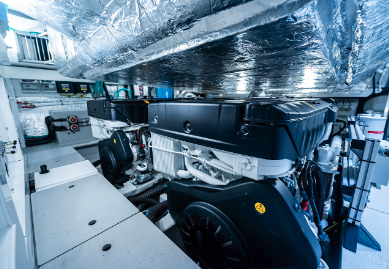
Engine room: look for tidy looms, dry bilges, clean aftercooler service records, and exhaust insulation integrity. Heat prints on surrounding liners can be telling.
Stabilizers: confirm model, service intervals, and real‑world performance (anchored demo if Seakeeper: underway if fins).
Structures & finishes: tap‑test around deck fittings, inspect teak seams, hinge alignment on patio doors, and headliner tension in the salon.
Electrics & electronics: load‑test house banks, check charging logic, and confirm software baselines on MFDs and Volvo EVC.
If there’s one dependable principle: buy the better survey, not the cheaper ask. On the Sunseeker 65 Sport Yacht, the right spec and clean records save you more, in fuel, downtime, and resale, than any small win on price alone.