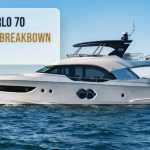
I’ve spent the last few weeks reviewing Sanlorenzo SL96A listings across the Mediterranean, U.S., and Asia-Pacific markets, and something unexpected caught my attention: the gap between new-build pricing and well-maintained used models felt narrower than I’d anticipated.
That compression tells me something meaningful about how the market values this particular yacht.
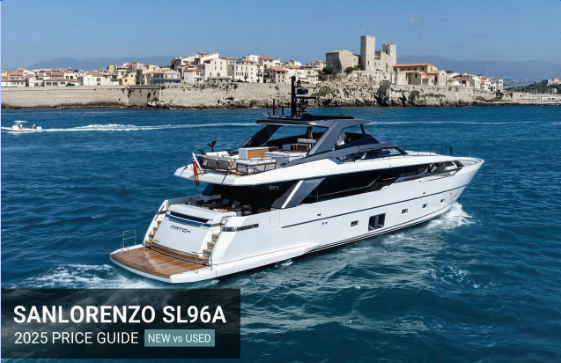
The SL96A occupies a thoughtful space within Sanlorenzo’s asymmetric collection. It’s not chasing size or spectacle. Instead, it balances livability, craftsmanship, and that signature Italian refinement in a way that resonates with buyers who understand what actually matters on a yacht. Because of that intention, its pricing reflects what the market truly prioritizes: layout intelligence, structural integrity, and how gracefully a yacht matures over time.
New Build vs. Used Market: Current Pricing Overview
A new Sanlorenzo SL96A typically starts around $8.5 million to $10 million, depending on your choice of interior finishes, optional systems, and custom requests.
According to Sanlorenzo’s official production philosophy, deep personalization is core to their approach—everything from cabinetry materials to tech integration—so final pricing can shift meaningfully based on how you configure the yacht. I’ve seen builds climb closer to $11 million when buyers add upgraded stabilizers, extended galley layouts, and custom audio-visual systems.
On the used side, the picture softens but stays relatively stable.
A 2021–2022 model in strong condition, with moderate hours and thoughtful upgrades, usually ranges between $7 million and $8.5 million. Older examples—say, a well-maintained 2018 or 2019—often sit closer to $6 million to $7.2 million, depending on systems, hours, and how the yacht was kept.
What stands out is how gently this model depreciates compared to other builders in the 90–100-foot range. Part of that comes from Sanlorenzo’s reputation for material quality and long-term structural integrity. But it’s also about the layout itself—the asymmetric design isn’t a trend. It’s a thoughtful response to how people actually use space on a yacht. That kind of design logic holds value.
If you’re comparing new versus used, the decision often comes down to whether you want full customization or whether a lightly used model—already broken in, already proven—feels like the smarter entry point.
Ownership extends beyond the purchase price, and understanding the rhythm of annual costs helps shape realistic expectations.
For a yacht of this size, you’ll typically run a crew of three to four: a captain, engineer, and one or two stewards depending on your usage pattern. Annual crew costs generally sit around $250,000 to $350,000, including salaries, benefits, and rotation coverage.
Maintenance follows a similar logic. Between routine service, systems upkeep, and periodic refits, you’re looking at roughly $80,000 to $120,000 per year. That number assumes normal use—if you’re spending significant time underway or in challenging conditions, it may trend higher.
Docking varies widely by region.
In the Mediterranean, expect $60,000 to $100,000 for seasonal berthing in desirable locations. I reviewed current marina tariffs in Palma’s port authority system last month, and prime slips remain competitive. U.S. and Caribbean costs tend to be somewhat lower, though premium berths in places like Miami or Newport still command attention.
Insurance usually runs about 1% to 1.5% of the yacht’s current market value annually, so for a $7 million yacht, that’s roughly $70,000 to $105,000.
These aren’t small numbers, but they’re predictable. And for many buyers, that predictability—knowing what ownership actually looks like—matters more than the sticker price itself.
What Drives SL96A Pricing? Year, Condition & Optional Systems
When I compare SL96A listings side by side, three factors consistently explain price differences: year, condition, and optional systems.
Year impacts price in two ways. First, there’s straightforward depreciation—newer yachts cost more. But second, and often more important, is what generation of systems the yacht carries. A 2020 model with updated navigation electronics and stabilizer refinements often holds stronger value than a 2018 model, even if both show similar hours.
Condition goes beyond cosmetics. I’m talking about engine hours, maintenance records, and how systems were treated over time. A yacht with 400 hours and complete service documentation will consistently command a premium over one with 800 hours and gaps in its history. It’s not about judgment—it’s about transparency and buyer confidence.
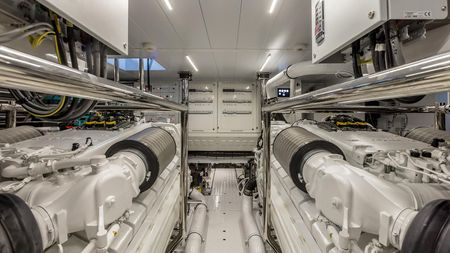
The SL96A typically runs MAN marine diesel engines in the V8 or V12 configuration, and understanding their maintenance cycles matters. MAN’s technical specifications show these engines are designed for extended intervals between major service, but that advantage only holds when owners follow the manufacturer’s protocols.
Options reshape pricing more than many expect.
Upgraded stabilizers, extended galley configurations, custom audio-visual systems, and enhanced tender garages can add $200,000 to $500,000 to a yacht’s original build cost—and much of that value transfers to resale, especially if the systems are well-integrated and recently serviced.
Regional demand also plays a quiet role. Mediterranean buyers often prioritize specific finish materials and shade systems, while U.S. buyers may focus more on range and technical redundancy. Those preferences show up in pricing, particularly during seasonal shifts.
Resale Performance & Depreciation: What the Data Shows
The Sanlorenzo SL96A resale market has shown steady behavior over the past few years, and that steadiness tells you something important: this yacht isn’t subject to wild market swings.
Depreciation in the first three years tends to be 12% to 18% annually, which is gentler than many comparable models. After that initial period, the curve flattens. A five- to seven-year-old SL96A in strong condition often holds 55% to 65% of its original value, assuming reasonable hours and thoughtful upkeep.
Part of this stability comes from the yacht’s design maturity. The asymmetric layout isn’t polarizing—it solves real usability challenges, and buyers recognize that.
Another factor is Sanlorenzo’s build quality and the brand’s growing presence in the U.S. and Asian markets, which broadens the resale pool. According to industry analysis from Boat International, yachts in the 90–100-foot range with strong brand reputations and thoughtful layouts consistently outperform more generic designs in resale strength. The SL96A fits that profile.
Global yacht market reports confirm that the luxury yacht segment has been growing steadily, with the 90–100-foot range showing particularly strong demand among high-net-worth buyers who prioritize craftsmanship and layout intelligence over pure size.
If resale stability matters to you—and it should—focusing on a three- to six-year-old model with complete records and moderate hours offers the best balance between entry cost and long-term value retention.
Technical Considerations: What Sets the SL96A Apart
From a build-quality perspective, the SL96A benefits from Sanlorenzo’s composite construction methods. According to Sanlorenzo’s technical documentation, the hulls use fiberglass while superstructures incorporate carbon fiber composites, which offer lighter weight and greater structural stability—translating directly to better handling and lower fuel consumption.
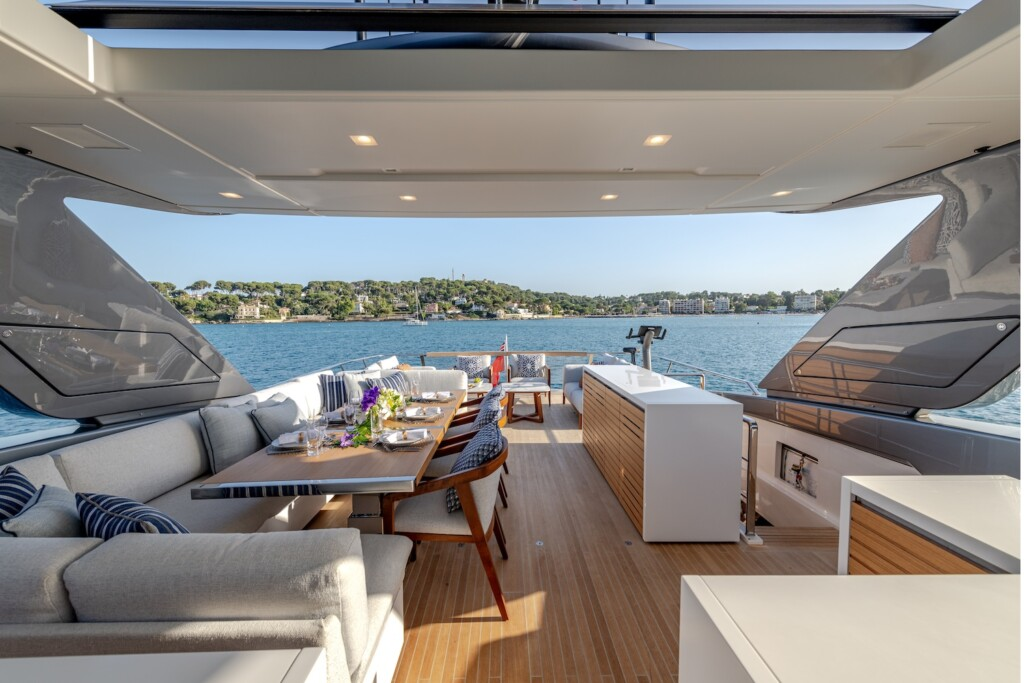
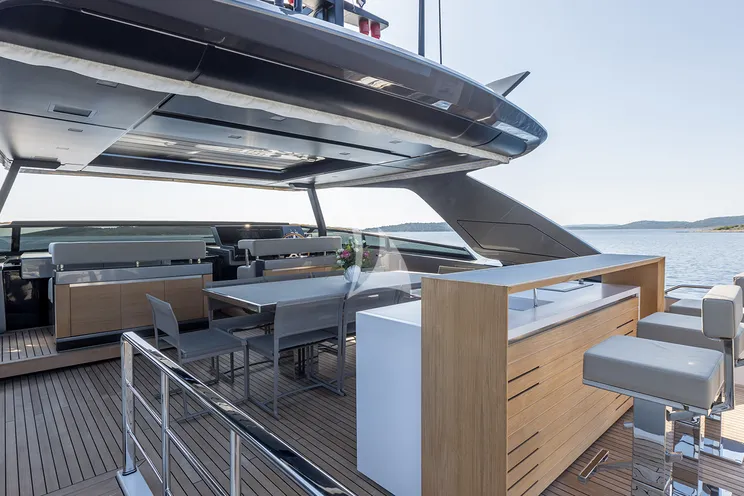
The asymmetric design itself creates approximately 10 square meters of additional usable space compared to traditional layouts in this size range. When I walk through these yachts, the difference is immediately apparent: better flow in the main saloon, more natural light, and a layout that actually matches how people move and gather on board.
Engine options typically center on MAN’s V-series marine diesels, which provide power outputs ranging from 1,000 to 1,400 horsepower depending on configuration. These engines are known for high torque at lower RPMs, which means quieter cruising and better fuel efficiency during typical passages.
The yacht’s systems—from stabilizers to electronics—reflect generational improvements that matter more than many buyers initially realize. A 2020+ model will typically have more refined stabilizer algorithms and integrated navigation systems compared to earlier years, and those differences show up in both comfort and long-term serviceability.
Where to Research Current Inventory
Pricing is always more precise when it’s based on specific yacht examples.
If you’re seriously considering an SL96A, industry market reports from Boat International provide current sales data and trend analysis that can help you understand where the market stands today. Their monthly reporting covers brokerage activity, delivery timelines, and regional pricing variations.
New builds go through Sanlorenzo’s global dealer network, and working directly with a dealer allows you to shape the yacht’s configuration from the start—which matters more on a Sanlorenzo than on many other brands, given their commitment to customization.
For used models, focusing on yachts with complete maintenance documentation, moderate engine hours (ideally under 500 for models 3–5 years old), and clear upgrade histories will give you the strongest foundation for both ownership experience and future resale value.
The clearest path forward often comes from comparing a few real examples side by side—not just on paper, but ideally with in-person inspections that let you evaluate joinery quality, systems integration, and how the yacht has been maintained over time.
Want to dive a bit deeper? These earlier articles might be the perfect next stop.