I was comparing two Princess Y72 listings earlier this week when a familiar pattern surfaced again.
On paper, the boats looked like twins—same year, similar layouts—yet their asking prices sat almost $350K apart. The Palma yacht had VAT-paid flexibility, full stabilizers, and a deeper options package. The U.S. boat carried fewer hours, but its lighter specification told a more modest value story.
It was a quiet reminder that Princess pricing is never arbitrary. It moves with usage, options, and regional context—sometimes subtly, but always with a clear internal logic.
Overview of Princess Yacht Classes in 2025
Princess F Class (Flybridge Series)
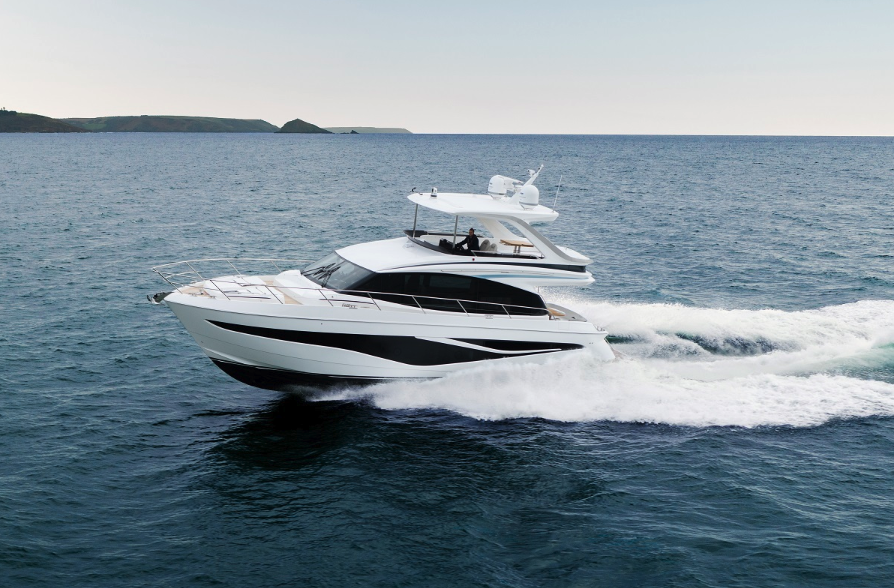
The F Class is the classic Princess flybridge, balanced proportions, efficient running surfaces, and layouts that work for family cruising. In 2025, common sizes run from the Princess F Class official specifications, covering the F45 through the F65. Expect light, open salons, practical crew arrangements on the larger models, and sensible engineering access. Hulls feel predictable and settled: that’s part of the Princess charm, less drama at the helm, more confidence in a sloppy chop.
Princess Y Class (Motor Yacht Series)
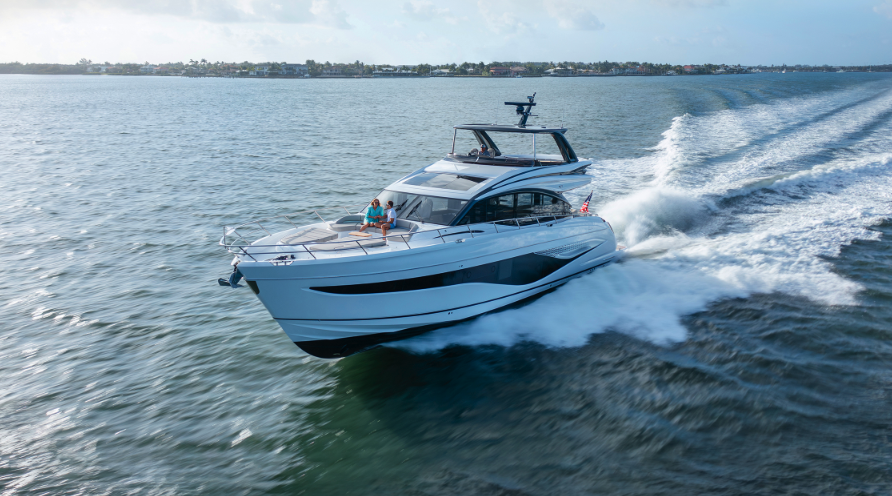
The Y Class is where volume and finish climb. Y72, Y80, and Y95 are the headliners, with a quieter ride, higher spec options, and more bespoke interior flourishes. This is the range that attracts owner-operators stepping up as well as those running with crew full-time. Construction and joinery take a noticeable step up versus the F Class, thicker doors, better acoustic treatment, and a calm, expensive feel underway, a quality noted in the Motor Boat & Yachting Princess Y72 review.
Princess S Class (Sportbridge Series)
S Class models (S62, S72, S80) blend a low-profile look with a compact sportbridge. You get the airflow and visibility of an open style, but retain the upstairs helm and social space. They tend to be lighter on their feet with the sportier engine selections. If you like a sleeker silhouette but still want a proper bridge, S is the sweet spot.
Princess X Class (Super Flybridge Series)
The X80 and Princess X95 technical details define the “Super Flybridge” platforms, featuring huge interior volume, long-range comfort, and a distinctly modern profile. Think main-deck owner’s options, big skylounges, and serious stabilizer packages. X boats are about living space and quiet, efficient passagemaking more than top speed.
2025 Princess Yachts Price Comparison by Class
New build MSRP and well-optioned delivery prices vary by engine packages, stabilization, and regional taxes. For 2025, this is where Princess yachts price levels typically sit, based on current quotes and active listings I track across the Med, U.S., and Asia:
F Class (F45–F65): New delivery generally ranges from about $1.6M–$4.2M. On the brokerage side, late-model F45/F50 (2020–2023, 200–700 hours) often list $1.2M–$1.9M, while F55/F62/F65 in similar years and fuller specs trend $2.0M–$3.4M. Stabilizers on F models can swing asking prices by $80K–$150K, and the difference is noticeable in seakeeping comfort.
Y Class (Y72–Y95): New 2025 inventory typically sits around $5.5M–$16M depending on size and options, with gyro + fins, upgraded AV/IT, and premium interior packages pushing the top end. On the used market, 2021–2023 Y72/Y78 often appear $4.7M–$6.3M: Y85/Y88 predecessors land wider ($4.5M–$7.5M) depending on hours and refits: Y95 is newer and scarce, most listings in the low-to-mid teens.
S Class (S62–S80): New orders commonly run $3.0M–$9.5M. Recent S62s (2020–2023) are frequently $2.5M–$3.6M. The S72 and S80 command stronger premiums when fitted with both Seakeeper and fins: I’m seeing $5.2M–$9.0M depending on spec density and hour band.
X Class (X80–X95): Volume and spec density define these boats. 2025 new deliveries typically price $8.0M–$16.5M. On the secondary market, X80s in the last two years usually ask $7.0M–$9.5M: X95 inventory remains scarce, and EU VAT-paid examples often carry a notable premium versus non-VAT U.S. boats.
Regional context matters:
Mediterranean: EU VAT-paid yachts can sit 10–20% higher than comparable non-VAT examples because they’re immediately usable across EU waters without tax exposure. Mooring scarcity in hotspots (refer to Ports de Balears official tariffs for current rates) keeps prime-condition, fully optioned boats sticky on price.
United States: Broader inventory and easier financing access create tighter spreads. Freight and import on Med-to-U.S. moves typically run into the six figures: factor that before chasing a “deal” overseas.
Asia-Pacific: Fewer like-for-like comps. Premier marinas and service networks are improving, but buyers pay for scarcity and logistics. Clean, low-hour Princess listings tend to hold value well in Singapore and Hong Kong.
What Drives the Premium Value of Princess Yachts?
Three real levers set Princess apart: hull efficiency and ride comfort, finish quality, and spec maturity.
Engineering and ride: Resin-infusion, thoughtful weight distribution, and conservative running angles translate to that composed Princess feel. In quartering seas, the boats track predictably, which reduces fatigue, subtle, but you notice after a long day.
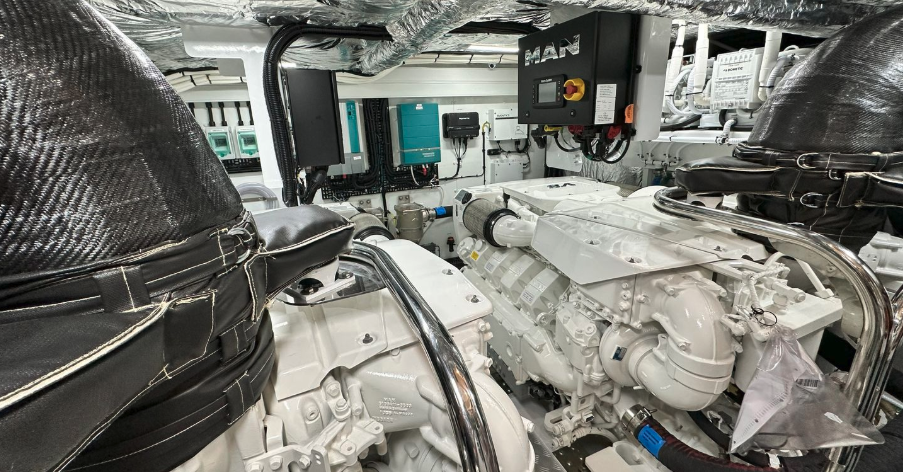
Interior and systems: Quiet glazing, solid doors, tidy looms, and clean machinery spaces. I still pause at the engine-room labeling, clear, logical, service-friendly.
Options that move price: Stabilizers ($80K–$150K+ depending on fins/gyro), upgraded MAN V12 marine engine data or Volvo packages, joystick/shaft assist, and comprehensive electronics. A well-spec’d boat can stand $250K–$600K above a lightly-optioned sibling and hold more of it on resale.
Depreciation behaves sensibly: the first two years often show 10–15%, then 4–6% annually if hours stay moderate and services are current. Hour bands I watch: 0–300 (nearly new), 300–800 (healthy), 800–1,500 (plan deeper inspections and price accordingly), 1,500+ (budget for upcoming majors depending on engine family). VAT status and warranty coverage nudge values at the margins.
Request a Personalized Princess Yacht Price Quote
If you want a real number for a specific F, Y, S, or X model, I suggest a short, focused brief:
Preferred region (EU VAT-paid vs. non-VAT, U.S., or Asia) and berth constraints
Hour band tolerance and service expectations (records, survey window)
Budget window and timeline
With that, I can triangulate current Princess yachts price levels across regions, flag transport or tax implications, and propose two to three comparable listings (plus one off-market lead when applicable). One dependable principle: buy the specification you’ll actually use, especially stabilization and sound attenuation. Those are the options you feel every minute on the water, and they’re the ones buyers quietly pay for later.
If you want to keep cruising, here are a few earlier posts worth sailing back to.