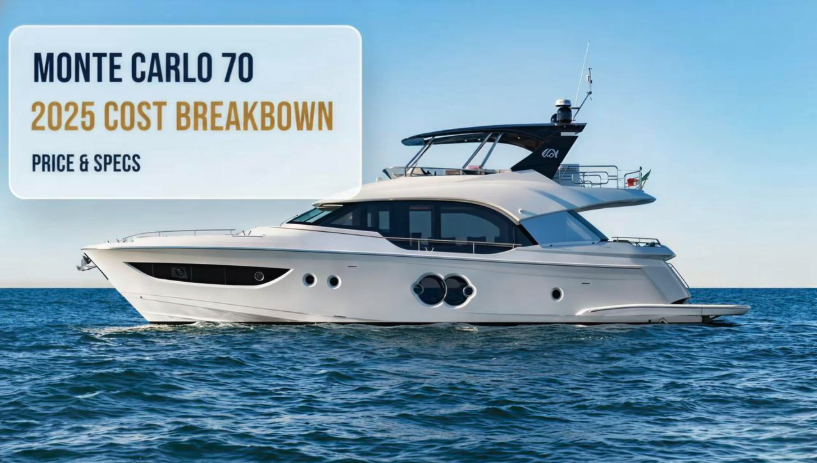
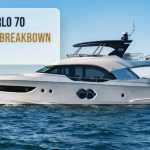
TheMonte Carlo Yachts 70 occupies a curious position in the 70-foot flybridge market. Last month, I watched a 2015 model in Palma sit at €1.9M for six weeks, while a 2020 “new generation” hull in Fort Lauderdale moved in eleven days at $3.2M—despite the near-million-dollar spread. The difference wasn’t just age. The Florida boat carried gyro stabilization, updated MAN electronics, and U.S. duty already cleared, while the Mediterranean listing presented with original fins and dated helm glass. Same nameplate, entirely different value equations.
Understanding Monte Carlo Yachts 70 price dynamics in 2025 requires looking past the sticker: build generation, stabilization technology, engine hours, and regional demand patterns all compress or expand values more than most buyers expect. Here’s the grounded, buyer-first analysis I use when clients ask what these elegant Italian flybridges actually cost—and what they’ll spend to keep one.
Monte Carlo Yachts 70 Price Ranges (2025)
The MCY 70 trades in a design-forward segment where Italian styling meets French-market sensibilities. Current pricing breaks into three bands:
Latest Generation (2019–2025): New or near-new hulls typically range $3.0M–$3.9M, shaped by engine configuration, stabilization choice (gyro versus fins), and interior specification. Mediterranean inventory often prices 3–7% softer than U.S.-delivered boats when import duty remains unpaid, though shipping costs narrow that advantage quickly.
Mid-Decade Brokerage (2015–2018): These boats generally list $2.1M–$2.8M, with engine hours (500–1,500 typical) and recent service work driving the largest swings. Seakeeper gyro installations commonly lift asking prices by $120K–$180K; fin-stabilized examples are less common but valued by serious cruisers planning longer passages.
Early Builds (2012–2014): First-generation MCY 70s sit $1.6M–$2.2M, where cosmetic condition, electronics currency, and documented MAN service history matter more than any single factor. Clean maintenance records on heat exchangers and aftercoolers outweigh updated upholstery—though buyers notice both.
Regional Market Patterns
Mediterranean: Broadest supply, pricing often 3–7% below comparable U.S. boats pre-duty. Italian service provenance can be advantageous given yard proximity to the Monfalcone build facility where Monte Carlo Yachts constructs its fleet.
United States: Tighter inventory, firmer asks, especially on post-2019 models with U.S. power specifications and duty cleared. Well-optioned, low-hour examples command top-of-range pricing.
Asia-Pacific: Fewer listings, strong premiums for turnkey, crew-maintained boats in Australia and Singapore. Logistics timelines extend, so buyers pay for delivery certainty.
Why prices diverge: The 2019 interior refresh sharpened materials and systems architecture. Stabilization reduces fatigue and broadens weather windows. And hour count plus service transparency form the valuation backbone for MAN V8 and V12 marine diesel installations.
What Drives Monte Carlo Yachts 70 Price Beyond the Hull
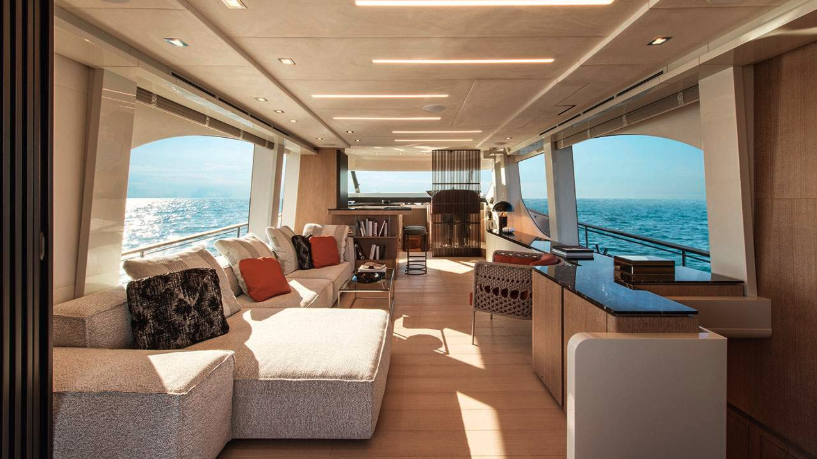
Base specifications on most MCY 70s I inspect are generous—teak decks, expansive glazing, quality sound insulation, and a flybridge that feels genuinely spacious. But the options list creates five- and six-figure deltas:
Stabilization Technology: Seakeeper gyro systems are most prevalent, with original factory costs in the $80K–$150K range. Resale uplift is meaningful when service history is documented. Fin stabilizers appear less often but deliver superior underway performance in heavier seas.
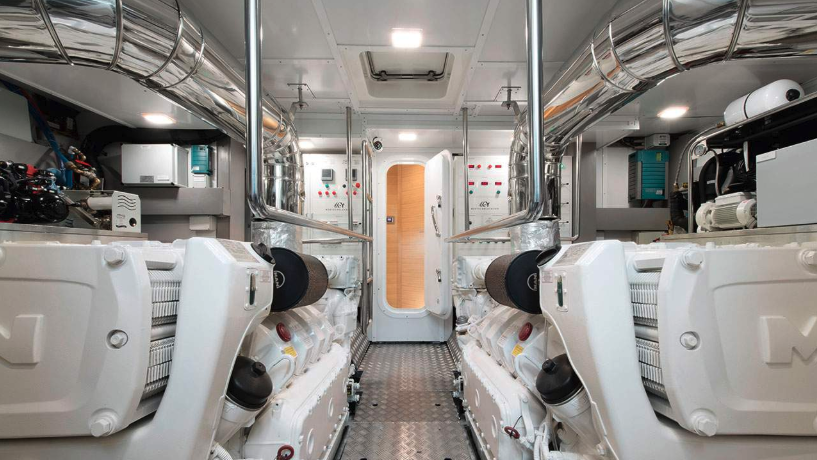
Engine & Propulsion: MAN V8 1200-class engines are typical, with later electronic suites and joystick/dynamic positioning adding both operational comfort and resale confidence. Updated MAN V8-1200 technical specifications and clean service intervals matter more to serious buyers than horsepower bragging rights.ights.
Electronics & Navigation: Full-suite upgrades—radar, FLIR thermal imaging, larger multifunction displays—typically added $40K–$100K to original builds. Older Raymarine or Garmin generations may prompt buyers to budget a refresh before purchase.
Interior Specification: Material choices (leathers, stone, stitched panels) carry real resale impact when they remain timeless rather than trendy. Nuanced detailing in joinery tolerances and hardware quality becomes obvious during showings.
Essential paperwork: complete MAN service logs (intervals, aftercoolers, heat exchangers), stabilizer maintenance records, generator hours and major services, plus VAT/duty status documentation for cross-border transactions.
Nuvolari Lenard Design & Build Quality
Nuvolari Lenard’s design signature—soft arcs, purposeful stance, generous glazing—is unmistakable. Beneath the aesthetics, vacuum-infused composite construction with carbon reinforcement keeps weight disciplined while preserving structural rigidity. Underway, the result is palpable: doors close with precision, cabinetry remains quiet, and the hull tracks predictably without constant helm correction.
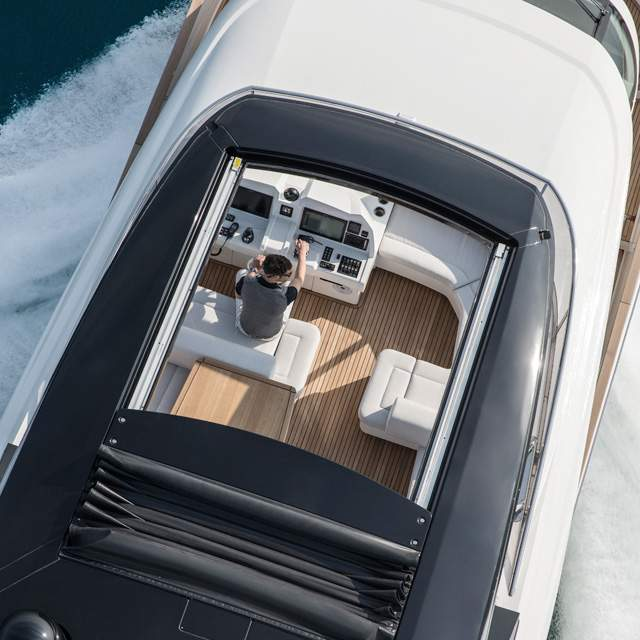
Layout observations from multiple walk-throughs: the main deck functions as a unified social space with excellent sightlines, the lower foyer maintains cabin privacy, and the flybridge—properly shaded—becomes the primary living area at 12–18 knots. Engine room access is sensible for a 70-footer: filters reachable, service points accessible without acrobatics.
Annual Ownership Costs for the MCY 70
Operating a 70-foot flybridge resembles running a small business—predictability is the goal. For most owner-operator or light-crew scenarios, annual costs typically range $180K–$320K:
MAN Major-Cycle Reserves: $15K–$35K annually (averaged) prevents heat exchanger, aftercooler, and valve service from becoming budget surprises
Insurance: $18K–$35K depending on cruising region, operator experience, and coverage limits
Dockage & Yard: $35K–$80K; Mediterranean homeports can spike seasonally, U.S. East Coast marinas offer more predictable (though not cheaper) pricing
Crew: Day-captain or part-time mate adds $40K–$120K annually based on usage intensity
Fuel: Entirely usage-driven; at 20–24 knots, plan 90–110 GPH combined. Light cruising years may run $30K, active seasons exceed $100K
Stabilizer servicing—whether it’s a gyro bearing replacement or fin-system hydraulic work—should be treated as a recurring line item. Plan $5K–$15K annually, following the Seakeeper maintenance schedule.
Electronics typically age gracefully… until they don’t. To keep the bridge updated and reliable, budget $10K–$20K every 3–5 years for navigation, displays, and software upgrades.
MCY 70 Market Competitors & Resale Dynamics
When buyers ask about alternatives, I typically reference the Princess F70, Azimut 72 Fly, Sunseeker Manhattan 68/70, Ferretti 720, and Absolute 70 Fly. The MCY leans design-forward and quietly luxurious; Princess and Ferretti emphasize engineering refinement and dealer network depth; Azimut and Sunseeker often show stronger domestic demand in the U.S. and U.K., which can accelerate resale velocity.
2025 Price Positioning:
Princess F70 & Ferretti 720: Late models list $3.4M–$4.2M new; robust dealer networks stabilize residuals
Sunseeker Manhattan 68/70: $3.0M–$3.8M with strong brand recognition in Florida and Mediterranean markets
MCY 70: $3.0M–$3.9M for latest generation; fewer total hulls mean pricing is more condition-sensitive but less exposed to heavy discounting cycles
Resale Behavior: Early-year depreciation typically runs 12–18% in the first 24 months, then moderates to 6–9% annually depending on hours and market conditions. Three factors preserve value most effectively: documented MAN service, current electronics, and stabilization with maintenance records. Cosmetics sell the showing, but the survey sells the boat.
Field observation: Three 2017 units in Palma last month sat until sellers adjusted pricing ~5% below comparable Princess and Ferretti listings. Once positioned correctly, two moved within six weeks—hour bands under 1,000 and gyro service documentation were the deciding factors.
Requesting a Monte Carlo Yachts 70 Quote
When evaluating anyMCY 70, request two items alongside the price: the complete options/build sheet and the most recent 24 months of service invoices. Then obtain a written estimate for any deferred maintenance identified by a MAN-certified technician or stabilizer specialist.
For new or near-new quotes, structure the proposal in three components: base boat, options package (stabilization, electronics, interior), and delivery costs (shipping, duty/VAT, commissioning). This clarity enables honest regional comparisons and distinguishes genuine value from discounting.
The buyer’s framework I rely on: year → hours → stabilization → service transparency → electronics currency. Work that sequence methodically, and the right MCY 70 emerges clearly.
If you want to keep cruising, here are a few earlier posts worth sailing back to.