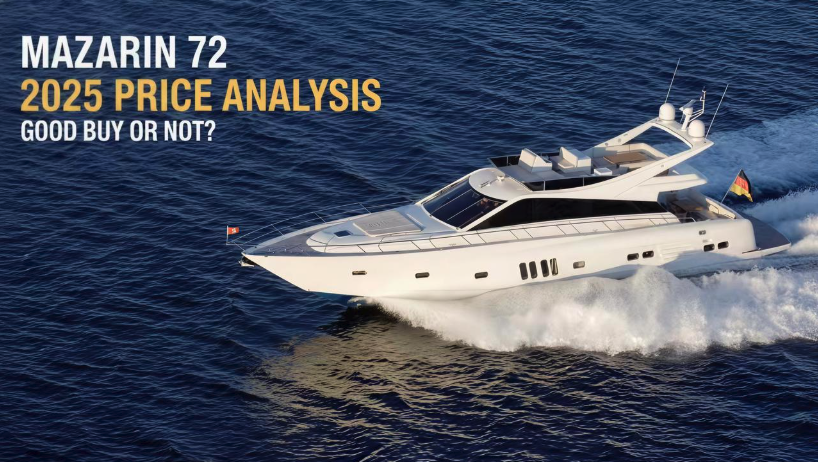
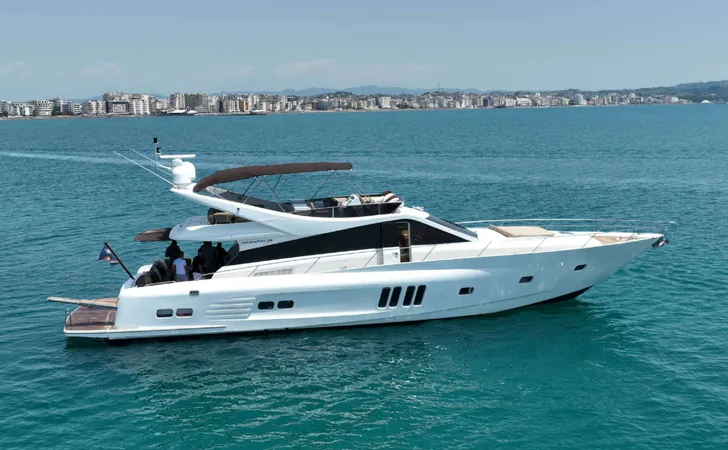
There is a distinct stillness inside a Mazarin 72 that you don’t always find in high-volume production yachts—a sense that the hull was built to silence the sea, not just float on it. Because these German-built hulls are so scarce, tracking their market value requires patience; they don’t pop up in clusters like Sunseekers or Azimuts. However, looking at the current spread between a 2009 unit in Palma and a refitted 2011 example in the Eastern Med, I noticed the market is finally shifting. We are moving away from depreciation based purely on age, and toward a value model defined almost entirely by technical stewardship. If you are watching this quiet corner of the market, here is what the data is telling us right now.
Mazarin 72 Used Market Price in 2025
The Mazarin 72 trades rarely, and scarcity is the headline. In most months, I see one to four active hulls globally, primarily in the Western Med, occasionally Northern Europe, and sporadically the Middle East. Because supply is thin, asking prices reflect specification, hours, and refit history more than pure “model-year math.”
Typical 2025 ranges I’m seeing:
Europe (Med/Northern EU): usually €1.05M–€1.45M, outliers up to ~€1.6M for low-hour, stabilized, tastefully updated examples.
US market: when they appear (rare), think roughly $1.2M–$1.8M depending on import history, 60Hz conversion quality, and survey results.
What moves the needle:
Year and production updates: Later builds (around 2010–2012) tend to carry a premium for incremental systems improvements and updated interiors.
Engine hours and service bands: MAN V12s in the 1,000–1,800-hour range price sensibly: once a boat crosses 2,000+ hours without bulletproof documentation, the spread widens and buyers negotiate harder. A full cooling-system and exhaust service within the last 2 seasons helps sustain price.
Stabilization: Factory or well-executed retrofits (ABT-TRAC stabilizer systems or a reputable gyro) can add €80k–€150k in perceived value compared with non‑stabilized siblings, especially for US buyers or Med family cruising.
Electronics and interior refresh: Modernized nav suites (2018+), upgraded AV, soft-goods, and lighting can lift value by €50k–€120k in buyer eyes, less about parts, more about turnkey feel.
Regional dynamics: The Med generally leads pricing. Northern Europe listings can be sharper on ask, but survey outcomes there are often very strong thanks to diligent maintenance cultures and shorter seasons.
Bottom line: in 2025, a well-kept Mazarin 72 with stabilization, clean MAN history, and recent updates typically sits around €1.25M–€1.45M ($1.35M–$1.55M). Non‑stabilized, higher‑hour boats with deferred cosmetics often transact under €1.1M.
Performance vs. Comfort: How the Mazarin 72 Really Balances Both
The Mazarin 72 has the quiet confidence of a Northern-European build. It isn’t flashy: it’s engineered. Think solid laminate in the right places, sensible systems access, and a hull that likes a genuine cruising pace.
Speed and ride: Most examples I’ve sea-trialed are happiest at 22–25 knots, with fuel burn that’s reasonable for the class and a reassuring, settled motion. Top end is often near 30 knots depending on load and prop condition. Against peers, Princess 72, Sunseeker Manhattan 70/73, Azimut 72, the Mazarin feels more planted than sporty: less twitch, more composure.
Noise and vibration: Good isolation around the engine room and thoughtful mounting keep salon conversation comfortable at cruise. It’s not the absolute quietest in class, but it’s an easy, low-stress environment for long legs.
Interior experience: Joinery is understated and precise, more boutique Northern yard than mass-production sheen. Layouts vary, but the flow from salon to galley to cabins tends to feel practical and calm. If you like clean lines and honest materials over gloss-for-gloss’s-sake, this boat resonates.
In short, it’s a cruiser’s 72: not trying to be the fastest, choosing instead a measured balance of speed, efficiency, and comfort that holds up well over time.
I approach Mazarin 72 surveys with a few consistent priorities:
Engines (MAN V12 marine engine specifications): Confirm exact model and hour band. Look for recent cooling-circuit service (heat exchangers, aftercoolers), exhaust lagging condition, leak checks at turbo interfaces, and oil analysis across multiple intervals. Verify WOT RPM under load.
Gearboxes and shafts: Inspect alignment, shaft seal condition (PSS mechanical shaft sealsor equivalent), coupling wear, and any history of vibration mitigation (prop balancing, mounts).
Stabilizers: If fins, check actuator seals, fin pins, and service intervals: if gyro, confirm hours, bearing life expectations, and cooling performance.
Electrical: Proper 50/60Hz conversion if the boat crossed regions: clean bus bars, healthy charging, and tidy labeling. Older switchboards sometimes need selective modernization, budget accordingly.
Generators: Hours vs. service history, load testing under hotel loads, sound shield integrity, and exhaust waterlift configuration.
Hull and deck: Moisture readings around stanchions, windlass base, and hardtop supports. Teak thickness and fastening pattern: margins around hatches where caulking fails first.
Windows and doors: Track wear, seals, and any early signs of delamination or fogging. It’s minor until it isn’t.
Plumbing and HVAC: Chiller capacity vs. cabin count, pump redundancy, condensate management. A tired chiller is a quiet money leak.
Electronics: Age of MFDs, radar generation (solid-state vs. magnetron), AIS class, and integration cleanliness. 2018+ refits age far better.
This is the hour band where I usually ask buyers to slow down and dig: 1,800–2,500 hours. Many boats are fine here, but only if the service ledger is disciplined. A strong file preserves value and makes negotiation calmer for everyone.
Annual Ownership Costs & Long-Term Resale Outlook
Annual ownership on a 72-foot flybridge tends to sit in these brackets (2025 norms, excluding unusual yard events):
Routine maintenance and spares: $60k–$100k, trending higher if you’re catching up on deferred items.
Insurance: $15k–$30k depending on region, experience, and claims history.
Dockage and wintering: $25k–$60k with wide regional variance (Med marinas vs. Northern EU halls).
Fuel at a true 22–24‑knot cruise: roughly 95–130 gph combined, or 360–490 lph. Annual total depends entirely on usage.
Crew: Add $90k–$160k if you run with a captain and part-time stew/deck.
Resale outlook: The Mazarin 72 benefits from low supply and a reputation for honest build quality. Depreciation at this age bracket is gentle compared with newer production models, often 4–7% annually if kept current. The real price drivers on resale are stabilization, electronics age, and the perception of careful ownership. Keep the MAN services up to schedule, refresh the tech stack every 6–8 years, and you’ll maintain a narrower bid–ask spread when it’s time to move on.
Where to Find a Mazarin 72 for Sale
Because the model is scarce, I cast a wider net than usual:
Western Med hubs: Palma, Barcelona, Côte d’Azur, and Ligurian coast. Listings surface here first and transact quickly in-season.
Middle East/Turkey: Good hunting ground for stabilized, warm‑water‑cruised examples.
Portals and networks: YachtWorld and Boats.com are the public baseline: serious buyers should also lean on brokers with Northern-European ties and whisper networks. Off‑market leads matter here.
Buying a Mazarin 72 is rarely an impulse purchase; it is usually a deliberate choice for engineering over flash. Consequently, your decision shouldn’t come down to the lowest asking price, but to the clearest history. My advice is simple: look past the cosmetic sheen and buy the boat with the healthiest engine room logbook. A 2010 hull with impeccable MAN service records and dry bilges will serve you far better than a newer, neglected example ever could. Be patient, wait for the one that has been loved by a knowledgeable owner, and when it appears, don’t hesitate—these boats tend to vanish into private hands just as quietly as they arrived.