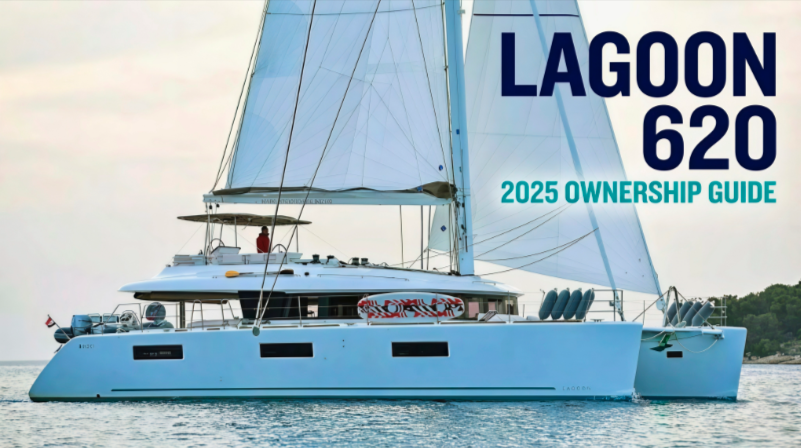
A few weeks ago, I was comparing Lagoon 620 listings across the Mediterranean and Caribbean, and noticed something quietly revealing—the price differences between regional deliveries didn’t align with what I’d expected.
It was a reminder that with bluewater catamarans like this, location and specification often matter more than the model year itself.
The Lagoon 620 price in 2025 generally starts around €2.8M to €3.2M for a new build in standard configuration. That’s the baseline—before you begin layering in the systems and finishes that transform a cruising cat into a genuinely self-sufficient platform.
But here’s what really shapes the final number: your choices. A modestly equipped 620 with core cruising essentials might settle closer to €2.9M, while a fully realized version—upgraded engines, robust generator package, premium teak detailing, comprehensive electronics, watermaker, full climate control—can easily reach €3.6M to €3.8M depending on delivery region and dealer structure.
Lagoon 620 Ownership Cost Breakdown
Ownership costs are where the real picture comes together. I always tell buyers: the purchase price is just the beginning. What you’ll spend annually shapes how you use the boat and how long you keep it.
Annual Maintenance & Service Costs
For a catamaran of this size, annual maintenance typically ranges between €45,000 and €65,000, depending on usage intensity and where you keep her.
Systems checkups (electronics, electrical, plumbing, HVAC)
Generator and watermaker servicing
If you’re cruising extensively—say, 150+ days a year—expect costs to trend toward the higher end. Light seasonal use can keep you closer to €45K annually.
I’ve found that proactive servicing, especially with marine-grade systems like those aboard the 620, saves significantly over reactive repairs. According to industry analysis from Grand View Research, multihulls in this class generally require more regular attention to bridgedeck structure and through-hull fittings than monohulls, but Lagoon’s construction methods—using vacuum-infused fiberglass with balsa core—make routine work straightforward.
Crew Salaries & Operating Staff Costs
Most 620 owners I’ve spoken with run the boat with a two-person crew—captain and chef/stew—especially if chartering or extended cruising is part of the plan.
Crew salaries typically fall between:
€60,000 and €90,000 annually for a captain (experience-dependent)
€40,000 and €60,000 annually for a chef or steward/ess
That brings total crew costs to around €100,000 to €150,000 per year, including benefits, travel, and insurance.
Some owners operate the boat themselves with occasional day crew for docking or passage support, which can reduce this line item significantly. If you’re considering the charter route, crew costs are often offset by charter income, but it’s essential to factor in downtime, maintenance windows, and seasonal demand fluctuations.
Mooring, Dockage & Winter Storage Fees
Dockage varies widely by region, but here’s what I’ve seen:
Mediterranean (French Riviera, Balearics): €25,000–€45,000 annually for prime marina berths
Caribbean (USVI, BVI, Antigua): €18,000–€35,000 annually depending on island and facility
U.S. East Coast (Florida, Chesapeake): €15,000–€30,000 annually
Winter storage (if hauling out) adds another €8,000 to €15,000, including haul-out, pressure washing, and covered or open storage fees.
Fuel, provisioning, insurance, and incidentals can add another €20,000 to €40,000 annually, depending on how actively you cruise. All told, a realistic annual budget for a privately operated Lagoon 620 sits between €150,000 and €250,000—more if chartering with full crew, less if owner-operated with minimal movement.
Lagoon 620 Used Market Prices & Resale Value (2025)
The used market for the Lagoon 620 is surprisingly stable. I’ve tracked listings across multiple regions over the past year, and here’s what stands out:
2020–2023 models are currently valued between €2.4M and €3.0M, depending on specification, engine hours, and region. That represents a depreciation rate of roughly 12–18% from original build cost over three to four years—gentler than many production monohulls in this size bracket.
2017–2019 models typically range from €2.0M to €2.5M. These earlier examples often come with fewer integrated systems but can be excellent value for buyers willing to retrofit electronics or upgrade soft goods.
Pre-2017 units occasionally appear under €1.8M, though availability is limited. These are often well-traveled boats with higher engine hours but solid structural integrity if properly maintained.
What Drives Resale Value Most Strongly on the 620?
According to catamaran market research from Mordor Intelligence, the 60–65-foot range sees consistent demand in both Mediterranean and Caribbean charter markets, with Lagoon holding strong brand recognition. That matters if you’re thinking three to five years ahead.
The Lagoon 620 holds its value more predictably than many competitors, largely due to brand recognition and Lagoon’s global service network.
Lagoon 620 Buying Guide & Expert Tips
If you’re serious about a Lagoon 620, here’s what I’d focus on:
1. Prioritize Specification Over Age
A well-equipped 2019 model often delivers better value than a lightly spec’d 2022. Look for air conditioning throughout, upgraded galley appliances, teak decking, and a robust electronics package.
2. Inspect the Engine Room Access and Systems Layout
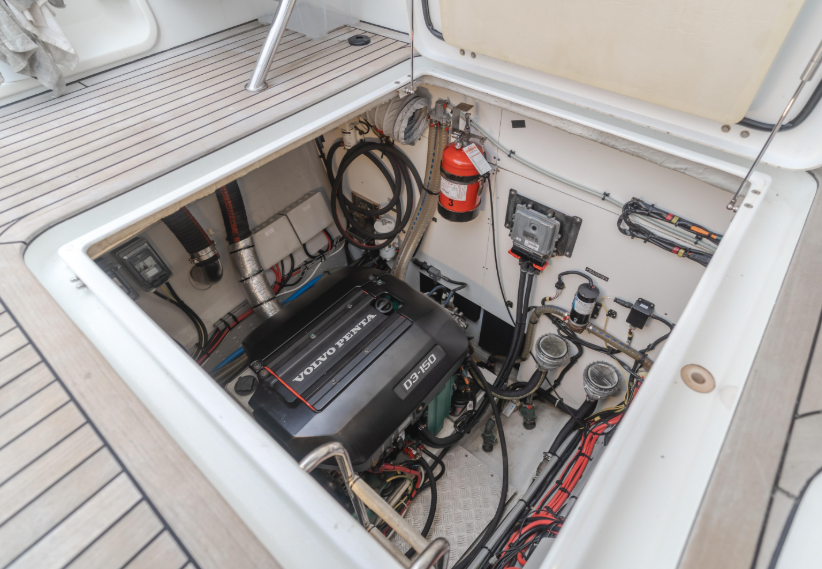
The 620’s engine rooms are well-designed, but I always recommend a pre-purchase survey that includes thermal imaging and compression testing on both engines. Generator hours matter as much as main engine hours.
3. Evaluate Bridgedeck Clearance and Performance Records
The 620 has excellent bridgedeck height, but it’s worth reviewing sea trial reports or previous owner logs to understand how she handles in varying conditions. Bridgedeck slamming is rare but worth confirming.
4. Consider Regional Availability and After-Sales Support
Lagoon’s dealer network is extensive, but parts and service timelines vary by region. If you’re planning to cruise Southeast Asia or the South Pacific, confirm local support availability beforehand.
5. Think About Charter Potential
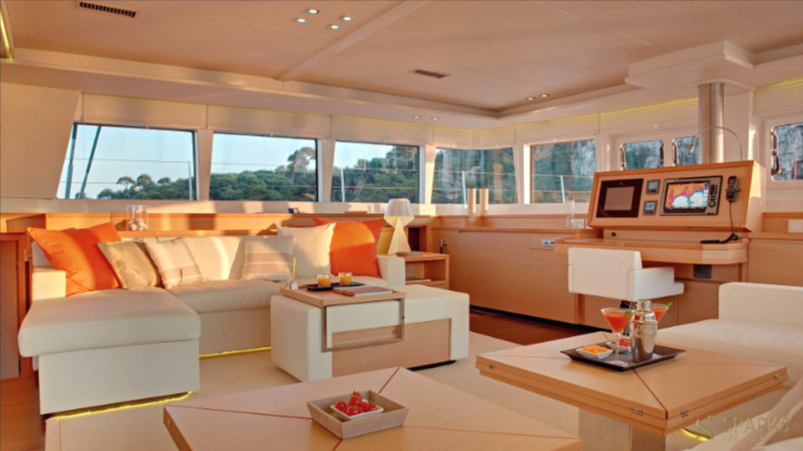
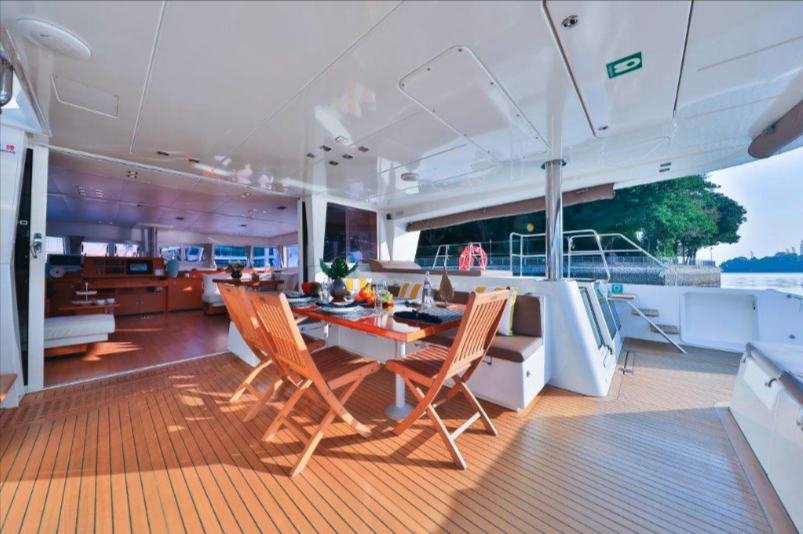
If chartering is part of your plan, the 620’s layout—spacious owner’s suite, four guest cabins, generous saloon—makes her a strong candidate. But factor in charter management fees (typically 20–30% of gross income) and wear-and-tear expectations.
Technical Considerations: Understanding the 620’s Build Quality
From a construction perspective, the Lagoon 620 benefits from Lagoon’s vacuum-infusion molding process, where fiberglass layers sandwich balsa wood core. This method creates strong, lightweight hulls with excellent structural integrity.
The 620 typically runs twin Yanmar marine diesel engines ranging from 110 to 150 horsepower depending on configuration. Yanmar’s common rail technology delivers efficient fuel consumption and reliable performance, particularly important for extended passages.
The yacht’s systems—from watermakers to climate control—reflect generational improvements. A 2020+ model will typically have more refined electronics integration and updated stabilizer options compared to earlier years, and those differences show up in both comfort and long-term serviceability.
Get an Accurate Lagoon 620 Quote
Pricing transparency in the yacht market can be elusive, but it doesn’t have to be. If you’re ready to explore specific configurations, I recommend starting with Lagoon’s official dealer network, which can provide detailed build options and current delivery timelines.
For market analysis and trend data, catamaran industry reports track pricing patterns across different size ranges and regions, giving you a broader context for evaluating individual listings.
If resale stability and predictable ownership costs matter to you, the Lagoon 620 offers one of the most dependable platforms in the modern catamaran market. She’s thoughtfully engineered, globally supported, and built for the kind of cruising that stays with you long after the lines are cast off.
For further context, you may find the following previous posts helpful.