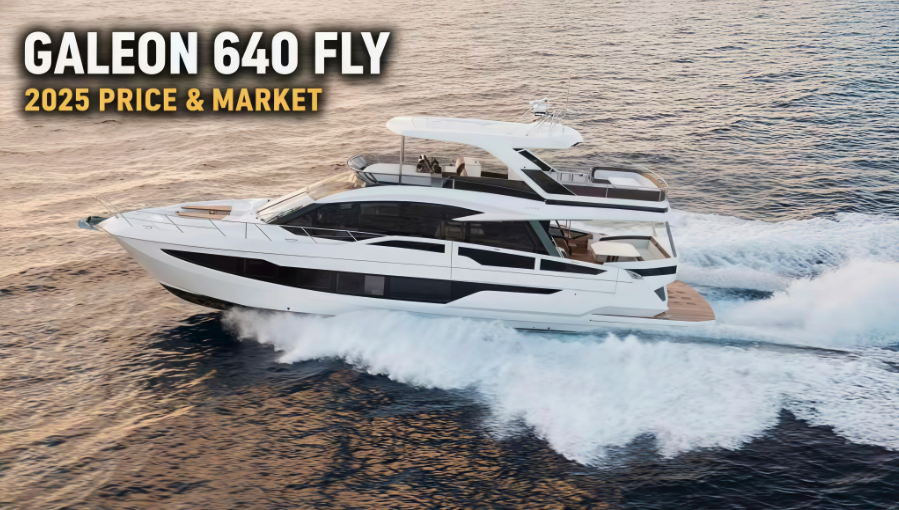
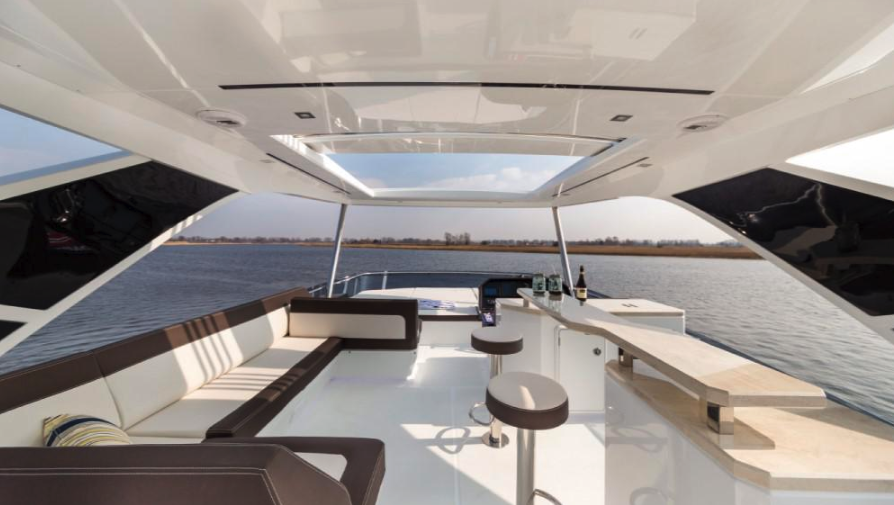
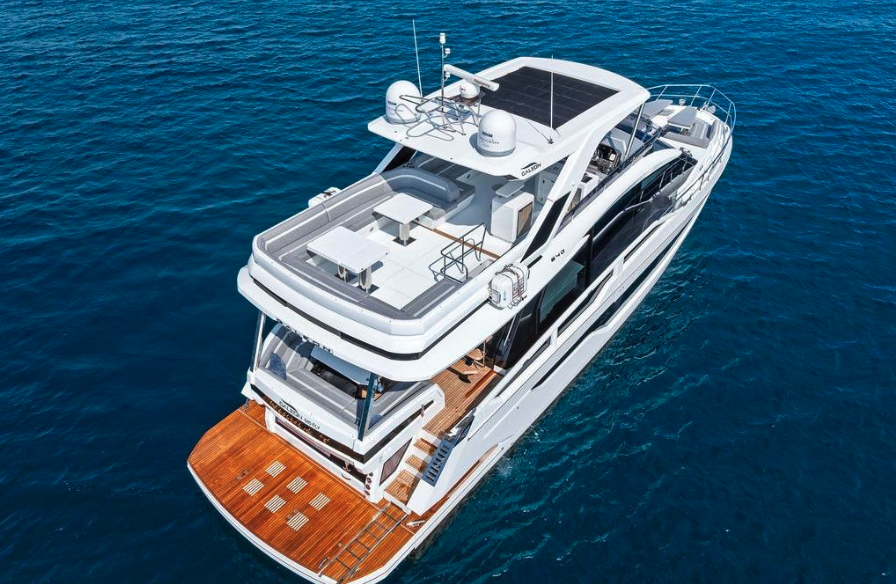
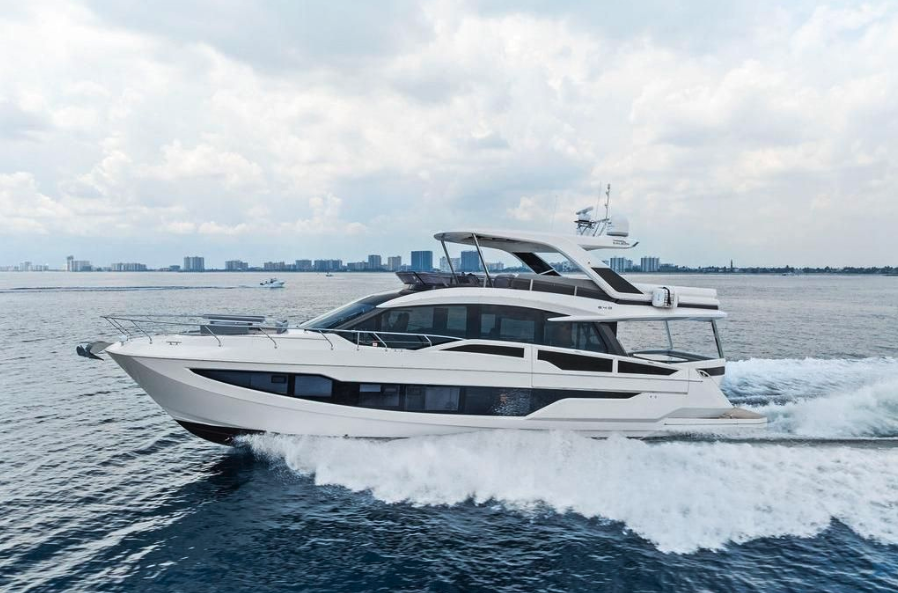
Earlier this week, I found myself comparing three Galeon 640 Fly listings—all from 2022, all showing similar engine hours—and noticed something that made me pause. One was priced nearly $400,000 higher than the others. Same platform, comparable condition, but the gap wasn’t accidental. It traced back to specification packages, regional pricing patterns, and a reality most buyers overlook: purchase price is just the opening move.
The complete picture matters more. Current Galeon 640 Fly prices span from $1.8 million to $2.8 million depending on year and specification, but ownership costs—docking, maintenance, insurance, fuel—typically add another $180,000 to $280,000 annually depending on how you use her. Understanding both numbers before you commit makes all the difference.
Galeon 640 Fly Price Overview 2025
The Galeon 640 Fly market reflects clear price tiers based on build generation, specification level, and geographic location.
Current New Build Prices
Price Range: $2.4M – $2.8M USD
New 2025 Galeon 640 Fly models currently list around $2.8 million, reflecting full factory warranty, zero hours, custom layout options, and the latest Volvo Penta integration. Delivery timelines typically run 10-14 months from contract to handover.
The signature beach mode—Galeon’s fold-down side platforms that extend beam width by nearly seven feet—adds approximately $90K-$130K to base pricing but transforms the cockpit into a floating terrace. First-year depreciation typically runs 12-15%, which makes timing and specification choices critical.
Price Range by Specification & Configuration
2022-2024 Models: $2.0M – $2.5M USD
This bracket represents the current market sweet spot. These yachts have moved past steepest depreciation while retaining modern systems and typically showing under 300 engine hours. You gain immediate availability instead of waiting over a year for new construction.
Four-cabin layouts command 6-9% higher resale values than three-cabin versions because they appeal to larger families and light charter operators. Premium upgrades like extended hydraulic swim platforms or upgraded galley packages may have added $60K-$120K to original build cost but typically recover only 50-65% at resale.
2019-2021 Models: $1.8M – $2.3M USD
This range represents excellent value entry points for buyers balancing capability with cost. Most examples show 300-500 engine hours and may benefit from electronics updates—navigation systems or entertainment integration—but remain mechanically sound with documented service history.
Budget $25K-$45K for navigation modernization if the yacht hasn’t been updated since delivery. Complete maintenance records from authorized service centers significantly impact value within this range.
Galeon 640 Fly Ownership Costs
Purchase price happens once. These expenses repeat annually and determine whether ownership aligns with your lifestyle.
Annual Maintenance and Running Costs
Routine Maintenance: $40,000 – $55,000/year
This covers engine service intervals, generator checks, bottom paint, antifouling treatments, and systems inspections. Galeon’s relatively modern Polish construction means fewer surprise repairs compared to older platforms, but regular maintenance remains essential for reliability and resale value.
Major Service (Every 3-5 Years): $85,000 – $130,000
Expect periodic larger expenses: engine overhauls, gel coat restoration, teak replacement, hydraulic system rebuilds, and electronics suite updates. Industry best practice suggests budgeting 2-3% of yacht value annually as contingency YachtBuyer for unexpected repairs like thruster failures or HVAC replacement.
Fuel and Crew Expenses
Fuel Consumption:
The Galeon 640 Fly runs triple Volvo Penta IPS engines with impressive efficiency at displacement speeds but higher consumption at planing speeds.
Cruising at 18-20 knots: 180-220 liters/hour combined
Owners using the yacht 100+ days annually sometimes employ full-time captains at $70,000 – $90,000/year plus accommodation and benefits.
Insurance & Docking Fees
Hull Insurance: 1.0-1.6% of insured value annually
Example: $2.3M yacht = $23,000-$36,800/year. Rates depend on navigation area, claims history, and whether you cruise offshore or coastal waters.
Docking Fees by Region:
Mediterranean (Prime Season): $65,000 – $95,000/year in locations like Côte d’Azur or Sardinia
Mediterranean (Secondary Marinas): $40,000 – $60,000/year in Spain or Greece
North America: $45,000 – $80,000/year in Florida or Caribbean
Northern Europe: $35,000 – $55,000/year in Baltic or North Sea ports
Annual contracts deliver 15-20% savings versus transient rates. Committing to 10-month agreements in popular cruising grounds creates negotiating leverage. Learn more about yacht ownership considerations at Boat International.If you plan to register your Galeon in the UK, the MCA oversees safety compliance and documentation.
Galeon 640 Fly Resale & Depreciation
Understanding depreciation patterns helps you make smarter buying decisions—it’s often the largest ownership cost beyond purchase price.
Engine hours matter significantly. A 2021 model with 200 hours frequently commands $100K-$150K more than a 2022 model with 450 hours. The market rewards light use combined with impeccable service documentation.
Depreciation Trends Over Time
Typical Depreciation Curve:
Years 1-3: 12-16% per year
Years 4-6: 7-10% per year
Year 7+: 4-6% per year
5-Year Ownership Comparison:
Buying New in 2025:
Purchase price: $2.6M
2030 estimated value: $1.8M-$2.0M
Total depreciation: $600K-$800K (23-31%)
Buying 2021 Model in 2025:
Purchase price: $2.1M
2030 estimated value: $1.6M-$1.8M
Total depreciation: $300K-$500K (14-24%)
The mathematics favor used purchases. Buying a 3-4 year old Galeon 640 Fly typically delivers better total cost of ownership because steep initial depreciation has already occurred.
Tips for Selling or Buying Used Models
Best Buying Window: November-February
Off-season timing creates motivated sellers. Yacht show inventory increases, and owners face winter storage decisions. January listings historically average 8-12% lower than June peak prices.
Best Selling Window: March-May
Spring boat shows drive buyer enthusiasm. Improving weather enables more sea trials, and summer season urgency peaks. March-May sales historically command 5-8% premiums over autumn transactions.
Evaluation Priorities for Buyers:
Complete service records from authorized Galeon service centers
Hull survey checking for osmosis or structural concerns
IPS drive service history and alignment documentation
Generator maintenance logs
Electronics suite generation and functionality
Original specification sheets showing factory options
Two identical Galeon 640 Fly yachts can differ by $150K based purely on documentation quality and visible condition. Premium examples show complete maintenance transparency.
Contact for Live Pricing & Brokerage Advice
The Galeon 640 Fly market moves quickly, and published prices often lag behind actual transaction values by several weeks.
How to Get Market-Backed Quotes
Real-time pricing requires broker access to recent closed sales, pending transactions, and current inventory across multiple markets. Published listings represent asking prices—actual transaction prices typically run 5-12% lower after negotiation, especially in off-season months.
Request comparative market analyses showing recent sales of similar year/specification models. This data reveals actual market clearing prices rather than aspirational asking figures.
Working with YachtTrading for Accurate Pricing
Experienced brokers provide three critical advantages: access to off-market inventory not publicly listed, knowledge of recent closed transactions, and negotiation expertise that often saves 6-10% of purchase price.
When evaluating brokers, look for specialists with multiple Galeon transactions in their history, established relationships with the shipyard, and transparent fee structures.
Final Thoughts
TheGaleon 640 Fly delivers modern Polish engineering with distinctive beach-mode styling in a manageable 20-meter platform. In 2025, budget $1.8M-$2.8M for purchase depending on year and specification, plus $180K-$280K annually for realistic operation.
The smartest buyers focus on 2020-2022 models with under 350 hours, verify complete service documentation before making offers, time purchases during off-season months when negotiating leverage favors buyers, and run complete five-year ownership cost projections including depreciation.
If you’re ready to explore specific inventory, certified brokers can provide current market positioning and help identify the best value within your target range.
If you want to keep cruising, here are a few earlier posts worth sailing back to.