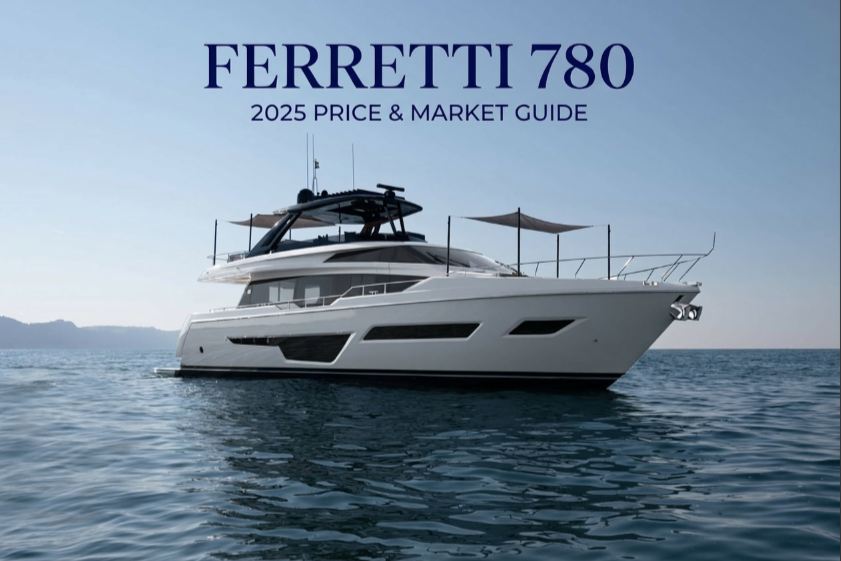
Last week, while reviewing three Ferretti 780 listings—in Fort Lauderdale, Viareggio, and a newer hull in Hong Kong—the pricing spread caught my attention. The U.S. and Mediterranean boats were within roughly 4% of each other, while the Asia example carried a quiet premium thanks to low hours and a 2023 electronics refresh. It’s a good snapshot of what defines Ferretti 780 pricing in 2025: year, hours, and options first, then region. If you’re weighing new versus brokerage, or considering an upgrade, here’s where the numbers really land—and why.
Ferretti 780 Price Overview
Factory New vs Brokerage Prices
When someone asks me for a “quick” Ferretti 780 price, I always offer a range, not a single figure. Specification swings matter more on this model than people expect. A factory-new Ferretti Yachts 780 typically closes around $4.8M–$5.8M, depending on engine package (MAN V12s are common), stabilizers (fins vs gyro), hardtop, and interior options. Recent tight inventory years pushed some transactions toward the upper end.
The 2018 refresh modernized the glazing, profile, and interior palette. Stabilizers often add $80K–$150K+ in value, and the quieter, calmer ride they deliver shows up in resale conversations with both owners and surveyors.
If you want to see how specific equipment lists impact pricing, MAN Engines’ official specs help contextualize powertrains.
Annual Ownership Costs
Crew & Staffing
On a 78-footer, most owners run a captain and a stew/deckhand; many add a third crewmember for charter or heavier use. Typical annual crew spend lands around:
Captain: $90K–$140K
Stew/deckhand: $55K–$85K each
All-in, crew compensation typically sits around $180K–$280K per year.
For standardized crew role definitions and certifications, RYA’s professional crew guidelines remain a useful baseline.
Maintenance, Service & Insurance
Budget operating costs (excluding crew) at 7–10% of hull value in the first five years. In practice:
Routine service: $90K–$150K
Dockage and storage: $35K–$90K depending on region
Insurance: 0.7%–1.2% of agreed value (≈ $35K–$60K on a $5M hull)
Fuel: usage-driven, typically $50K–$120K annually
All-in annual ownership usually falls between $300K–$450K, rising in high-use seasons or premium marinas.
For anyone comparing marina categories or berth cost structures, US Coast Guard facility listings give clarity on service availability by region.
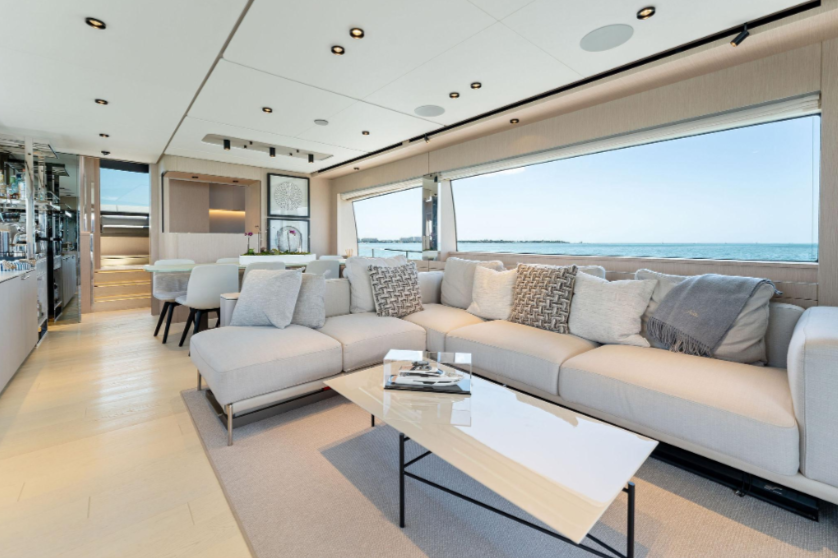
Post-2018 hulls introduced larger windows and a lighter palette. Galley-up vs galley-down layouts, soft-goods refreshes, and teak deck replacements influence appeal during surveys.
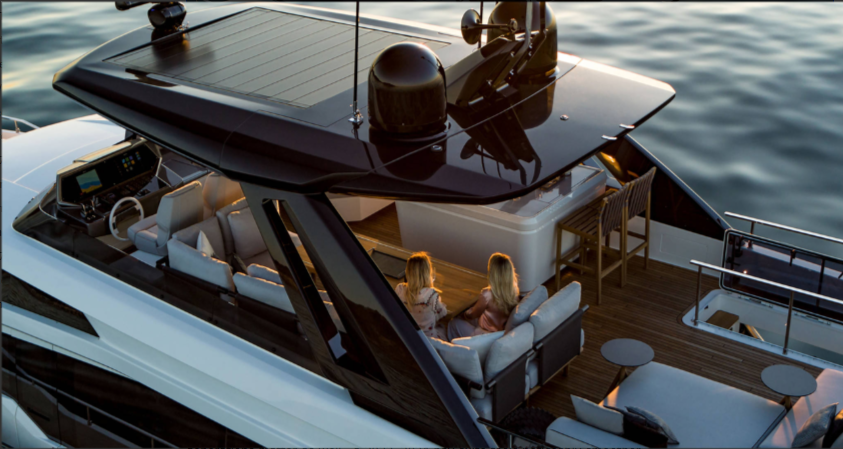
Hardtop configuration, flybridge enclosure, wetbar layout, and stabilizers remain key line items. Electronics generations matter as well—a 2022–2024 nav suite feels noticeably smoother.
Thoughtful refits can add $150K–$300K in perceived market value.
Sub-1,000 hours is typical for 5-year-old boats; 1,200–1,800 hours can still price well if major services are completed. Hours often explain price differences better than calendar year.
Evidence that justifies a strong ask:
Complete engine/generator service records
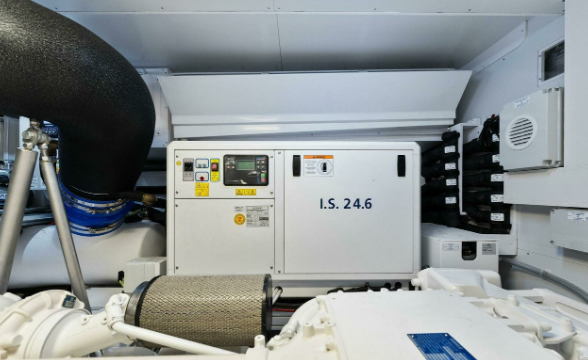
Clean engine-room cosmetics
Stable sea-trial data (mid-20-knot cruise, balanced load, minimal vibration)
A quick comparison tool for hour ranges and depreciation curves can be found in YachtBuyer’s technical briefs.
Resale Value & Best Years to Buy
Depreciation Patterns
Years 0–3: 12–18% annually
Years 4–7: 6–9% annually
Years 8+: depreciation flattens; condition takes over
For most buyers, 3–6-year-old Ferretti 780s land in the value sweet spot.
How to Find a Good Deal
Target 2018–2021 for the redesign and better interiors
Prioritize hours + service over cosmetics
Prefer stabilizers and recent nav upgrades
Watch region: late-season Med trades softer; U.S. often mid-range premium; Asia sometimes premium for low hours
Inspect teak, window seals, hydraulics, flybridge structures during survey
Owners consistently mention the calm main-deck ambiance, quiet cruising characteristics, and salon proportions. The 2020 interior update (veneers, textiles, LED schemes) improved perceived volume.
Performance & Handling
With MAN V12s (1,550–1,800 hp), a Ferretti 780 typically cruises in the mid-20-knot range, topping out in the high-20s to low-30s. Fins stabilize comfortably in 3–4 ft seas; helm ergonomics remain a strong point. Midship owner’s suite is notably quiet underway.
For technical performance benchmarks, MAN’s marine performance sheets give clean power curves.
Talk to a Specialist
For most buyers choosing between new and brokerage, a 3–5-year Ferretti 780 with stabilizers, updated nav, and complete service records is the strongest overall value. If you need region-specific comps across the U.S., Med, or Asia, I can outline current spreads.
Ferretti 780 Price: Frequently Asked Questions
New vs used price ranges:
New: $4.8M–$5.8M
2022–2024: $4.6M–$5.4M
2018–2021: $3.6M–$4.6M
2007–2013: $1.4M–$2.3M
Regional differences: U.S. generally mid-range; Med 3–7% softer; Asia premium on low-hour examples.
Typical annual ownership costs: $300K–$450K including crew and operations.
Taxes & duties: Consider U.S. state tax, EU VAT, and import duties (e.g., U.S. ≈1.5%). Always confirm with a maritime tax specialist.
Best value years: 2018–2021 redesign with stabilizers, updated electronics, and strong service history.
Disclaimer
Data is based on publicly available Ferretti 780 listings and typical industry cost ranges. Asking prices may not reflect final transaction values. Always consult a qualified surveyor, broker, and maritime/financial advisor.