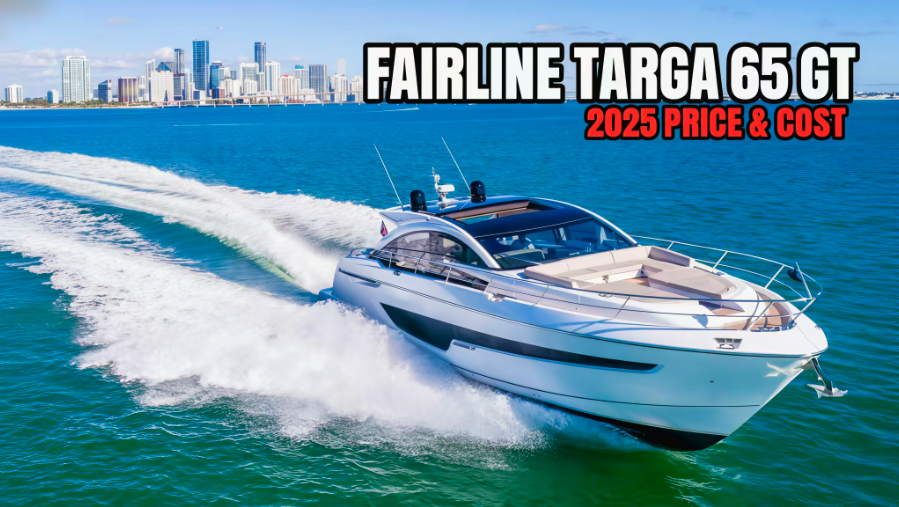
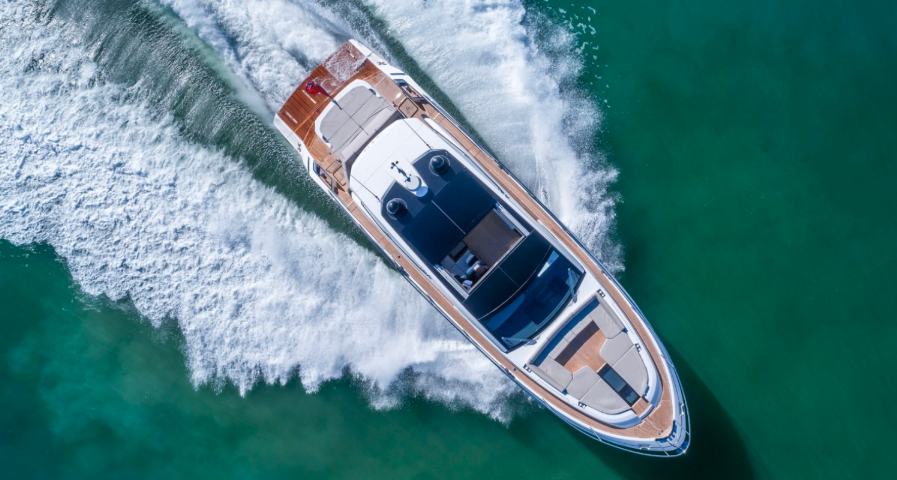
I was comparing late-model Fairline Targa 65 GTs across three different listing platforms last month when something small but telling caught my attention: two nearly identical 2022 builds, both with under 200 hours, were priced nearly €400,000 apart.
One was listed through a Mediterranean broker, the other through a U.S. dealer. Same year, same specification tier, vastly different asking prices.
That gap isn’t random. It reflects how location, specification depth, and market timing quietly shape what you’ll actually pay for a Fairline Targa 65 GT — and what it costs to keep one running year after year.
If you’re considering this model, whether new or pre-owned, here’s what the real numbers look like in 2025.
Fairline Targa 65 GT Price Overview (2025)
The Fairline Targa 65 GT typically starts around €2.8M–€3.2M for a new build with standard specification.
That baseline includes the twin Volvo Penta IPS 1350 engines, stabilizers, bow thruster, and core interior layout. It’s a solid starting point, but most buyers add at least €300K–€500K in options before delivery.
New Fairline Targa 65 GT Price (2024-2025)
Price Range: €2.8M – €3.2M
When you order new, you’re paying for full warranty coverage, custom layout selections, zero engine hours, and the latest navigation systems. Delivery typically takes 8-12 months from order to handover.
The trade-off? You’ll absorb roughly 15% depreciation in year one alone. Explore new models at authorized Fairline dealers.
2020-2022 Fairline Targa 65 GT Price Range
Price Range: €2.2M – €2.6M
This is the market sweet spot and gets the most buyer interest for good reason.
These boats are already past the steepest depreciation curve while retaining modern systems. Engine hours typically sit under 300, and you get immediate availability instead of waiting nearly a year for a new build.
Most examples in this range carry upgraded electronics — Garmin or Simrad helm suites — plus teak decking, hydraulic swim platforms, and enhanced galley configurations.
Custom interior finishes may have added €150K–€250K to original build cost, but typically recover only 50-60% of that investment on resale.
2018-2019 Fairline Targa 65 GT Price Range
Price Range: €1.8M – €2.1M
Entry-level pricing for near-current models. The hull design is nearly identical to newer builds, but you’ll notice differences in helm ergonomics and sometimes less refined soundproofing around the engine bay.
Engine hours matter significantly here — anything over 500 hours tends to push pricing toward the lower end.
Budget an additional €40K–€60K for electronics modernization if the yacht hasn’t been updated since delivery. Complete service records from authorized dealers significantly impact value within this range.
Pre-2018 Fairline Targa 65 Models
Price Range: €1.5M – €1.7M
These earlier examples occasionally appear on the market, though availability is limited.
They lack some of the structural refinements introduced in the 2019 refresh, particularly around the aft deck stiffness and cockpit drainage flow. Engine hours typically exceed 600, and buyers should anticipate potential refit costs for interior soft goods and exterior teak work.
Critical evaluation factors include hull survey results checking for osmosis, stabilizer condition, generator service history, and documented maintenance intervals.
Regional Pricing Patterns
Mediterranean listings, especially through brokers on the French Riviera or Mallorca, often carry a 10–15% premium compared to U.S. Gulf Coast or Caribbean inventory.
For buyers exploring financing, typical terms land around 15–20 years at 4.5–6% APR, depending on creditworthiness and loan structure. That puts monthly payments for a €2.5M used model somewhere near €18K–€22K before considering operating costs.
If you plan to register your Targa 65 GT in the UK, the MCA oversees safety compliance and documentation. U.S. buyers can obtain a Certificate of Documentation via the USCG National Vessel Documentation Center, while the USCG Boating Safety site provides guidance on safe operations. Many Mediterranean yachts are registered in Malta, which offers flexible options through the Transport Malta Ship & Yacht Registry.
Ownership expenses for the Targa 65 GT fall into a predictable rhythm once you understand the core categories.
These aren’t luxury-tier costs in the 70’+ range, but they’re substantial enough to plan for carefully.
Fuel Consumption and Annual Fuel Costs
The twin IPS 1350s burn roughly 200–240 liters per hour combined at cruise speeds (25–28 knots).
Annual Fuel Costs (assuming 100-150 cruising hours per season):
Conservative use: €35K–€50K
Performance use (higher speeds, longer trips): €50K–€70K
Mediterranean diesel pricing hovers near €1.20–€1.40 per liter in 2025. If you’re based in the U.S., fuel costs drop slightly, closer to €30K–€40K for similar usage.
Dockage and Marina Fees by Region
Mediterranean (High Season):
Prime locations (Antibes, Porto Cervo, Monaco): €40K–€70K/year
Annual contracts typically save 15-20% compared to transient daily rates. Owners who commit to 10-month terms can negotiate significantly lower effective monthly rates.
Crew and Captain Costs
Professional Captain (Full-Time Employment):
Salary: €60K–€85K/year plus accommodation, meals, and benefits
Makes sense if you’re cruising 150+ days per year
Freelance Captain (Per-Day Rate):
€350–€600/day depending on region and experience level
Works well for owners using the yacht 40-100 days per year
Typical annual spend: €14K–€60K
Most Targa 65 GT owners in the moderate-use range hire captains on a daily or weekly basis rather than maintaining full-time crew. This significantly reduces annual overhead.
Insurance, Maintenance, and Operating Expenses
Hull Insurance:
€15K–€25K per year (approximately 1.0-1.2% of insured value)
Rates vary by navigation area, deductible structure, and claims history
Full coverage including hurricane protection pushes toward the higher end
Annual Maintenance:
Routine service: €30K–€50K/year (engine servicing, bottom paint, system checks, electronics updates, general upkeep)
Major refits every 3-5 years: €50K–€100K (teak replacement, upholstery refresh, generator overhaul)
Industry best practice: budget 2-3% of yacht value annually as contingency for unexpected repairs like thruster failures, air conditioning replacement, or electronics issues.
Add it all together, and you’re looking at €120K–€200K per year in baseline running costs, excluding major refits or upgrades. That figure assumes moderate use — around 100–150 hours annually — and standard maintenance discipline.
Key Factors That Affect Fairline Targa 65 Pricing
The price you’ll actually pay for a Targa 65 GT, whether new or used, hinges on a handful of quiet but decisive factors.
Some are obvious; others only reveal themselves when you start comparing listings side by side.
Specification Depth and Equipment Packages
A boat equipped with upgraded entertainment systems, full teak decking, hydraulic swim platform, premium galley appliances, and enhanced soundproofing can easily carry a €400K–€600K premium over baseline builds.
On the used market, these upgrades don’t always translate to proportional resale value, but they do sustain asking prices longer.
Engine Hours and Service History
Engine hours directly influence pricing, particularly once you cross 300 hours.
Below 200 hours, depreciation curves stay gentle. Between 300–500 hours, expect a 10–15% discount compared to similar low-hour examples. Above 500 hours, you’re often looking at 20–25% off unless the boat has impeccable service records and recent major engine work.
Market Location and Regional Demand
European inventory tends to hold stronger pricing due to tighter supply and higher regional demand.
U.S. listings, especially in Florida, often reflect softer pricing but also more varied condition quality. Boat International market reports track these regional shifts clearly.
A 2021 Targa 65 GT in Antibes might list at €2.5M, while a similar model in Fort Lauderdale sits closer to €2.2M. Transport costs between regions run €40K–€60K for transatlantic shipping, which limits but doesn’t eliminate arbitrage opportunities.
Year and Generational Updates
The 2019 refresh introduced improved cockpit ergonomics and better helm sight lines. The 2021 update brought quieter engine bay insulation and revised interior material palettes.
These aren’t transformative changes, but they do create a €150K–€250K spread between otherwise comparable models.
Condition and Documentation Quality
Service history and documentation can shift pricing by 10–20% in either direction.
A boat with complete records, regular yard visits, and proactive maintenance will command premium pricing. One with gaps in documentation or deferred maintenance flags — even if mechanically sound — will struggle to meet market averages.
Fairline Targa 65 Used Market, Resale Value & Buyer Advice
The used market for the Targa 65 GT sits in a relatively stable zone, though it’s worth understanding how depreciation flows across different ownership windows.
Depreciation Patterns
First-year depreciation typically runs 12–18% off the original build price. That’s fairly standard for this class and reflects the immediate shift from “new” to “pre-owned” status.
By year three, total depreciation usually reaches 25–30%, then slows considerably.
The 3–6 year window tends to offer the best balance between price and condition — you’re past the steepest depreciation curve but still within the modern specification era.
5-Year Depreciation Analysis
Scenario 1: Buying 2021 Model in 2025
Purchase price: €2.4M
2030 estimated value: €1.9M–€2.1M
Total depreciation: €300K–€500K (13-21%)
Average annual depreciation: €60K–€100K
Scenario 2: Buying 2019 Model in 2025
Purchase price: €2.0M
2030 estimated value: €1.6M–€1.8M
Total depreciation: €200K–€400K (10-20%)
Average annual depreciation: €40K–€80K
Resale Strength by Region
Mediterranean-based boats with full teak, upgraded electronics, and documented yard history tend to hold value better than U.S. inventory.
What to Look for When Buying Used
If you’re buying used, focus on a few key evaluation areas:
Hull condition below the waterline — look for osmosis signs, bottom paint quality, and prop wear
Engine compression tests and service logs — these tell you far more than hours alone
Electronics generation — older Garmin or Simrad systems may need costly upgrades soon
Interior fabric and joinery condition — higher-quality builds age gracefully; rushed fit-outs show wear quickly
For buyers prioritizing resale stability, I’d suggest targeting 2020–2022 models with under 250 hours, documented maintenance, and at least mid-level specification.
These boats sit in a pricing sweet spot — past the initial depreciation drop but still young enough to avoid major system overhauls.
If budget flexibility is tighter, 2018–2019 models can offer strong value, especially if you’re willing to update electronics and refresh soft goods yourself. The core hull and engine platform remains nearly identical to newer builds.
Best Time to Buy a Fairline Targa 65 GT
Optimal buying window: November–February
Off-season timing creates motivated sellers. Yacht show season concludes, inventory increases, and sellers face approaching winter storage costs.
January listings historically average 8-12% lower than June peak-season prices. Secondary opportunity exists September-October at Mediterranean summer season end when owners realize actual usage fell short of plans.
Contact Us for an Accurate Fairline Targa 65 Price Quote
Pricing shifts subtly across seasons, regions, and individual boat specifications.
While the ranges here reflect current 2025 market conditions, your specific situation — location, financing structure, specification preferences — will shape the final numbers.
If you’d like a more tailored price assessment, or if you’re comparing a few specific listings, I’m happy to help walk through the details side by side. Real pricing clarity comes from looking at actual boats, not just broad averages.
The Targa 65 GT remains one of the more thoughtfully designed sportcruisers in this size range — practical enough for owner-operators, refined enough for serious cruising, and priced competitively within its class.
Understanding what you’ll actually pay, and what it costs to keep one running well, makes the decision process far clearer.
If you want to keep cruising, here are a few earlier posts worth sailing back to.