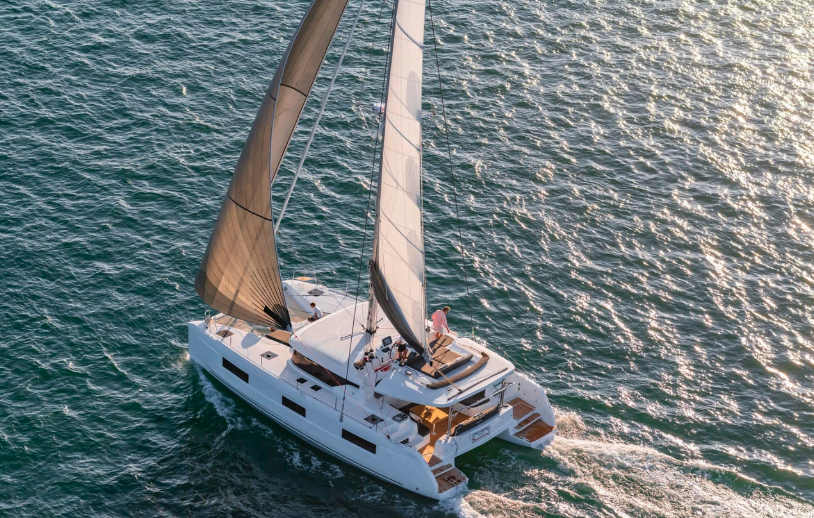
Three weeks ago, I walked through a pristine 2019 Lagoon 46 in Antibes—owner’s version, lithium bank, barely 800 hours—listed at €825,000. Two days later, in Fort Lauderdale, I found what looked like its twin: same year, similar hours, nearly identical layout. Price? $1.18 million. The boats felt the same underfoot. The difference wasn’t the yacht—it was VAT status, regional demand, and a €60,000 electronics upgrade the European seller had quietly folded into the asking price. That gap taught me something I now tell every first-time cat buyer: the number on the listing is where the conversation starts, not where it ends.
Average Catamaran Cost by Size: 40ft, 50ft, & 60ft+
Size dictates your baseline, but it’s the details—build quality, propulsion, and systems—that move the needle. Here’s what the current market looks like for production cruising catamarans.
40-foot class (sailing): New builds from established yards like Lagoon and Bali typically land between $450,000 and $700,000 depending on your options package. Lithium house banks, air conditioning, watermakers, and modern chart plotters can push you toward that upper limit quickly. On the brokerage side, five- to eight-year-old examples with sensible hours—meaning under 1,500—usually trade in the $300,000 to $450,000 range. U.S. East Coast markets often carry a 5–10% premium when inventory tightens before Caribbean season. In the Med, VAT-paid boats sit slightly higher but can be attractive if you’re planning EU-based cruising.
50-foot class (sailing): This is the sweet spot for many cruisers—enough volume for comfortable liveaboard life without the draft or docking headaches of larger hulls. New boats land around $850,000 to $1.4 million depending on whether you choose owner layout versus charter spec, standing rigging upgrades, and factory systems. Clean five- to seven-year-old boats commonly transact between $600,000 and $900,000. Demand stays particularly firm in the Caribbean ahead of charter season, while Asia-Pacific tends to price 8–12% higher due to limited stock and shipping friction.
60-foot+ (sailing): Now you’re entering semi-custom territory. Quality builds from yards like Fountaine Pajot, Privilege, and Nautitech commonly range from $1.8 million to $3.5 million on the used market. New can stretch $2.5 million to $5 million depending on carbon spar options, performance daggerboards, and interior finish level.
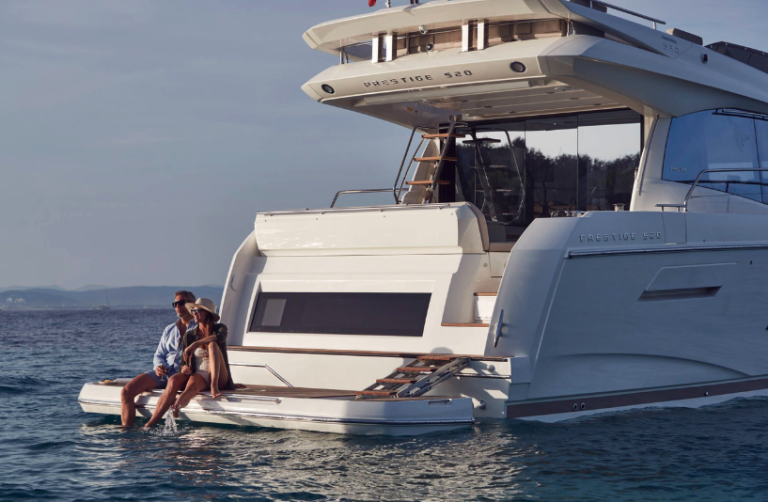
Power catamarans of the same length usually carry a 15–30% purchase premium over their sailing counterparts, then ask more in fuel and service costs. In return, you get faster passage times, gentler motion at speed, and big-boat volume without draft penalties. A 50-foot power cat might list at $1.3 million where a similarly aged sailing 50 sits near $950,000.
Why the Price Spreads?
Three patterns drive valuation more than any others:
Year-to-year engineering changes: Mid-cycle hull tweaks, resin systems, and weight-reduction updates move prices more than most buyers expect. A model year that introduced larger tankage, improved bridge-deck clearance, or better structural reinforcement will often command a measurable step up. Lagoon’s technical evolution between their 450 and 46 models, for example, represented genuine engineering improvements—not just cosmetic updates—and the market reflected that.
Hour bands: Under 1,500 hours on twin small diesels is a comfort zone for many buyers. It signals light use, less thermal cycling on engine mounts, and typically gentler wear on running gear. Between 1,500 and 3,500 hours isn’t scary if service history is crisp and documented—regular oil analysis, scheduled impeller changes, clean bilges—but it does soften price by roughly 8–15% versus comparable low-hour examples. Charter provenance shows up primarily in hours and interior wear patterns, not in assumptions about previous care.
Upgrades that matter: Lithium/solar refits, modern plotters and radar arrays, Starlink-ready networks, and stabilizers on power cats carry real resale weight. A proper lithium conversion—well-installed with appropriate charging profiles and BMS integration—often adds $20,000 to $60,000 of market value. A gyro stabilizer on a power cat can represent $80,000 to $150,000 in original cost and remains highly desirable for owners who value comfort at anchor or in following seas.
Lagoon dominates global catamaran volume, which stabilizes both pricing and parts availability—something that matters when you’re searching for a specific through-hull or windlass part three years into ownership. Recent 40- to 42-footers generally list between $380,000 and $650,000 on the used market depending on age, specification, and region. The 50- to 55-foot range often sits $800,000 to $1.2 million pre-owned, with late-model owner versions creeping higher when equipped with desirable options like upgraded sail handling, davit systems, and modern house banks.
New-builds, when build slots are scarce, can command premiums of 5–10% over MSRP—especially on the 46 and 51 where demand stays persistent. I’ve noticed meaningful pricing differences for boats with upgraded rigging packages, Code 0 gear, and modern lithium battery banks versus base-spec charter versions with lead-acid.
Fountaine Pajot Price Overview (Cruising Class with Performance Feel)
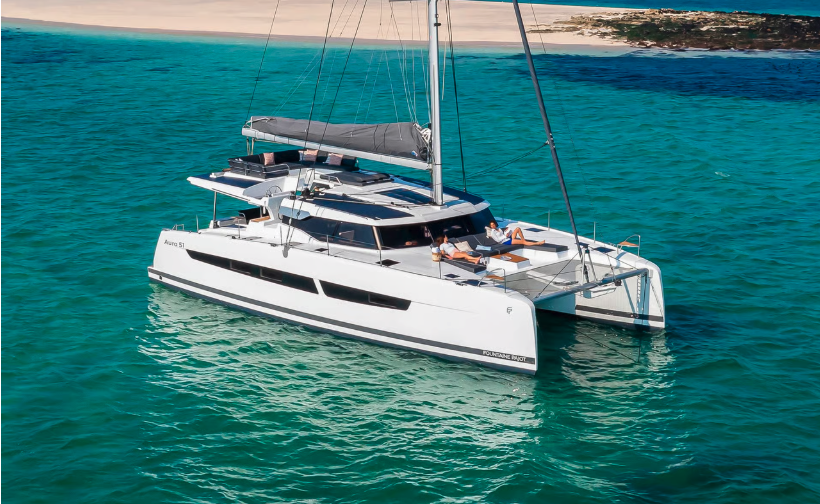
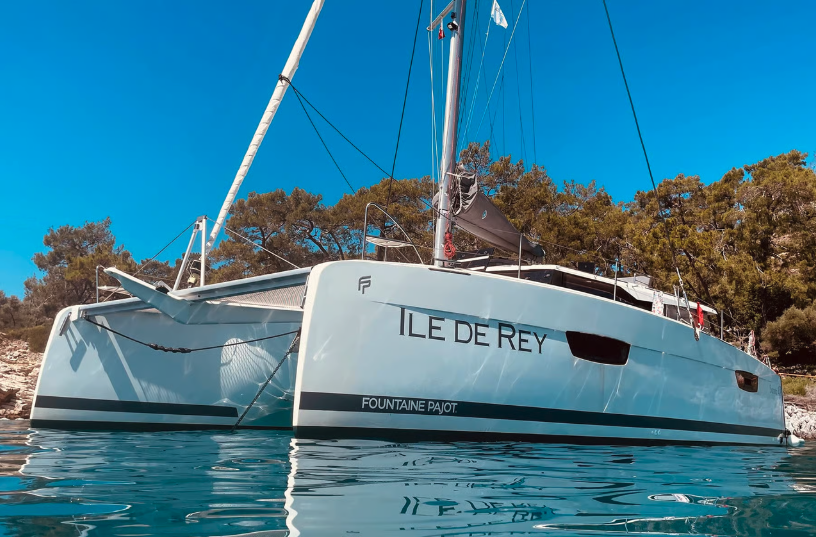
Fountaine Pajot’s Tanna 47, Saona 47, and Aura 51 show a touch more emphasis on weight management and sailing performance versus pure interior volume—something you feel immediately at the helm in 15+ knots. Price-wise they shadow Lagoon closely but hold firm in owner versions where attention to joinery and systems routing shows through. Clean Saona or Tanna 47s commonly trade $650,000 to $950,000 used, depending on age and options. Aura 51s, when they appear on the brokerage market, often ask $1.1 million to $1.4 million. Buyers sensitive to helm ergonomics, bridgedeck clearance, and sailing feel often favor FP in this bracket.
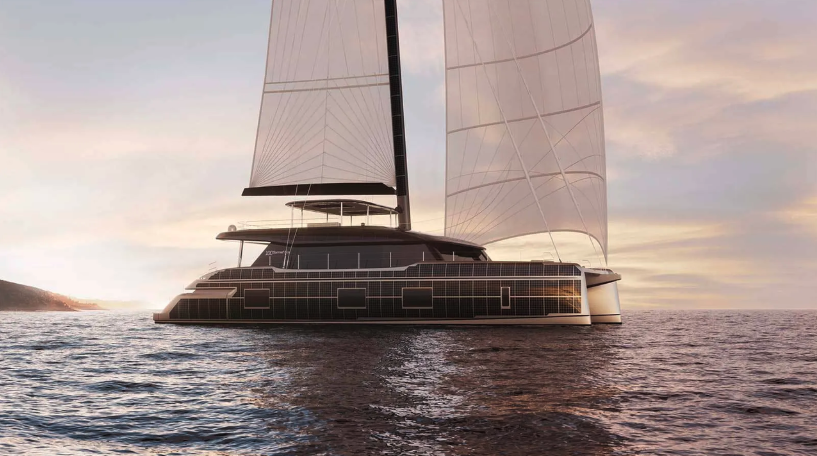
Sunreef operates in a different orbit entirely—fully custom interiors, extensive carbon options, and hotel-grade mechanical systems. New sailing or power cats in the 60- to 80-foot band frequently span $4 million to $10 million depending on specification. Custom interiors incorporating stone countertops, exotic veneers, integrated AV and IT networks, and hybrid propulsion can add seven figures quickly. On the brokerage side, depreciation is gentler in percentage terms but chunky in absolute dollars. Serious buyers weigh yard support, warranty transferability, and the exact specification trail before committing.
Power vs. Sailing Catamaran Cost Comparison
Purchase price: Power catamarans of equal length often run 15–30% higher at acquisition. A 50-foot power cat with uprated diesels, modern helm electronics, and a gyro might list at $1.3 million where a similarly aged sailing 50 sits near $950,000.
Running costs: Fuel fundamentally changes the rhythm of ownership. A 50-foot power cat at 16–18 knots may see 30–45 gallons per hour combined—meaningful expense over a 200-mile passage. A sailing sister might burn 1.5–3.0 gph total while motoring at 6–8 knots, with near-zero fuel consumption under sail. Maintenance tilts differently: standing rigging and sail replacement cycles versus larger engines, higher-capacity generators, and stabilizer servicing. Annual upkeep tends to converge at 7–12% of hull value, but volatility is higher for power cats if usage is heavy.
Use case alignment: If your itinerary values speed, predictable ETAs, and the flexibility to power through weather windows, the premium can be entirely rational. If you prioritize silence under sail, dramatically lower fuel burn, and simpler mechanical systems, sailing wins on lifetime cost and sensory pleasure. Neither choice is wrong—they serve different cruising philosophies.
Total Cost of Ownership: Annual Maintenance & Charter Income Potential
Annual maintenance for responsible private use usually sits around 7–10% of hull value, rising to 10–12% with high hours or complex systems. Here’s what that looks like for a typical 45- to 50-foot sailing catamaran:
Insurance: $10,000–$22,000 (region, experience level, and storm plan matter significantly)
Dockage/mooring: $12,000–$25,000 (U.S. East Coast marinas at the upper end; Mediterranean varies with VAT status and seasonal demand)
Haul, antifoul, zincs: $6,000–$12,000 annually
Engine and generator service: $2,000–$6,000 (oil, filters, impellers, belt inspection)
Rigging inspections and eventual standing-rig refresh every 7–10 years: $25,000–$45,000
Sail replacement cycle (mainsail and genoa): $20,000–$50,000 depending on cloth and size
Power cats add gyro servicing, significantly higher fuel costs, and sometimes pricier haul logistics due to beam, nudging annual budgets upward by 15–25%.
Charter Income Reality
According to industry charter management data, well-placed 45- to 50-footers in managed programs can gross $120,000 to $250,000 annually in strong markets like the Caribbean or Med. Larger power cats sometimes clear $300,000+. Net income varies widely. After management fees (typically 20–35%), crew costs if crewed, and accelerated maintenance from higher usage, many owners cover 50–80% of annual costs in good years.
The trade-off is straightforward: higher hours compress resale value by roughly 10–20% versus comparable private-use boats, though strong documentation and transparent service records mitigate much of that gap. I’ve seen well-maintained charter cats with 4,000+ hours sell within 5% of comparable private examples when the logbooks tell a clear story.
How to Find the Best Catamaran for Sale at the Right Price
I start every search with three filters: build year, hour band, and documented structural updates or refits. Then I layer in upgrades that genuinely change the ownership experience—power capacity, refrigeration systems, shade solutions, pilot visibility, and sail-handling ergonomics.
Shop Regionally Smart
The Mediterranean and Caribbean offer the deepest inventory pools. The U.S. East Coast is logistically convenient for American buyers but can run pricier mid-season when demand peaks. Asia-Pacific often carries a scarcity premium of 10–15%. When comparing across regions, factor shipping costs ($30,000 to $150,000+ depending on route and season) and VAT implications to keep comparisons meaningful. A €700,000 VAT-paid boat in the Med might actually cost less delivered to the U.S. than an $800,000 non-VAT Caribbean listing once you model shipping.
Read the Refit, Not Just the Year
A tidy lithium/solar/watermaker package paired with a modern navigation suite can be worth substantially more than an extra cabin you’ll never use. Conversely, orphaned electronics from discontinued manufacturers and tired canvas are legitimate bargaining chips. I recently walked a 2016 boat with a $95,000 refit completed 18 months prior—new standing rigging, Raymarine Axiom suite, lithium house bank, fresh upholstery. That boat was genuinely worth more than a 2018 example with original everything and deferred maintenance.
Mind the Hour Bands
Zero to 1,500 hours feels like light use—engines barely broken in, minimal wear on running gear. Between 1,500 and 3,500 hours is perfectly fine with solid records and clean maintenance intervals. Beyond that threshold, I slow down and inspect more carefully: exhaust elbows for corrosion, engine mounts for sagging or cracking, sound insulation condition, and hinge hardware fatigue. Last month in Palma, I inspected three 2017 units where quiet hinge fatigue on saloon doors and lazarette hatches told me more about usage intensity than the hour meters ever could.
Compare Competitors Horizontally
Lagoon versus Fountaine Pajot is a study in volume versus feel, decided in micro-doses of helm feedback and motion characteristics.Privilege, HH Catamarans, Seawind, Leopard, Bali—each has a distinct personality in joinery execution, deck ergonomics, and motion at sea. Price follows those personalities. Understanding where a particular model sits in its competitive set helps you evaluate whether you’re looking at a fair price or an outlier.
Plan for Depreciation
According to The Multihull Company’s analysis, early-year depreciation typically runs about 10–15%, then settles near 5–8% annually with condition, upgrades, and market sentiment driving the spread. High-volume production models from Lagoon or Leopard depreciate more predictably than low-volume semi-custom builds, which can be an advantage or disadvantage depending on your timeline.
Finding Clarity in the Numbers
Last Tuesday, I sat across from a couple in their early fifties—experienced sailors, thoughtful about money, completely overwhelmed by the range of options and prices they’d found online. We spent two hours walking through their actual usage plan: six months a year in the eastern Caribbean, occasional guests but mostly just the two of them, a mild preference for sailing over motoring when conditions allowed. By the end, the choice clarified itself: a well-documented 2017 Lagoon 450 with 2,200 hours, recent standing rigging, and a sensible lithium upgrade. Not the newest. Not the lowest hours. Not the fanciest layout. But the one that needed the fewest changes after closing, in the region where they wanted to cruise, at a price that let them sleep well at night.
That’s the principle I’d offer: clarity beats cheapness. Buy the newest, best-documented hull in the layout you’ll actually live with, in the region that minimizes post-closing logistics and maximizes your time on the water. Catamaran price becomes a calmer conversation when the specification aligns with your real use. The right boat isn’t the one that costs the least—it’s the one you’ll still be happy with three years from now, when the spreadsheet is forgotten and all that remains is the experience of the boat itself.