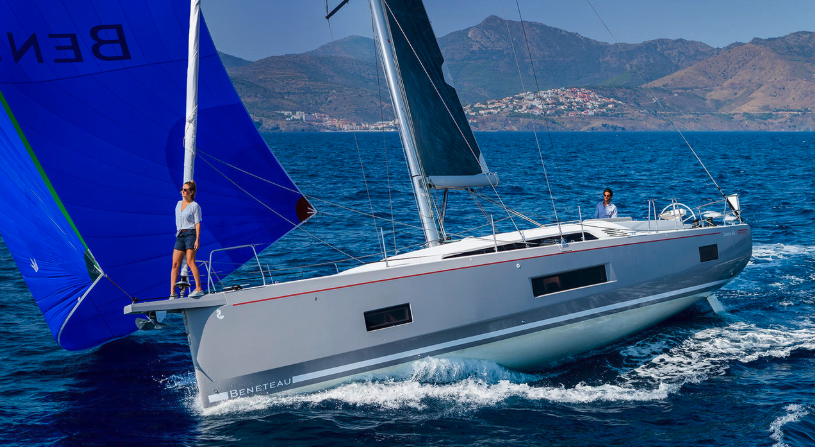
Most buyers who ask me about the Oceanis 46.1 expect a straightforward answer — “What’s a fair price in 2025?” But this model rarely behaves in straight lines. A private, low-hour boat in the U.S. can sit tens of thousands above a same-year hull in the Adriatic, and the moment you add VAT status, charter history, sail age, electronics, or canvas condition, the spread widens quickly.
That’s why I map the 46.1 by region, usage profile, and specification rather than chasing a single number. Once those layers fall into place, the price story finally makes sense.
Beneteau Oceanis 46.1 Price in 2025 (New vs Used)
New pricing: In 2025, a new Beneteau Oceanis 46.1 official specification typically invoices at roughly $520,000–$560,000 base in the U.S., with a realistic sail-away spec (air con, genset, in-mast furling, electronics, bow thruster, canvas, decent sail inventory) landing around $640,000–$730,000. In the Med, delivered-and-equipped numbers often sit €560,000–€680,000 including VAT depending on pack choices and local fit-out. Asia-Pacific tends a touch higher, import duties and shipping push turnkey pricing 5–10% above U.S. equivalents.
Used pricing: For private, low-hour boats, 2019–2020 examples usually range $380,000–$470,000 in the U.S. and €360,000–€460,000 in the Med (VAT status swings this). 2021–2022 boats commonly list $440,000–$540,000 depending on options and hours. Nearly-new 2023–2024 boats with premium packs and lithium/solar tends to ask $520,000–$620,000.
Regional spread:
Mediterranean: The Oceanis 46.1 is popular with charter fleets, so you’ll see volume. Ex-charter examples price attractively, often 10–18% below private-equivalent boats, but carry higher hours (1,500–3,000+), cosmetic wear, and heavier systems usage.
U.S.:Fewer ex-charter listings, generally lower hours (300–900 range on 2019–2022 units) and slightly higher asking prices. This premium is often offset by cleaner survey results and the ability to verify chain of title via the USCG National Vessel Documentation Center, ensuring no hidden liens exist on domestic hulls.
Asia: Low supply, higher logistics costs. Well-kept private boats can command a premium, particularly with tropical air con, genset, and quality canvas.
Why the gaps: Price hinges on five layers: year, engine hours, options, condition, and VAT/tax status. A 2020 with 2,200 hours and basic sails in the Med will sit far below a 2020 U.S. boat with 600 hours, upgraded electronics, and fresh canvas. Sails alone move the needle, new cruising main + genoa can easily swing $12,000–$22,000.
Cost of Optional Extras for the Oceanis 46.1
Options change the lived experience, and the resale logic. I budget them in real dollars because buyers feel them twice: once at purchase, again at resale.
Well-specified boats recover option value better in hot-climate markets (air con, genset, shade, watermaker) and in performance-minded pockets (sails, winches, bowsprit).
Performance Pack vs Cruising Pack Upgrades
Performance Pack vs Cruising Pack Upgrades
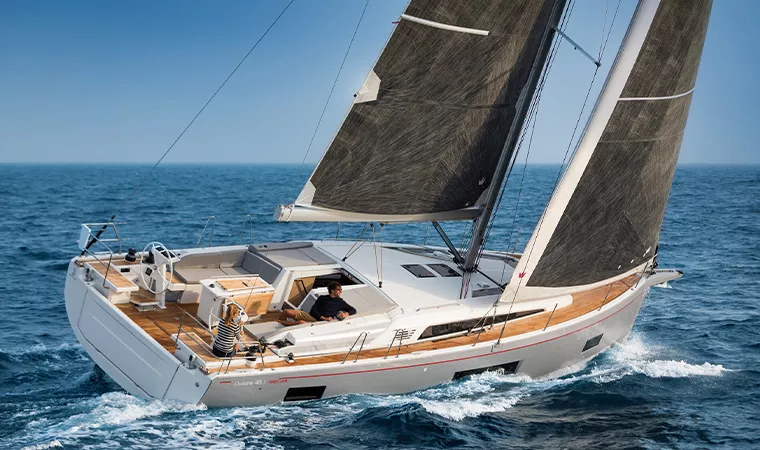
I’ve sailed both setups back-to-back. The Performance Pack typically brings a taller mast, deeper keel (on some specs), upgraded sails (often laminate), performance rigging tweaks, and sometimes a square-top main.
As noted in independent Yachting World performance reviews, this configuration livens the 46.1 noticeably, offering cleaner pointing angles and a crisper feel in 10–14 knots Expect roughly $15,000–$30,000 premium depending on sailcloth and hardware.
The Cruising Pack leans into convenience: in-mast furling, electric primary winches, cockpit controls, upgraded ground tackle, and comfort options. Pricing often clusters $18,000–$35,000 depending on brand choices and electronics bundling. Resale-wise, Performance Pack keeps value in sailor-heavy regions (Brittany, Pacific Northwest), whereas Cruising Pack holds best in warm-climate, family-cruising markets (Florida, Balearics).
Annual Maintenance Costs for a 46-Foot Sailing Yacht
On a 46.1 used as a private cruiser, annual running costs usually sit around $25,000–$45,000 in the U.S., excluding moorage in premium marinas. Here’s how mine typically break down in buyer models:
Insurance: $5,000–$10,000 (hurricane exposure, survey age, and experience matter)
Dockage: wildly regional, $6,000–$18,000+ for standard slips: Med berths can spike in July–August
Engine + genset service: $2,000–$4,000(Adhering to official Yanmar 4JH series maintenance guides for oil/filters/impellers/coolant is critical for warranty retention).
Sails/rigging reserve: $2,000–$5,000 annually (averaged: full sail refresh every 6–8 years for cruisers)
Bottom (haul, paint, zincs): $2,000–$6,000 depending on paint and yard
Teak decks increase upkeep: lithium/solar decreases genset hours but adds battery management costs. Charter programs alter the math, more frequent bottom jobs and sail turnover, but some costs offset within the program.
Oceanis 46.1 Resale Value and Market Demand
Depreciation on the Oceanis 46.1 follows a familiar curve: the first three years commonly see 12–16% annual effective depreciation (spec- and market-dependent). Years 4–8 often settle toward 5–8% annually, assuming average private use. Low-hour, well-optioned boats, air con, genset, upgraded sails, bow thruster, hold their ground better.
True drivers: year first, then hours, then options, then cosmetic condition, then region. I give extra weight to hour bands: under 800 hours is strong: 800–1,600 is fine with good service records: beyond 2,000 triggers closer inspection of cooling circuits, sail condition, and deck hardware. Demand remains healthy in the U.S. and Western Med: Asia is more supply-constrained and price-sticky.
Find a Beneteau Oceanis 46.1 for Sale
How I source them: I start with cross-regional searches (U.S. East Coast, Balearics, Croatia, Australia) and create a short-list by hour bands and option tiers. I’m cautious with ex-charter boats, not dismissive, just methodical. I verify VAT status early, scan sail dates, ask for engine/genset service logs, and listen for deck hardware noise under load during sea trials.
Comparables I pull into the same spreadsheet: Jeanneau Sun Odyssey 490, Dufour 470, Bavaria C45/C50. If a 46.1 is leaning premium on price, it should lean premium on sails, electronics, and interior condition as well. One dependable principle: buy the cleanest survey in the best location you’ll actually sail, transport and “project discounts” evaporate faster than they appear.
If you want to keep cruising, here are a few earlier posts worth sailing back to.