Earlier this week, while reviewing two nearly identical Azimut 66 Fly listings, one in Fort Lauderdale, one in Palma, something quiet but telling stood out. The Florida boat asked $2.35M with Seakeeper, low hours, and no VAT: the Palma sistership sat at €2.15M VAT-paid, slightly higher hours, newer electronics. Same model, different oceans, different math. That, in a nutshell, is how the Azimut yachts price conversation really works: model generation, equipment, hours, and regional friction costs all pulling the number gently up or down.
Azimut Yachts Collections Overview
Azimut Fly Series – Elegance & Luxury Yachts
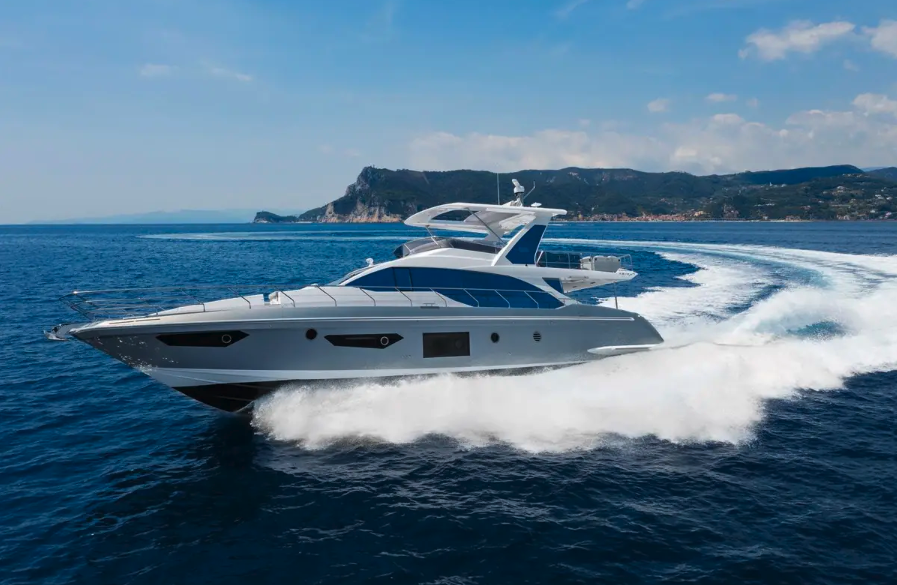
This is the line most buyers picture: airy flybridges, generous glazing, and interiors that feel like Milan apartments at sea. Think 50–90 feet, with popular models such as the 53, 60/62/66, 72, and 78. Pricing sensitivity sits around option levels (stabilizers, hardtops, upgraded interiors) and engine-hour bands. The Azimut Fly Series balances family comfort with respectable cruise efficiency: hull evolutions in the mid-2010s improved ride softness and interior volume without big weight penalties.
Azimut S Series – Sport & Performance Yachts
The S models (S6, S7, S8, etc.) lean into IPS or surface-drive performance, low, sleek profiles, and a livelier helm feel. They tend to command a touch more on late-model used markets when hours are low and the spec includes carbon roof structures and gyro stabilization. Buyers choosing between S and Fly should weigh outdoor space and headroom versus speed and styling, the S will feel quicker and more intimate: the Fly will entertain better at anchor.
Azimut Magellano Series – Long-Range & Explorer Yachts
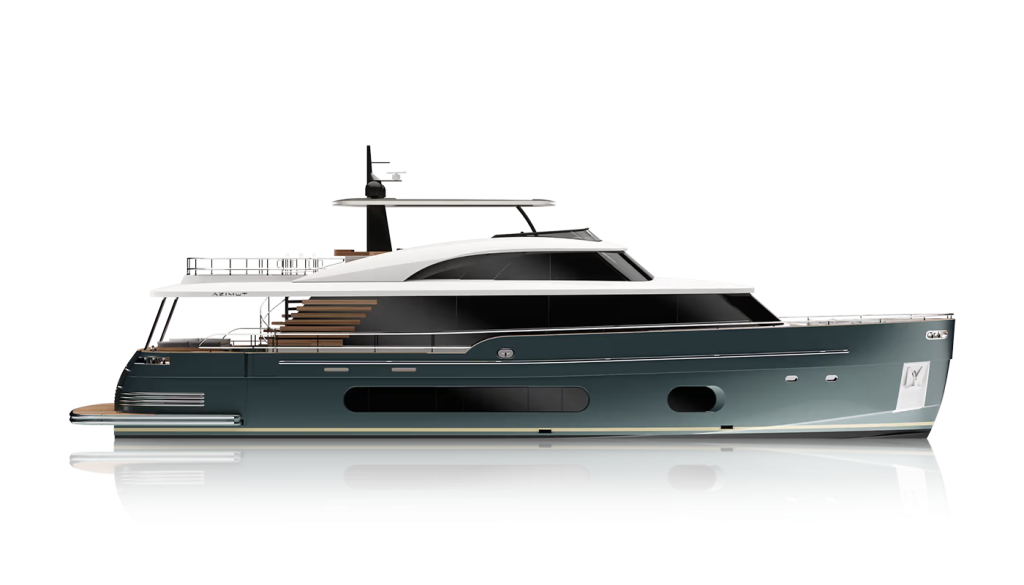
Magellano sits in the “crossover” pocket: semi-displacement hulls, efficient cruise in the mid-teens, and a calmer motion profile. The 53, 66, and 25M are standouts when owners want range and quieter passage-making. These boats hold value nicely when presented with stabilizers, upgraded house systems, and solid service records. They’re also favored in the Med for shoulder-season cruising where weather is changeable.
Azimut Yachts Price List – New vs. Used
New Azimut Yachts Prices
New-build Azimut pricing depends on size, spec, and slot timing. Typical window pricing I’m seeing across the ranges:
Fly Series: roughly $1.3M–$2.0M for 50–55 ft: $2.1M–$3.2M for 60–66 ft: $3.8M–$5.8M for 72–78 ft. Grande models (26–35M) step from about $8M to $18M+ depending on materials, engine package, and décor.
S Series: generally $1.6M–$2.4M for S6/S7: $3.0M–$4.5M for S8/S10 tiers with performance options.
Magellano: typically $1.8M–$2.6M for Magellano 53/60: $3.5M–$5.5M for 66/25M depending on stabilizers, long-range spec, and interior upgrades.
A few notes that move the needle on a new Azimut yachts price:
Stabilizers: $80K–$150K for gyros on mid-sizes: larger boats can run higher. They pay back in resale desirability.
Electronics and AV: full-package, networked systems can add $50K–$120K. Not all tech retains value equally: buyers reward clean integration more than top-end brand names.
Slot position and currency: delivery season and EUR/USD shifts can swing effective pricing by several percent.
Used Azimut Yachts Prices & Market Trends
Used pricing reflects the familiar stack: year → hours → spec → location → service history. As of this season:
2014–2017 Fly 50–60 ft: often $850K–$1.4M in the U.S.: €800K–€1.3M in the Med (VAT status crucial). Clean under-1,000-hour boats with gyros sit at the top.
2018–2021 Fly 60–72 ft: typically $1.8M–$3.2M: Med examples can price similarly in euros, with VAT-paid units trading faster domestically.
S Series 2019–2022: $1.6M–$2.8M depending on model and engine hours: IPS boats with careful joystick usage and documented servicing hold well.
Magellano 53/66 (2016–2020): $1.4M–$3.0M, with quieter, long-range specs commanding premiums.
Depreciation on Azimut tends to follow a gentle S-curve: steeper in the first 3 years (roughly 12–18% cumulative), moderating years 4–7 (6–9% per year), then leveling with condition differentiating outcomes. Regional notes:
U.S.: strong demand for 60–78 ft Fly models: clean titles and U.S. service records add confidence.
Med: a wide spread due to VAT and charter history disclosure norms: VAT-paid often secures domestic buyers.
Asia-Pacific: fewer listings, higher logistics costs: well-specified late models can ask premiums due to scarcity.
Operating costs matter when back-solving value. On 60–80 ft yachts, annual maintenance and running typically sit around $120K–$300K depending on usage, crew, and mooring. Buyers do price this in subconsciously, boats with calmer, predictable service histories sell faster and closer to ask.
What Defines Azimut Yachts Value
Design & Innovation
Azimut’s value stems from weight-conscious construction (selective carbon use in decks/superstructures), abundant natural light, and layouts that feel larger than the LOA suggests. Mid-2010s refreshes improved glazing stiffness and reduced creaks: post-2019 electronic architectures are simpler to troubleshoot. Interior fit tends toward contemporary Italian, clean veneers, stitched leathers, refined hardware. Resale rewards boats with timeless finishes over trend-heavy palettes. Compared with Sunseeker or Princess, Azimut often feels a touch more design-forward: compared with Ferretti, it’s slightly lighter on the move but similarly elegant.
Performance & Build Quality
Performance varies by line. Fly models settle into happy cruises around 22–26 knots with reasonable fuel burn: S models push faster when seas cooperate: Magellano keeps comfort center stage at 10–18 knots. Engineering maturity improved with newer engine generations, Volvo IPS revisions and later MAN series brought better diagnostics and smoother torque delivery. Value jumps with gyro or fin stabilization (comfort equals use), upgraded sound attenuation, and robust AC/electrical plants for warm-weather cruising.
True price drivers, in order of effect: year cohort (hull and systems generation) → engine hours (under ~700 often draws a premium) → stabilization and spec → regional demand and VAT → documentation and service cadence.
How to Get a Quote on Any Azimut Model
If you’re zeroing in on a specific model, here’s the calm, reliable path I use:
Define the brief: LOA range, cruising style (Fly, S, or Magellano), stabilization must-have or not, and target hour band.
Check three regions: U.S., Western Med, and your nearest viable market. Note VAT status, shipping, and duty, these can swing the net azimut yachts price by 5–12%.
Pull comps by year generation: look for meaningful updates (e.g., post-refresh interiors, newer engine electronics). Adjust for gyro, hardtop, and electronics packages.
Inspect service records first, cosmetics second. Confirm engine services by hours and years, not just stamps. Gyro service intervals and cooling systems are worth a close look.
Price the full landing: purchase price ± VAT/duty, shipping, survey, insurance, and first-year maintenance. I usually model $150K–$250K for a 60–70 ft first year to be safe.
If you want a precise number, ask for a written quote with a line-item spec and delivery timing. Then compare it to two real-world listings in different regions. The right boat isn’t just the lowest sticker, it’s the one that will be quiet, stable, and easy to own on day 400, not just day one.
Azimut Yachts Price — Frequently Asked Questions
What is the typical azimut yachts price for new models?
New Azimut pricing varies by series, size, and spec. Expect roughly $1.3M–$2.0M for Fly 50–55 ft, $2.1M–$3.2M for 60–66 ft, and $3.8M–$5.8M for 72–78 ft. S Series runs about $1.6M–$4.5M, while Magellano ranges $1.8M–$5.5M depending on stabilization and interior upgrades.
How much does an Azimut 66 Fly cost?
For a 66 Fly, new builds typically land within the $2.1M–$3.2M Fly-series band, depending on options. Recent used comps show $1.8M–$3.2M for late-model 60–72 ft Fly boats. Real-world examples: $2.35M in Florida (Seakeeper, low hours, no VAT) versus about €2.15M VAT-paid in Palma with slightly higher hours.
If you’d like to keep exploring, here are a few past posts worth sailing back to.