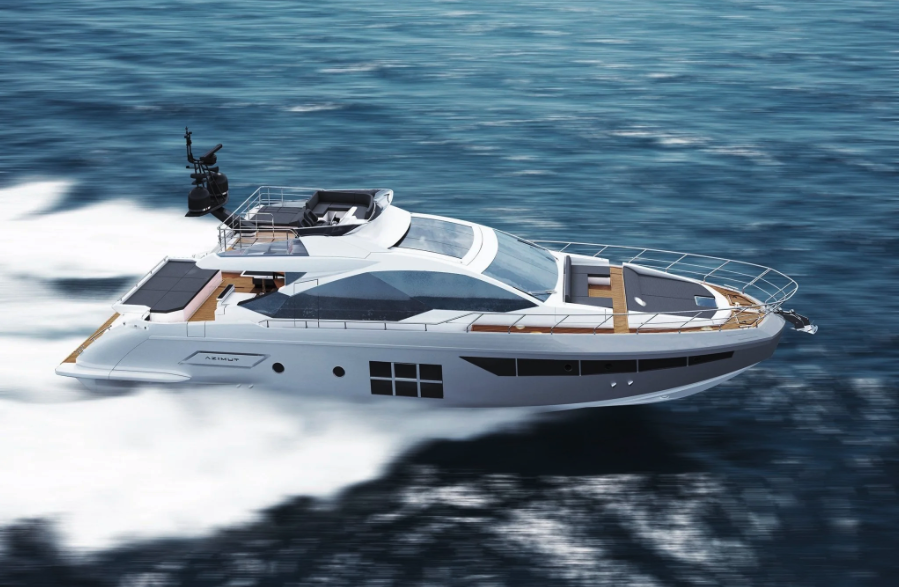
I’ve been tracking Azimut S7 listings for a while now, and something keeps catching my attention—the way certain yachts hold their value has less to do with their year and more to do with how they were built from the start.
A well-configured 2020 model can easily command pricing that sits closer to a 2022, and when you look at the details, the logic becomes clear. It’s not about age; it’s about what’s actually on board.
The Azimut S7 occupies this interesting space where sport yacht performance meets genuine liveaboard comfort. At just over 70 feet, she’s substantial enough to feel serious but manageable enough that you’re not locked into full-time crew. Understanding her pricing means looking past the base number—it’s about spotting which years brought real upgrades, how the used market is actually behaving right now, and what ownership truly costs once the purchase paperwork clears.
Let me walk you through what I’ve been seeing across recent listings, ownership budgets, and resale patterns.
Azimut S7 Price Range (2025 Analysis)
The Azimut S7 price typically ranges from €3.2M to €4.5M for a new build, depending on configuration and market. Used models from 2019–2022 generally sit between €2.4M and €3.6M, though this varies with engine hours, upgrades, and regional demand.
When I line up current Azimut S7 listings, the spread reflects more than just calendar age. A 2020 model with upgraded Volvo IPS drives, premium interior finishes, and recent stabilizer service often commands stronger pricing than a 2022 base-spec build with higher hours.
New vs. Used Market Comparison
A new S7 configured with popular options—extended flybridge hardtop, upgraded galley appliances, premium teak decking, and enhanced audio-visual systems—usually lands around €4.2M–€4.5M before delivery and commissioning costs.
Used market pricing breaks down like this:
2023–2024 models: €3.4M–€4.0M (very early depreciation phase)
2018–2019 models: €2.4M–€2.9M (mature pricing, often with original owners)
What drives these differences? Engine hours matter more than year alone. A 2021 model with 150 hours and documented service history will typically outprice a 2022 with 400 hours. Hull updates introduced in 2020—specifically improved sound insulation and refined stabilizer integration—also create a small but noticeable value bump.
Regional demand adds another layer. Mediterranean listings, especially from Italy and France, tend to reflect higher baseline pricing due to local demand and proximity to Azimut’s service network. U.S. listings often show slightly softer numbers, particularly in the Fort Lauderdale and California markets where inventory moves faster.
Annual Ownership Costs
Once you move past the purchase, understanding the Azimut S7 cost structure becomes essential. Annual ownership typically runs between €180K and €280K, depending on usage patterns, crew configuration, and how actively you maintain the yacht.
Crew Requirements & Salary Estimates
The S7 can be owner-operated or run with a small professional crew. Many owners handle day trips themselves but bring on crew for longer passages or when hosting guests.
Chef (seasonal or event-based): €30K–€45K per season
For owners who prefer flexibility, hiring crew on a rotational or seasonal basis reduces baseline costs. I’ve noticed more S7 owners gravitating toward this model—permanent captain, rotating support crew—which keeps annual crew costs around €100K–€120K rather than a full-time trio.
Maintenance, Service & Technical Upkeep
Regular maintenance forms the backbone of ownership cost. For the S7, expect:
If you’re running Volvo IPS engines—common on S7 builds—service intervals are predictable, and parts availability through Volvo Penta’s network is strong. According to detailed technical reviews, the S7’s triple 800 hp Volvo Penta D13 IPS1050 diesels consume approximately 86.1 gallons per hour at cruise (around 28.9 knots), offering excellent efficiency for this class.
I’ve found that IPS-equipped models tend to have slightly lower unplanned repair costs compared to shaft-drive alternatives, mostly due to fewer mechanical touch points.
Stabilizer service deserves separate attention. The S7 typically comes with a high-quality fin or gyro system, and annual service runs €6K–€10K. Skipping this maintenance shows up quickly—not in breakage, but in diminished comfort and increased wear on surrounding systems.
Insurance, Mooring & Operating Expenses
Insurance for the S7 typically costs €30K–€45K annually, depending on coverage scope, navigational range, and claims history. If you’re cruising beyond Mediterranean or U.S. coastal waters, expect higher premiums.
Mooring costs vary dramatically by location:
Mediterranean (high season): €40K–€70K annually
U.S. East Coast (marina): €25K–€50K annually
Caribbean (seasonal): €30K–€55K annually
Fuel and operational expenses depend heavily on usage. At cruise speed (around 28 knots), the S7 burns roughly 180–220 liters per hour. For an owner running 150 hours annually, fuel costs land around €35K–€50K at current European diesel pricing.
When I add up these elements—crew, maintenance, insurance, mooring, and fuel—the typical S7 ownership budget sits comfortably around €220K annually for moderate use. Owners who cruise lightly or handle more tasks themselves can bring this closer to €180K, while those running full crew and extended seasons may reach €280K.
Resale Value & Used Price Trends
Understanding Azimut S7 used market behavior helps frame long-term ownership expectations. The S7 depreciates at a rate that’s gentler than many sportier Italian builds, largely because of its dual-purpose layout—it appeals to both performance-focused buyers and those prioritizing comfort.
First-year depreciation typically runs 12–15%, which is relatively mild for a 70-foot sport yacht. By year three, cumulative depreciation settles around 25–30%, then flattens considerably. A well-maintained 2020 model purchased new for €4.0M might reasonably command €2.8M–€3.0M today—assuming moderate hours, clean service records, and no deferred maintenance.
What Holds Value?
Stabilizers, upgraded audio-visual systems, and premium interior materials consistently add resale appeal. According to independent yacht reviews, the S7’s use of carbon fiber in its superstructure—what Azimut calls “Carbon Tech Generation”—allows for expanded onboard volumes while maintaining dynamic stability, a feature that sophisticated buyers recognize and value.
I’ve noticed that S7s with extended flybridge hardtops and upgraded galley layouts move faster in the used market, often fetching 8–12% higher pricing than base-spec equivalents.
Conversely, models with high engine hours (over 500) or incomplete service documentation tend to sit longer. The difference isn’t dramatic, but it’s real—buyers considering used S7 listings are detail-focused and willing to wait for the right package.
Regional resale patterns mirror new-build demand. Mediterranean-based yachts tend to hold value slightly better, partly due to tighter inventory and partly because European buyers often prioritize local purchase for VAT and registration simplicity.
Technical Considerations: Understanding the Build
From a construction perspective, the S7 benefits from Azimut’s strategic use of carbon fiber throughout the superstructure, flybridge, mast, transom, and portions of the deck. According to Power & Motoryacht’s detailed testing, this reduces top weight by approximately 30% and helps lower the center of gravity, contributing to the yacht’s confidence-inspiring handling and reduced roll momentum—up to 15% improvement compared to traditional fiberglass construction.
The hull design comes from P.L. Ausonio Naval Architecture working with Azimut’s R&D department, featuring a planing hull with approximately 13.8 degrees of transom deadrise and 18 degrees amidships. This configuration provides stability at rest while maintaining efficient performance at speed.
The yacht achieved a top speed of 35.1 knots during independent testing, with noise levels remaining impressively low at just 69 decibels—making her a genuinely comfortable long-distance cruiser despite her sporty character.
Finding the Right Azimut S7
If you’re seriously considering an S7—whether new or used—the next step is gathering specific pricing based on your preferred configuration, delivery location, and intended use profile.
For new builds, working directly with Azimut’s dealer network gives you access to current build slots, option pricing, and delivery timelines. Build times currently run around 12–16 months, so if you’re planning for a 2026 season, starting conversations now makes sense.
When evaluating options, focus on these value drivers:
Engine hours and service history
Stabilizer type and condition
Interior materials and recent updates
Electronics generation and upgrade path
Hull survey results and structural condition
A thorough survey will cost €5K–€8K, but it’s essential. I’ve seen deals fall apart over deferred maintenance that wasn’t caught early, and the best listings move quickly—having survey financing pre-arranged speeds up decision-making.
The Azimut S7 represents a thoughtful balance—performance without harshness, space without excess, and a cost structure that’s predictable once you understand the components. For most buyers, a well-kept 2020–2022 model with moderate hours and documented service history delivers the best combination of value retention and immediate usability.
If you want to keep cruising, here are a few earlier posts worth sailing back to.