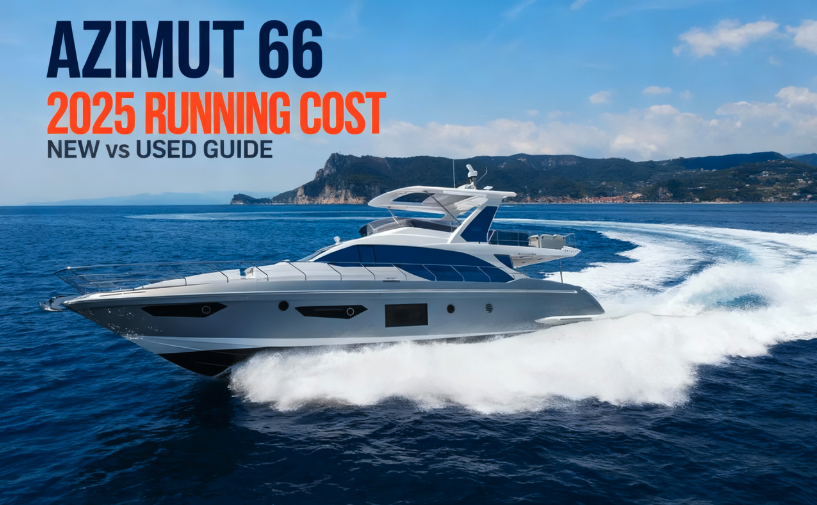
There is a distinct feeling you get when you step aboard a yacht that has been cherished versus one that has simply been ‘owned.’ I walked through a 66 Fly recently where the teak felt soft underfoot and the engine room was clinical; it commanded a premium, and rightly so. In a market full of noise, listing figures can be deceptive. When clients ask me about the average Azimut 66 price, I always tell them that the sticker price is just the opening line of a story. The real value lies in the chapters written by the previous owner’s maintenance schedule and the specific options they chose.
2025 Price Matrix: Brokerage vs. Late-Model Pricing
The Depreciation Curve: Early Hulls (2016–2019) vs. Recent Builds (2020–2023)
The Azimut 66 Fly debuted mid‑2010s and held court until the 67 arrived. In today’s brokerage market:
2016–2017 boats typically sit around $1.45M–$1.75M, with clean service history and ~1,000–1,600 hours.
2018–2019 units often range between $1.75M–$2.05M, with premiums for Seakeeper, hardtop, and upgraded electronics.
Late hulls (2020–2021) tend to ask $2.00M–$2.40M when well‑specced and sub‑1,200 hours: a few 2022–2023 carryover registrations appear, but supply is thin and pricing is case‑by‑case.
Early‑year depreciation was typical for a 66‑foot flybridge: roughly 12–18% in the first two years, then a steadier 6–8% per year as the market recognized the platform’s strengths. Post‑2020 pricing has been stickier, partly a pandemic effect, partly fewer late‑model 66s.
The “Carbon Tech” Premium: Do Newer Models Hold Value Better?
Azimut’s Carbon-Tech generation superstructure and hardtop meaningfully reduce weight up high, improving stability and efficiency. The 66 Fly was among the first models to implement this carbon fiber technology, which reduces structural weight while increasing interior and exterior volume. Buyers do pay a modest premium, often $60K–$120K, in the resale market for proven Carbon-Tech execution paired with Seakeeper. In practice, the boats that hold value best combine:
Carbon-Tech superstructure + hardtop
Seakeeper 9 (or dual units where fitted)
Updated nav suites (Garmin or Raymarine refresh 2020+)
Clean hour band and documented CAT service
It’s not the material alone: it’s the full, modernized spec that keeps demand strong.
Regional Variance: Pricing Differences Between Med Specs and US Specs
US East Coast: Generally commands a 5–10% premium for US-spec power and safety equipment, hardtops, chillers sized for Florida summers, and the convenience of being “already here.”
Mediterranean: Broader inventory, more bimini-top boats, and occasional sharper asks, often 5–8% below comparable US listings. VAT status (paid vs. not) moves numbers materially.
Asia-Pacific: Thinner supply with pockets of strong demand: logistics and import duties can push asking prices 5–12% higher than Med equivalents. Buyers often factor delivery back to their home waters into negotiations.
Shipping a 66 can run $80K–$150K depending on route and season, which narrows cross‑ocean arbitrage for many buyers.
The Real Cost of Ownership (Beyond the Sticker Price)
Insurance: about 0.8–1.2% of hull value ($14K–$26K/year), subject to experience and storm exposure.
Dockage: $180–$300/ft/year in many US markets: figure $12K–$20K for the slip, more in premium marinas. Med moorings vary widely by port and season.
Captain/crew: A full‑time captain often lands $70K–$90K plus benefits. Many owners run with a captain + part‑time stew during peak months: others go freelance at $350–$500/day.
Variable Costs: CAT C18 Fuel Consumption & Service Intervals
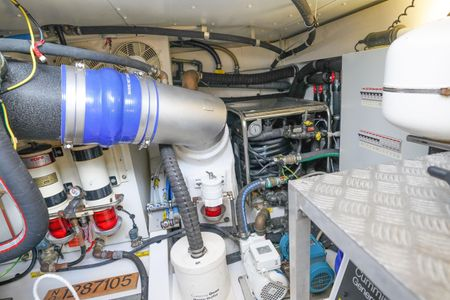
Twin CAT C18 ACERT marine engines (1,150–1,200 hp) are the heart of the 66. At an honest cruise, 24–27 knots, you’re usually looking at ~90–110 gph total, depending on load, sea state, and cleanliness of running gear. Pull back to 10–11 knots and you can see ~15–22 gph. Service cadence that keeps resale happy:
1,000 hours: more involved checks (valve lash, aftercoolers as needed)
2–3 years: heat exchanger/aftercooler service by calendar if hours are low
Plan $35K–$55K/year for routine mechanicals, bottom, anodes, and incidentals on a regularly used boat.
The “High-Style” Maintenance Budget: Caring for Decadent Interiors
Azimut’s high‑gloss lacquers, veneers, and soft goods are beautiful but honest about wear. Budget for:
Periodic polishing of lacquer to chase micro‑swirls
Re-caulking and re-varnishing select high‑touch edges
Leather and fabric refreshes every 3–5 years in sunny climates
Owners who set aside an extra $10K–$20K/year for aesthetic upkeep keep the boat “showing above year,” which reliably protects resale.
Dora’s Field Notes: Factors That Swing the Resale Value
Assessing the Carbon Fiber Paintwork: What to Look For
On walk‑throughs, I look for subtle print‑through and UV haze where carbon meets lighter laminates. Sight along the hardtop’s underside and the superstructure shoulders at oblique angles: tiny telegraphing isn’t unusual with temperature swings. I run a fingertip across edges for micro‑checking in high‑heat zones. None of this is fatal: it’s about knowing what’s cosmetic vs. structural and pricing touch‑ups accordingly.
Interior Wear: Checking High-Gloss Surfaces and Soft Goods
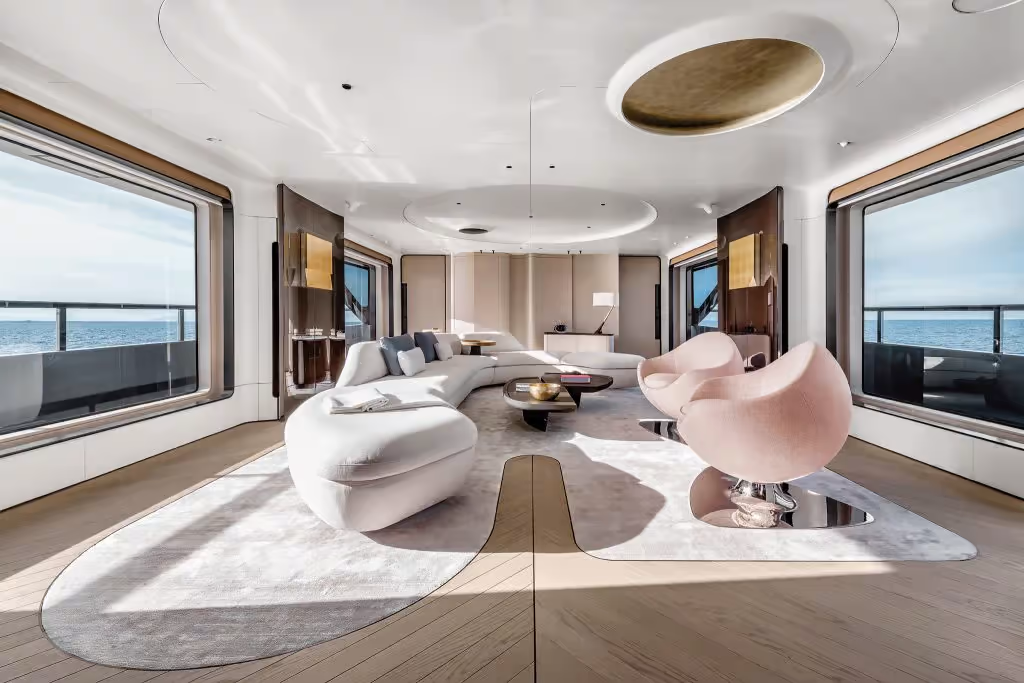
High‑gloss walnut can hide fine scratches in showroom light. I always open shades, let natural light in, and look horizontally across surfaces. Door tops and table rims tell the truth. For soft goods, I check stitching at radius corners, helm seats for compression lines, and salon carpet edges near sliders. A boat that’s had gentle interior care usually appraises better than one with newer electronics but tired finishes.
Essential Options: Why the Seakeeper & Hardtop Are Non-Negotiable
On a 66, a Seakeeper stabilizer is more than comfort, it’s resale insurance. It typically adds $60K–$120K in market value depending on model and install quality, and broadens your buyer pool. The hardtop matters for sun protection, antenna real estate, and quieting wind flow over the bridge. A 66 without these two will trade: it just trades slower and invites steeper offers.
Rival Check: Azimut 66 vs. Ferretti & Sunseeker
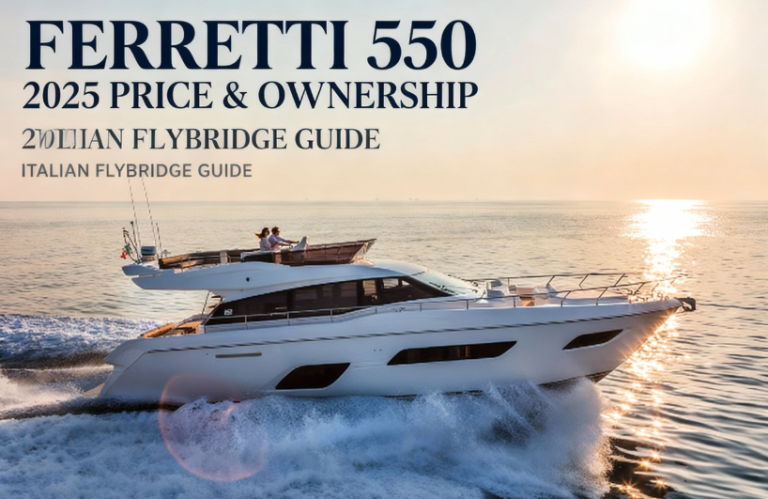
Azimut 66 vs. Ferretti 670: Battle of the Italian Giants
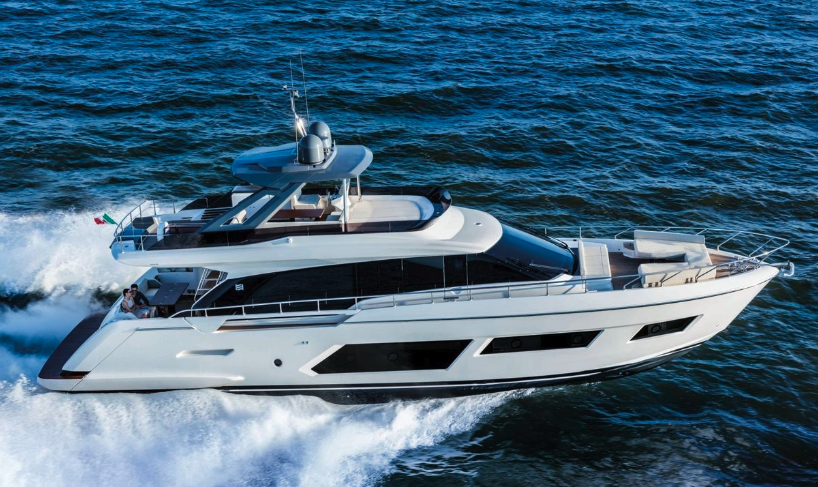
The Ferretti 670 typically prices a touch higher year‑for‑year, think $1.9M–$2.4M for 2019–2021, reflecting heavier build, a slightly more conservative interior, and Ferretti’s steady Med demand. The Azimut 66 counters with a lighter superstructure, livelier acceleration, and a more expressive interior palette. Underway, the Ferretti feels planted and quiet: the 66 feels agile and engaging. If you prize craftsmanship understatement and an extra measure of acoustic calm, the 670 edges it. If you want drama in the salon, a brighter fly, and a touch more sparkle per pound, the 66 delivers, and usually at a price advantage.
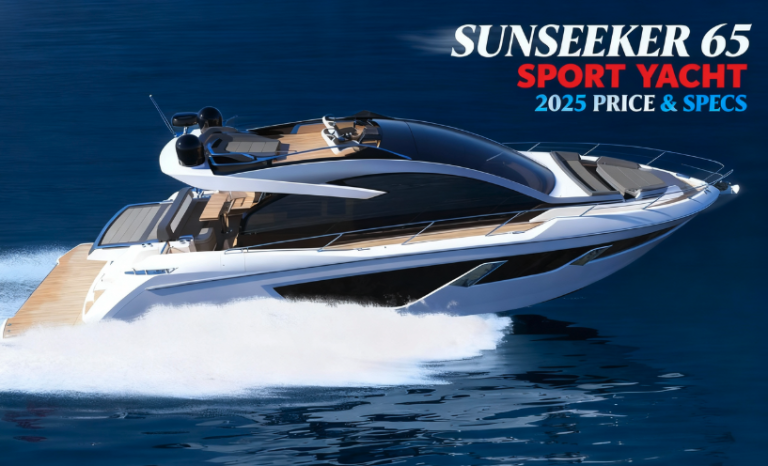
Azimut 66 vs. Sunseeker Manhattan 66: Style vs. Sport
The Manhattan 66 leans sportier in helm ergonomics and exterior lines, often running MAN V8s. Pricing overlaps closely with the Azimut 66, but Sunseeker buyers often accept more “driver’s boat” character and a firmer ride at pace. Interiors tilt a bit more Anglo‑modern than Italian gloss. In resale, both trade briskly with the right spec: the Azimut’s Carbon‑Tech + Seakeeper combo tends to pull stronger in the US, while Sunseeker loyalty in the UK and Med evens the field.
Verdict: Is the Azimut 66 a Good Buy in 2025?
If you find a 2018–2020 Azimut 66 with Seakeeper, hardtop, straight service records, and sub‑1,200 hours in the $1.9M–$2.3M lane, it’s a smart buy in 2025. Earlier boats make sense at $1.5M–$1.8M if cosmetics are honest and machinery is current. I’d be cautious with high‑hour examples that haven’t had heat‑exchanger/aftercooler attention by calendar, they’ll appraise fine today and ask for money tomorrow.
One dependable principle: buy the spec, not the paint year. Stabilization, hardtop, electronics currency, and documented CAT care will carry you further than a newer HIN with thin options. Pay fair money for the right boat and it will pay you back in quieter ownership and easier resale.
Frequently Asked Questions
What is the cruising speed and fuel burn of the Azimut 66?
Most CAT C18 boats like to cruise in the mid‑20s. Figure 24–27 knots with a typical load, burning roughly 90–110 gph combined. Drop to 10–11 knots for long legs and you’ll often see 15–22 gph. Clean hull, tidy running gear, and conservative trim make a bigger difference than many expect.
Does the carbon fiber superstructure reduce maintenance costs?
Indirectly. Carbon-Tech cuts weight aloft, which helps stability and efficiency. Maintenance shifts from “heavy gelcoat medicine” to vigilant cosmetics: watching for UV haze, managing sealants at carbon/gel interfaces, and keeping topcoats polished. You won’t eliminate upkeep: you’ll redirect it. Owners who stay ahead of small cosmetic items tend to avoid big bills.
How does the Azimut 66 resale value compare to Princess or Sunseeker?
Against Princess (e.g., F68/Y72 lineage), Azimut typically shows slightly steeper early‑year depreciation but comparable holding power once the boat is into years 4–8. Versus Sunseeker Manhattan 66, resale is broadly similar: the winner is the better spec in the better region. In the US, Azimut 66s with Seakeeper and hardtop usually transact faster: in the UK and parts of the Med, Sunseeker loyalty narrows or reverses the gap.