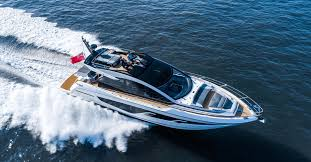
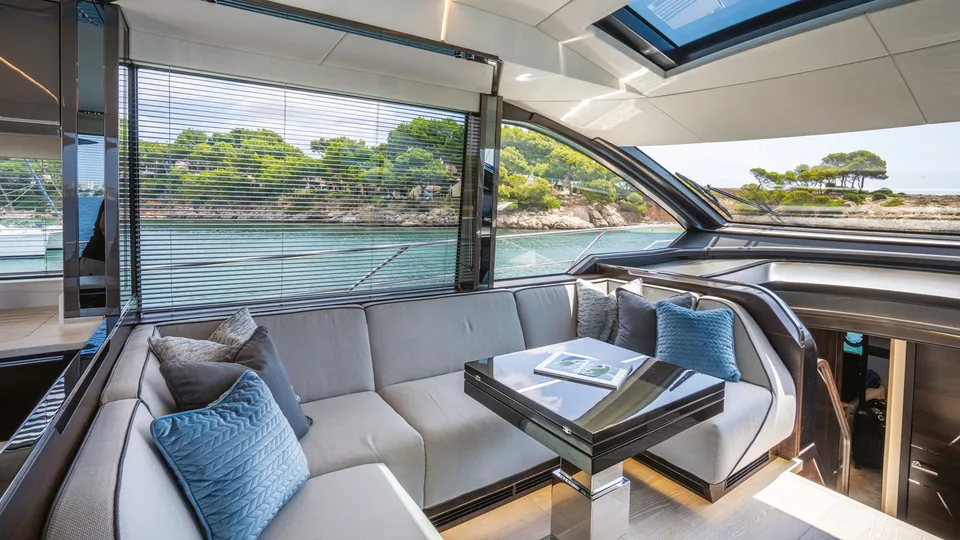
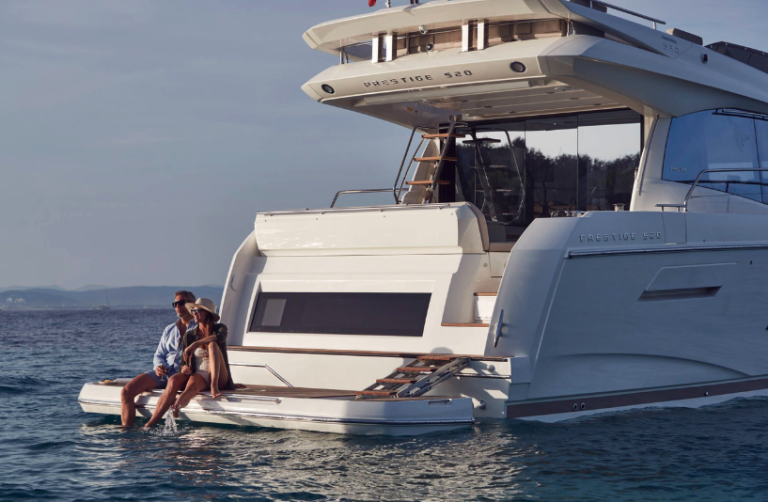
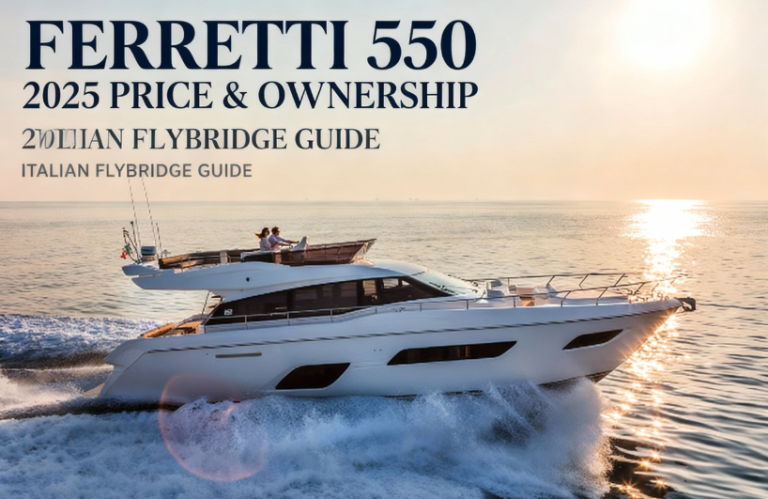
Something caught my eye while reviewing recent listings across the Mediterranean and Florida last month: the 60-foot yacht segment has quietly become one of the most competitive and value-rich categories in the market. I noticed three 2019 models — one Italian flybridge, one British sport yacht, and one Polish express — all priced within $200,000 of each other, yet offering completely different ownership experiences.
The truth is, asking “how much is a 60-foot yacht?” is a bit like asking how much a car costs. The answer depends entirely on the brand, the year, the specification level, and where the yacht was built. But I can offer you a clear starting point.
Average Price of a 60-Foot Yacht in 2025
In 2025, the average price of a 60-foot yacht typically sits between $1.4 million and $2.8 million for a used model built within the past five to ten years. If you’re considering a brand-new 60-footer from a respected European or American builder, expect to invest anywhere from $3.2 million to $5.5 million, depending on customization, engine choice, and onboard systems.
I’ve walked through dozens of 60-footers over the years, and I can tell you that this size category offers something genuinely special: enough volume for comfortable long-range cruising, but still manageable enough for an owner-operator couple. You get three full guest cabins, a flybridge with real social space, and the ability to cross oceans if the hull and fuel capacity support it.
The price variation comes down to a few key factors: hull construction material (fiberglass vs composite), engine brand and configuration (twin diesel vs IPS pods), stabilization systems (gyro vs fin), and the level of interior finish. A 60-foot yacht from Princess Yachts will feel different underfoot compared to a Sunseeker or an Azimut — not better or worse, just different in design philosophy, joinery style, and performance profile.
Price Comparison of Top 60-Foot Yacht Brands
Let me walk you through three of the most popular brands in this size range, based on real market data I’ve been tracking across Europe, the U.S., and Asia over the past six months.
Azimut 60 Price in 2025
The Azimut 60 Fly, produced between 2016 and 2022, is one of the most recognizable Italian flybridges in this category. I’ve inspected several of these yachts in Palma and Antibes, and what stands out immediately is the expansive flybridge layout and the generous beam — this yacht feels wider than many competitors at the same length.
For a 2018–2020 Azimut 60, you’re typically looking at $1.6 million to $2.1 million, depending on engine hours, specification level, and whether the yacht includes upgrades like a hydraulic swim platform, upgraded Bose sound system, or teak extension on the flybridge. The earlier 2016–2017 models tend to sit closer to $1.3 million to $1.7 million.
One thing I always tell buyers: check the engine-hour band carefully on Azimuts. Many of these yachts were charter-operated in the Mediterranean, and anything over 800 hours should trigger a closer inspection of the engine-room condition and service history. The twin MAN or Volvo engines are reliable, but service intervals matter.
According to Boat International, the Azimut 60 maintains strong resale value in Southern Europe, where the brand has deep market recognition and excellent dealer support.
Princess F62 Yacht Cost in 2025
ThePrincess F62, introduced in 2018, represents British yacht-building at its finest. I’ve spent time aboard three different F62s, and the craftsmanship is consistently impressive — the joinery is precise, the helm ergonomics are thoughtful, and the engine-room layout is one of the cleanest I’ve seen in this class.
A 2019–2021 Princess F62 typically ranges from $2.0 million to $2.6 million. The earlier 2018 models, which are now six to seven years old, usually sit between $1.7 million and $2.2 million. Princess owners tend to spec their yachts more conservatively than Sunseeker or Azimut buyers, so you’ll often find well-maintained examples with lower engine hours — usually in the 300 to 600-hour range.
The F62 uses Volvo Penta IPS drive systems as standard, which offer excellent fuel efficiency and maneuverability in tight marina spaces. I’ve noticed that Princess yachts hold their value particularly well in Northern Europe and the UK, where brand loyalty is strong and the dealer network is highly responsive.
One detail I appreciate: the Princess F62 offers a slightly more conservative, classic interior aesthetic compared to the more contemporary Italian designs. If you value timeless elegance over bold design statements, this yacht rewards that sensibility. You can explore full specifications on the Princess Yachts official website.
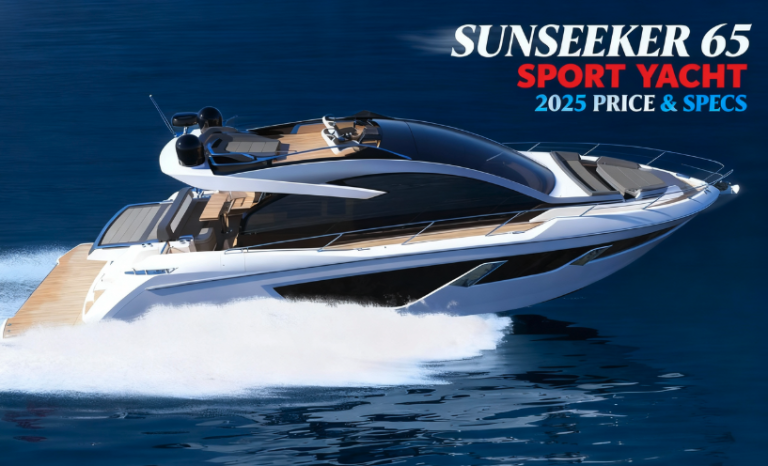
Sunseeker 65 Sport Yacht Price in 2025
The Sunseeker 65 Sport Yacht, produced from 2017 onward, is the sportiest option in this comparison. I walked through two 65 Sport Yachts last fall in Porto Montenegro, and the first thing you notice is the aggressive styling and the performance-oriented helm design. This is a yacht built for owners who want speed, presence, and a more dynamic driving experience.
Expect to invest $2.2 million to $2.9 million for a 2019–2021 Sunseeker 65 Sport Yacht. Earlier 2017–2018 models range from $1.8 million to $2.4 million. Sunseeker yachts often come highly optioned, with features like upgraded teak decking, premium audio systems, and custom interior finishes, which can add considerable value on the resale market.
One consideration: Sunseeker yachts depreciate slightly faster in the first three years compared to Princess or Azimut, but they stabilize well after the five-year mark. According to Yachting Magazine, Sunseeker maintains strong brand recognition in the U.S. and Middle East markets, where the sportier design language resonates with buyers.
New vs Used 60-Foot Yacht Costs in 2025
If you’re weighing the decision between new and used, let me share what I’ve observed across hundreds of buyer conversations.
A brand-new 60-foot yacht from a top-tier builder will cost between $3.5 million and $5.5 million in 2025, depending on the brand, customization level, and optional equipment. For example, a new Princess F62 with a full premium specification package, gyro stabilization, upgraded teak, and custom interior finishes can easily reach $4.8 million to $5.2 million.
The advantage of buying new is obvious: full factory warranty, the ability to customize every detail to your taste, and the assurance that you’re the first owner. You also benefit from the latest hull designs, improved fuel efficiency, and updated electronics packages.
On the other hand, a three- to five-year-old used 60-foot yacht offers exceptional value. These yachts have already absorbed the steepest part of the depreciation curve — typically 20% to 30% in the first three years — yet they still feel modern, perform reliably, and often come with valuable upgrades already installed by the first owner.
I usually recommend that first-time buyers in this category consider a 2019–2021 model. You’ll save $1.2 million to $2.0 million compared to new, and if the yacht has been properly maintained with low engine hours (under 500), you’re essentially getting a near-new yacht at a significant discount.
For depreciation analysis and market trends, Power & Motoryacht publishes annual resale reports that provide helpful context for understanding long-term value retention across different brands.
Annual Ownership Costs for a 60-Foot Yacht
Ownership costs are where many buyers feel surprised, so let me walk you through the realistic annual expenses for a 60-foot yacht based on typical Mediterranean or U.S. East Coast ownership.
Annual maintenance and operating costs for a 60-foot yacht typically range from $120,000 to $180,000 per year, assuming moderate usage of 80 to 120 cruising days. Here’s how that breaks down:
Marina fees: $30,000 to $60,000 annually, depending on location. A berth in Palma or Fort Lauderdale will cost significantly more than a spot in Greece or the Carolinas. You can review current rates on official port authority websites like Port de Mallorca.
Insurance: $18,000 to $30,000 per year, based on yacht value, cruising area, and your experience level as an owner-operator.
Routine maintenance: $25,000 to $40,000 annually for engine servicing, bottom cleaning, antifouling, and general upkeep. Twin MAN or Volvo engines require servicing every 200 to 300 hours, and each service typically costs $3,000 to $5,000.
Fuel costs: Highly variable, but expect to budget $15,000 to $30,000 per season if you’re actively cruising. A 60-foot yacht burns approximately 30 to 50 gallons per hour at cruising speed.
Crew (optional): If you hire a professional captain and deckhand for peak season, add $40,000 to $80,000 for salaries and benefits.
One thing I always remind buyers: these costs scale with usage. If you only use the yacht for 40 days a year and keep it in a more affordable marina, your annual costs could drop to $80,000 to $100,000. The key is being realistic about how you’ll actually use the yacht.
Where to Find 60-Foot Yachts for Sale in 2025
When you’re ready to start your search, I recommend working with an experienced buyer’s agent who specializes in this size category. A good agent will help you navigate regional price differences, identify yachts with clean maintenance records, and negotiate effectively on your behalf.
The best 60-foot yachts for sale tend to appear in spring and early summer, as owners prepare for the season and decide whether to upgrade or sell. I’ve noticed that April through June offers the widest selection in Europe, while September through November is prime listing season in Florida and the Caribbean.
Focus your search on yachts that show:
Low to moderate engine hours (under 600 hours for a five-year-old yacht)
Clear service records with receipts for major maintenance
Recent surveys (within the past 12 months)
Original factory specifications, with any modifications properly documented
If you’re considering a used yacht, always arrange for an independent marine survey and sea trial before making an offer. I’ve seen too many buyers skip this step and regret it later when hidden issues emerge.
For technical guidance on surveying and inspection, the U.S. Coast Guard and Maritime and Coastguard Agency both publish helpful resources on safety standards and equipment requirements.
Buying a 60-foot yacht in 2025 is about finding the right balance between brand, specification, age, and ownership costs. Whether you’re drawn to the Italian flair of an Azimut, the British refinement of a Princess, or the sporty presence of a Sunseeker, the key is understanding what drives value in this market: build quality, engine condition, and how the yacht has been cared for over time.
Take your time. Walk through multiple yachts. Compare the details. And when you find the one that feels right — where the layout flows naturally, the engines sound healthy, and the craftsmanship speaks to you — you’ll know. That’s the yacht worth investing in.
If you want to keep cruising, here are a few earlier posts worth sailing back to.