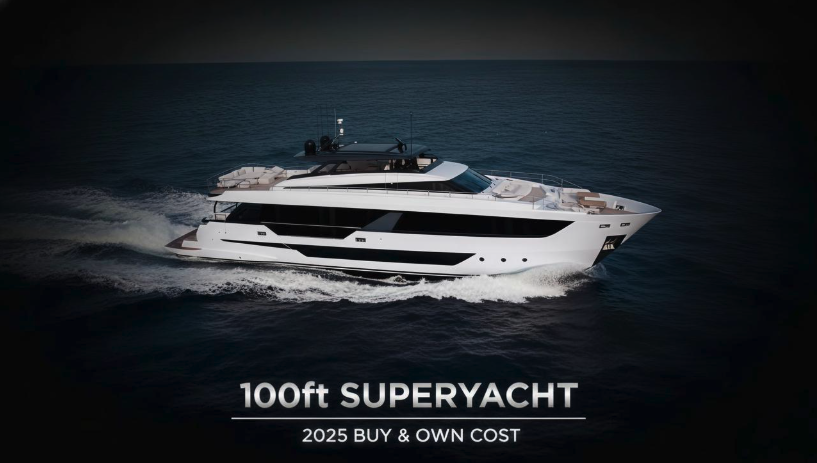
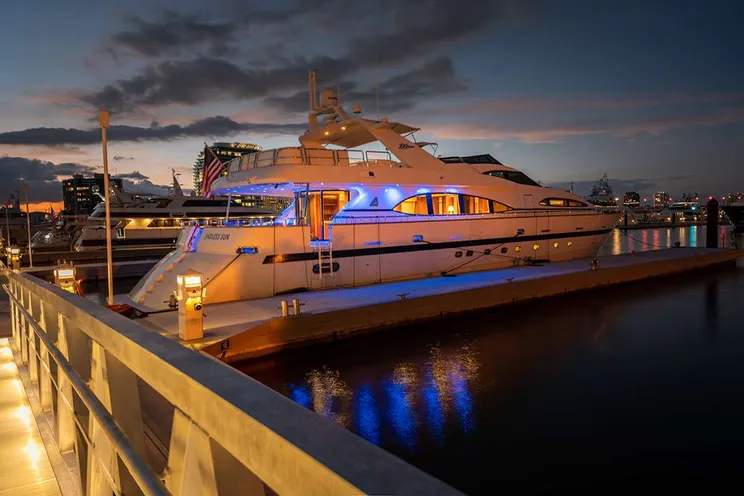
While reviewing three near-identical 100-foot flybridge listings, two in the Western Med, one in South Florida, something quiet but telling stood out. Same model year band, similar engine hours, yet a $1.1M spread. The only obvious differences: stabilizer spec, electronics year, and a cleaner refit record. This is where 100 foot yacht price behavior reveals itself: design updates and running-cost exposure shape value just as much as length and brand badge.
Average Purchase Price of a 100-Foot Yacht in 2025
For 2025, the average purchase price for a well-kept, composite 100-foot planing or semi-displacement yacht typically sits between $5.5M and $12M on the brokerage market. New builds, depending on brand and spec, generally range from about $13M to $22M.
Here’s how that spreads by age and spec:
2005–2012: Often $3.5M–$6M, with wide variance tied to major refits (electrical, soft goods, nav upgrades) and engine-hour bands. Stabilizers (especially fins or later retrofitted gyros) can lift value $150K–$400K depending on system and age.
2013–2018: Commonly $6M–$9M. These years benefit from quieter hull/deck lamination, improved glazing, and cleaner weight distribution on many models. Buyers pay up for zero-speed stabilization and refreshed AV/IT backbones.
2019–2023: Frequently $9M–$12M on brokerage for top European builders with tasteful specs and under-2,000 hours. The “nearly new” feel, warranty echoes, and modern interiors hold pricing.
2024–New build 2025: $13M–$22M+, depending on yard, materials, and propulsion (traditional shafts vs. pods or waterjets) and whether the model offers beach club or folding terraces.
Regional patterns I’m seeing:
Mediterranean: Slightly stronger ask prices for late-model European brands: inventory is broader, and peak-season demand props up values. VAT status and charter history influence pricing logic but don’t automatically raise value without documentation.
United States: Tighter spreads on late-models: buyers scrutinize survey outcomes and service records in detail. Freight and import past can matter, but clean U.S. spec boats with strong service history move well.
Asia-Pacific: Smaller pool of comparable comps: sharp boats can command premium asks, but time-to-sale may be longer. Logistics back to Med/US can compress that premium during negotiations.
Why the differences? Hull refinements after 2012–2014 reduced noise/vibration: engine generations improved fuel curves: and later electronics integrations lowered future refit exposure. Buyers pay for reduced uncertainty, quiet, stable, and up-to-date.
The 10% Rule: Annual Running Costs for a 100-Footer
For a 100-footer, the classic 10% rule (of current market value) still works as a planning anchor. In practice, annual running costs usually fall between 8% and 12% of value. On a $8M yacht, budget $640K–$960K per year: on a $15M new build, $1.2M–$1.8M isn’t unusual, especially early on when warranty items and punch lists still require attention.
Two notes I share with buyers:
Usage drives fuel and wear, but the fixed skeleton, crew, insurance, dockage, preventive maintenance, sets the floor.
Gyros and fin stabilizers add comfort and resale strength, but they bring service lines. It’s not a negative: it’s a predictable line item like generators.
Crew, Insurance, Fuel, and Dockage Breakdown
Crew: For a 100-footer, think 4–6 crew depending on program. Total annual compensation (salaries, taxes, rotation relief) typically ranges $350K–$650K. Well-run programs pay for themselves in reduced downtime and better survey outcomes.
Insurance: $80K–$200K, shaped by hull value, cruising area, and claims history. Newer builds with modern fire detection and updated electrical often land lower on a per-value basis.
Dockage and yard: $100K–$250K depending on region and marina class. Med high season and premium South Florida berths can push this higher: winter yard periods add anothe $60K–$120K for routine work.
Fuel: Very usage-sensitive. Light family cruising could be $120K–$200K annually: active Med season programs with longer passages can run $250K–$400K.
All in, a realistic full-year plan for a frequently used 100-foot yacht often totals $900K–$1.6M, with leaner programs at the low end and charter-active or heavy-cruising programs at the top.
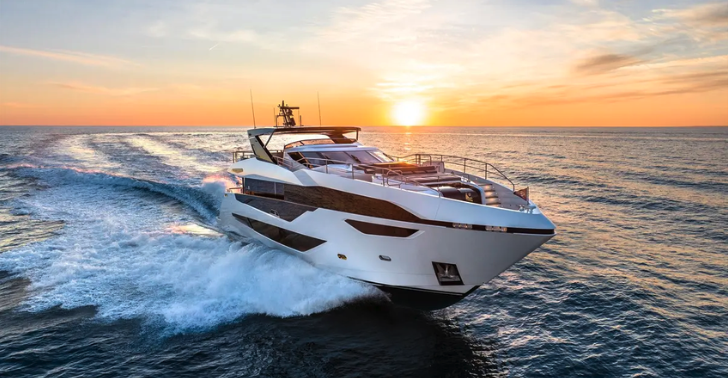
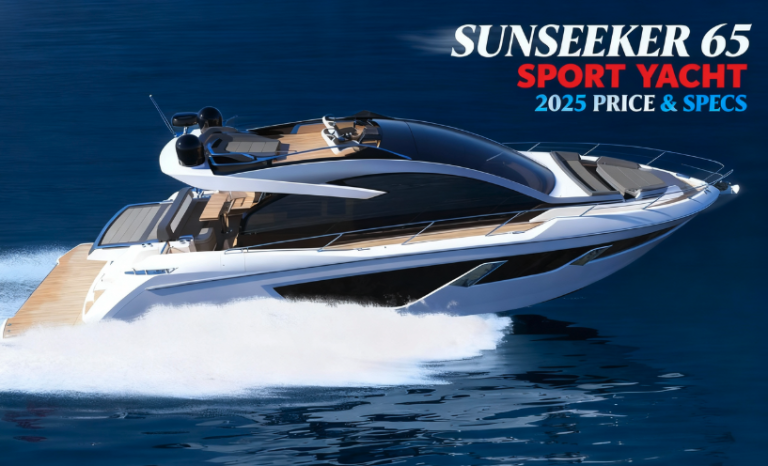
Sunseeker 100 Yacht (2022–2025): Brokerage examples with low hours and high-spec interiors typically ask $11.5M–$14M: new build, depending on options and slots, can land around $14M–$18M. The model’s beach club and glazing keep demand resilient.
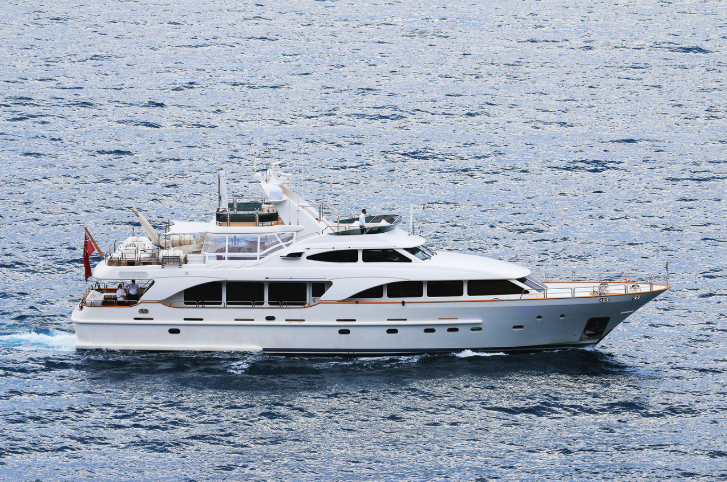
Benetti Classic 100 (mid-2000s): Many of these sit $3.8M–$5.5M depending on refits, class status, and interior condition. When stabilized, with updated nav and fresh soft goods, they trade faster and firmer. Steel/aluminum or heavier displacement lines command respect for range and motion, but plan for class and paint cycles.
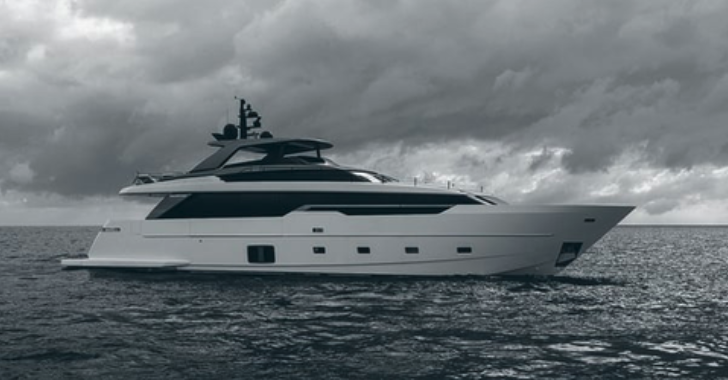
Sanlorenzo SL96A / SL102A (close to 100′ class): Late-2019 to 2023 boats with asymmetric decks and modern layouts often market at $9M–$13M on brokerage: new build equivalents typically start mid-to-high teens. The SL’s quietness underway and modern glazing are real differentiators versus peers.
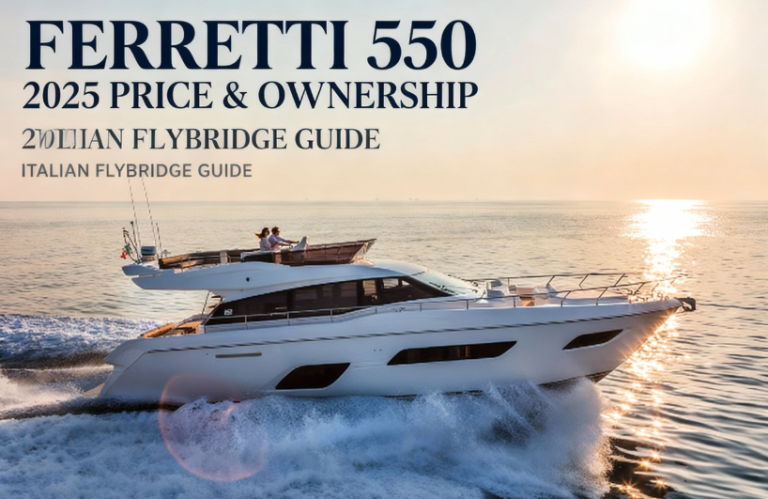
Against competitors (Azimut Grande ~32m, Princess X95, Ferretti 1000), pricing is similar, but the spread reflects finish quality, hull efficiency, and interior volume. I pay particular attention to noise/vibration notes in surveys, a quiet boat earns its premium at resale.
New Build vs Brokerage Prices at 100 Feet
New build brings customization, latest systems, and warranty, but also delivery slots, currency exposure, and specification creep. In 2025, I’m seeing new-build premiums of roughly 25%–45% over comparable late-model brokerage examples. That gap narrows when a brokerage boat carries expensive recent upgrades (stabilizers, lithium banks, electronics, paint) and clean surveys.
Depreciation tends to be front-loaded: often 10%–15% in year one post-delivery, softening to 6%–9% annually in years two to four, then settling around 4%–7% as the model matures and refits stabilize condition. Engine-hour bands matter: under ~1,500 hours on a five-year-old is attractive: over ~3,500 hours, I slow buyers down for deeper engine and gearbox diligence.
Speak with a Superyacht Advisor for 100-Foot Yacht Costs
If you’re benchmarking a 100 foot yacht price today, a short, objective consultation can prevent six-figure surprises. Share your preferred regions, hour tolerance, stabilization requirements, and planned usage. We’ll map real comps, running-cost expectations, and survey priorities for your shortlist.
One dependable principle: buy the quietest, most-updated hull you can sensibly afford, stability, noise control, and recent systems work protect both your experience and your exit. If you’d like, send me the three listings you’re considering, and I’ll flag the hidden cost lines before you step aboard.
If you want to keep cruising, here are a few earlier posts worth sailing back to.