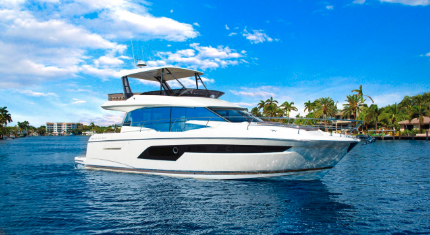
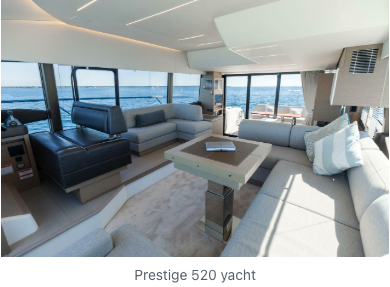
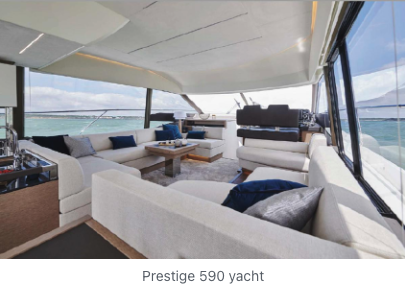
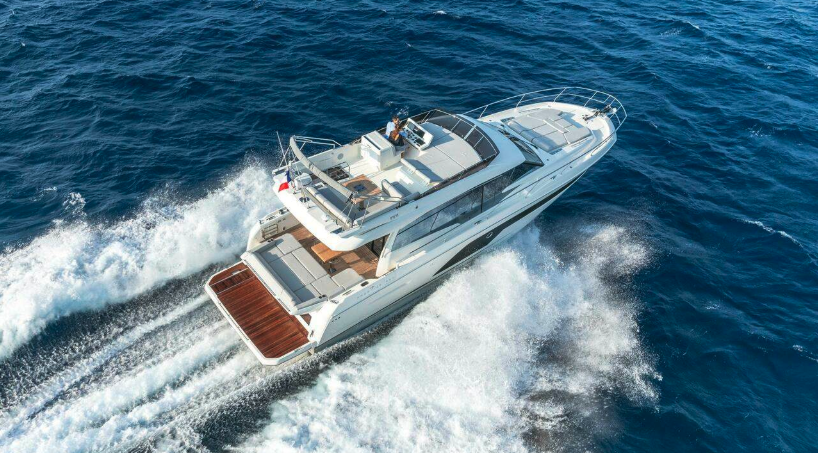
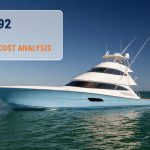
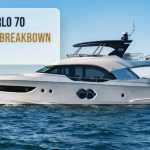
One of the most frequent debates I hear from clients is the ‘Prestige Dilemma.’ You start looking for a 50-footer and fall for the practical brilliance of the Prestige 520. Then, you step aboard a 590, see that private master suite entrance, and suddenly the math gets complicated.
Is the Prestige 520 vs Prestige 590 decision really worth a half-million-dollar premium? On paper, they look like close siblings. In reality, they are different animals designed for different captains. One is the ultimate owner-operator cruiser; the other is a ‘mini-superyacht’ that demands a bit more from you—both in skill and budget. Here is how I help buyers navigate this choice without the sales pressure.
The Financial Reality: Is the Upgrade Worth the Premium?
Brokerage Price Gaps (2019–2024): The “$500k Question”
Across 2019–2024 inventory, I consistently see the Prestige 520 trading in the U.S. between about $1.0M and $1.5M depending on year, hours, and options. Late 2019–2020 boats often sit around $1.05M–$1.25M: 2021–2022 boats push $1.25M–$1.45M: near‑new 2023–2024 examples can ask up to the mid‑$1.5Ms when very clean and stabilized. In the Med, asks trend 5–10% lower when comparing VAT‑excluded figures: VAT‑paid listings are a different calculus because tax is embedded in the price. Asia tends to carry the highest asks due to low supply.
The Prestige 590 typically ranges about half a step above: think $1.5M–$2.2M over the same vintages. 2019s frequently list $1.45M–$1.65M: 2020–2022s land in the $1.65M–$1.95M band: fresh 2023–2024s move into the $2.0M+ territory, especially with Seakeeper, upgraded AV, and high‑spec galley packages. That’s the reliable $500k spread most buyers feel.
Why the delta? Three core drivers: the private master layout, the step up in volume (beam and tankage), and the propulsion package. These translate into different use cases, and different resale pools.
Operating Costs: Slip Fees, Insurance, and Fuel Differences
Berthing and haul‑outs scale with LOA and beam. The 520’s footprint makes 50‑ft slips viable in more marinas: the 590 edges you into 60‑ft pricing and limited availability in busy U.S. metros. Insurance generally runs ~0.6–1.0% of agreed hull value annually in North America, so a $500k capital gap often adds roughly $3k–$5k per year.
Fuel is where behavior matters. A typical 520 with Volvo IPS 650s (D6‑480s) will cruise 22–25 knots burning roughly 38–45 gph combined, dropping into the mid‑20s gph at an efficient 9–10‑knot displacement run. The 590 with Cummins 600s on Zeus pods will see ~50–60 gph around 22–24 knots and mid‑30s gph at a slower 9–10 knots, helped by volume but offset by weight. If you plan frequent 100‑nm weekends at speed, the annual difference adds up quietly. Stabilizer ownership costs also differ: Seakeeper 6 on a 520 vs 6/9 on a 590: figure routine service in the low thousands annually, with installations typically adding $80k–$150k to the original build cost.
Layout & Privacy: The “Private Entrance” Factor
Master Suite Comparison: Shared Access (520) vs. Private Staircase (590)
This is the emotional hinge. On the 520, the full‑beam master is reached via the main companionway, perfectly fine for couples, but you’ll share traffic with guests. On the 590, the master gains a private staircase from the salon. It sounds small: it doesn’t feel small. The separation changes mornings, wardrobe access, and resale to privacy‑sensitive buyers. In markets like South Florida and Hong Kong, I see buyers pay a real premium for this.
The Crew Cabin Reality: Storage Locker vs. Habitable Quarters
On the 520, the aft “crew” is often a single‑berth plus head that many owners use as a large, weatherproof storage locker, dive gear, folding bikes, spares. On the 590, the aft cabin is meaningfully more habitable for a steward or occasional captain. If you’re mostly owner‑operated with visiting family, the 520’s space utility is excellent. If you do plan to run with crew, the 590’s aft quarters make day‑to‑day life simpler.
Engineering & Propulsion: Volvo IPS vs. Cummins Zeus
The 520 Experience: Volvo IPS 650 Agility & Service Network
Volvo IPS 650s give the 520 a light, intuitive feel. Joystick docking is predictable, and the global Volvo Penta service network is a comfort when you’re far from home. Annual IPS service (gear oil, seals, software checks) is well‑understood, and parts availability in the U.S. and Med is strong. Noise and vibration levels on the 520 are impressively civilized for the class, good isolation and that sweet IPS “slide” make close‑quarters maneuvering less tense for couples.
The 590 Experience: Cummins Zeus Torque & Maintenance Nuances
The 590’s Cummins 600s on Zeus pods bring easy torque and a planted, muscular push off the dock. Zeus station‑keeping is excellent. The nuance: Zeus pod service is more specialized, and while Cummins support is widespread, some yards see fewer Zeus boats than IPS, which can mean scheduling around the right technicians. Expect similar annual service cadence, but build a relationship with a pod‑savvy yard. Underway, the 590 feels heavier, quieter through the mid‑ship zone, and a touch more linear in throttle response once spooled.
Handling & Seakeeping: The Owner-Operator Test
Docking Dynamics: Windage Differences for Couples
I’ve put couples at the helm of both. The 520’s lower windage and IPS set‑up make beam‑blow days less dramatic. Sightlines are friendly from both stations, and side‑deck access is manageable for line‑handling. The 590’s height and larger windage ask for slightly earlier inputs and a bit more spring‑line discipline. Both joystick systems are capable: the 520 simply forgives more in tight fairways.
Offshore Comfort: Does the 590’s Extra Weight Smooth the Ride?
Yes, generally. In a 2–3 ft chop at 18–22 knots, the 590’s extra displacement softens entries and reduces salon‑level shudder compared to the 520. With Seakeeper on, both feel composed at anchor and at slow troll. If your waters run lumpy, think Pacific Northwest fetch or shoulder‑season Aegean, the 590 buys you longer “go” windows. In intracoastal, bay, and fair‑weather island‑hopping, the 520 feels lively and efficient without fatigue.
The Decision Matrix: Matching the Hull to Your Lifestyle
The 520 Buyer: Prioritizing Agility & Ease of Handling
You run owner‑operated, mostly with family or one other couple. Marina availability and operating costs matter. You value a bright salon, practical galley, and civilized sound levels underway. A late‑model 520 with IPS, Seakeeper 6, upgraded electronics, and <800 hours typically sits in a sweet spot for total cost of ownership. Depreciation after year three tends to moderate (often 6–8% annually, depending on condition and hours), and resale liquidity is healthy.
The 590 Buyer: When Privacy & Hosting Space Are Non‑Negotiable
You host, you cruise for longer, and you want the master to feel like a retreat. You’re comfortable with 60‑ft slip economics and the service rhythm of Zeus pods or you have trusted technicians. Add Seakeeper 6/9, hardtop, and premium upholstery packages and you’re in the top of the buyer pool later at resale. Early‑year depreciation can run 12–18% in the first 24–36 months, then flatten: privacy‑sensitive markets often reward the 590’s layout.
A simple rule I give clients: choose by routine, not by “what if.” If 80% of your days are short hops with two to four aboard, the Prestige 520’s agility, network support, and cost profile are wonderfully aligned. If your reality is extended stays, frequent guests, and a true owner’s retreat, the Prestige 590 earns its premium. Both are honest boats: the right one is the one that quietly makes your normal day feel easy.